


Professional Mould Removal Hackney
Certified mould remediation specialists providing full inspection, treatment, and post-treatment verification for complete mould decontamination.

Certified mould remediation specialists providing full inspection, treatment, and post-treatment verification for complete mould decontamination.
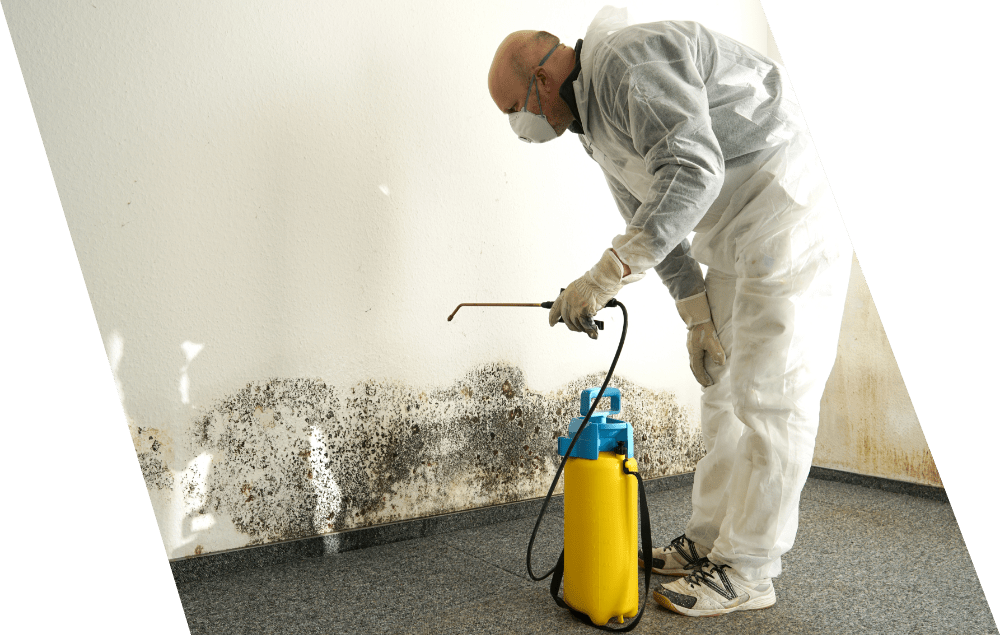
The cost of mould removal depends on the size of the affected area and the type of treatment required. After a detailed inspection a clear, personalised quote is provided based on the scope of work.
| Small mould area (e.g. around a window or corner) | Medium mould area +£100 (large section of a wall affected) | Large mould area +£150 (more than one wall or ceiling) | ||||
|---|---|---|---|---|---|---|
| Room | Standard | Fantastic Club* | Standard | Fantastic Club* | Standard | Fantastic Club* |
| Bedroom | £350 | £320 | £450 | £420 | £500 | £470 |
| Bathroom | £350 | £320 | £450 | £420 | £500 | £470 |
| Kitchen | £350 | £320 | £450 | £420 | £500 | £470 |
| Living / Dining room | £350 | £320 | £450 | £420 | £500 | £470 |
| Hallway / Landing | £350 | £320 | £450 | £420 | £500 | £470 |
| Utility room | £350 | £320 | £450 | £420 | £500 | £470 |
| Paid inspection | £50 | |||||
| *Price for members of the Fantastic Club. The Fantastic Club is a yearly subscription of £89. | ||||||

In Hackney, mould removal requires meticulous attention to detail to ensure that all aspects of mould remediation are addressed. The process begins with a thorough assessment to identify root causes like high humidity, poor ventilation, and previous water damage. Mould cleaning in Hackney effectively targets visible mould while prioritising the long-term health of your home through mould prevention tactics that prevent future infestations.
Skilled professionals employ specialised equipment to evaluate humidity, ventilation, and water damage issues. Mould remediation is designed to eliminate not only visible mould but also the conditions that promote its recurrence. Treatment of affected walls, ceilings, and floors is typical, but soft furnishings are usually removed from this process. By focusing on moisture balance and condensation control, mould experts can ensure a mould-free environment for homeowners in Hackney.
In Hackney, our structured mould remediation starts with a detailed inspection to assess the mould dynamics. Then, we install HEPA air filtration to eliminate airborne spores. We implement HOCl treatment for its potent mould neutralization properties in a controlled manner. Our ULV fogging technology ensures that the treatment reaches every nook and cranny, thoroughly addressing hidden mould infestations.
Post-treatment, we ensure complete mould removal using specialized equipment that includes H-Class filtration. Once all mould is extracted, we finalize the process with an air-cleaning method to restore a safe environment. By choosing our mould remediation services in Hackney, you're investing in future-proofing your property against mould regrowth, while enhancing overall air quality and promoting long-term stability. Rely on our mould removal team in Hackney for an effective and comprehensive solution.

Booking mould cleaning is quick and designed to get results without unnecessary delays.
Share what you’re dealing with, whether it’s visible mould, damp patches, or a recurring problem. This helps determine the right approach, from mould cleaning to full mould remediation.
A specialist checks the affected areas and identifies what’s causing the mould, such as excess moisture, condensation, or poor ventilation. This ensures the issue is treated properly, not just on the surface.
You’ll get a straightforward quote based on the level of contamination and the type of mould removal required. The service is tailored to ensure effective results and long-term protection.
The treatment removes mould and improves indoor air quality, helping to prevent future growth and create a healthier living space. It also targets the root cause of the problem for longer-lasting results.
Mould removal requires more than basic cleaning, which is why it’s handled by trained mould remediation specialists experienced in treating both visible and hidden contamination. Each specialist assesses the full extent of mould growth, including underlying causes such as excess moisture, condensation, and ventilation issues, ensuring the problem is addressed properly rather than just on the surface.
Number of bookings: 213
With Fantastic Services for: 2 years
Other specialities:
Number of bookings: 123
With Fantastic Services for: 2 years
Other specialities:
Number of bookings: 139
With Fantastic Services for: 2 years
Other specialities:
Alongside professional mould removal and mould cleaning, a range of additional property care services is available to help maintain a healthier indoor environment.
































Mould can spread quickly and impact both health and property if not treated in time. Book a service today to remove mould, improve indoor air quality, and restore a cleaner and healthier living environment.

Mould needs three things, and only one of them can realistically be taken away. The spores are already present in the air of every building. Wallpaper paste, plaster, timber and household dust all provide something to feed on. What decides whether a colony establishes is sustained moisture at the surface, which is why a Hackney flat where nothing looks wet still grows the same patch every winter, and why diagnosing one of these cases from a photograph is close to useless.
Air temperature and relative humidity together give a dew point for the room. The temperature of the wall surface then decides whether that dew point is reached on it. A surface running a few degrees below the dew point stays wet for hours every night and dries only partially during the day, which is exactly the regime that suits germination. A reading taken on one afternoon captures none of that. It describes a moment, and the moments that matter are the cold ones in the small hours when nobody is measuring anything.
The more informative approach is to leave small data loggers in the affected rooms for two weeks and read the trace afterwards. That record shows whether humidity spikes sharply with showering and cooking and then recovers, which points to a ventilation shortfall, or sits high all day, which points to a moisture source in the fabric. It shows whether heating drops away overnight and by how much, and which room is consistently the coldest. Two properties with identical visible growth can produce entirely different traces, and the recommendation follows the trace rather than the appearance.
What is growing is also evidence. Fine dark speckling on a cold surface behind furniture is the classic surface colonisation associated with condensation. Pink or orange staining in a shower enclosure is usually organic residue on the sealant rather than a fabric problem, and it responds to cleaning. White fluffy or crystalline deposits on masonry are frequently salts rather than biological growth, which means a wetting history rather than a humidity problem. Fruiting bodies or strands on timber move the conversation from cleaning to decay, and that is assessed differently.
E8 contains Georgian and Victorian terraces, purpose-built flats, conversions and large post-war blocks, and they arrive at the same result by different routes. Solid walls that cannot be warmed evenly, concrete frames with cold structural elements, and conversions with retrofitted wet rooms all combine with modern moisture loads and reduced air leakage. The measurement approach is identical in each; the remedy is not. Fitting ventilators, forming access panels and making good after works is covered by Hackney shelf and curtain fitting, and warm voids found during an inspection sometimes need the service in full as well.
Continuously running extract units and new circuits are notifiable electrical work, and the team covering Dalston covers that. The same monitored approach is used in the adjoining district, where our mould removal service in Dalston deals with flats above commercial premises in particular. Assessment procedure and guarantee terms are described on our main service page.
There are two visits. On the first, readings are taken across the affected rooms and loggers are positioned, typically in the worst room, in a control room and outside where that is practical. On the second, the loggers are collected and the trace is interpreted alongside the surface readings, and a written recommendation follows from the combination. The single most useful contribution from the household is to change nothing during the logging period, since a fortnight of unusually careful ventilation produces a trace that describes a home nobody lives in. The assessment is priced as its own piece of work, with remediation quoted separately from its findings.
Skip the line, request and
book a service online

