Mould Removal and Treatment Services in Haggerston
Professional mould removal and remediation service targeting both visible mould and hidden spores to maintain clean and safe indoor environments.

Professional mould removal and remediation service targeting both visible mould and hidden spores to maintain clean and safe indoor environments.

The cost of mould removal depends on the size of the affected area and the type of treatment required. After a detailed inspection a clear, personalised quote is provided based on the scope of work.
| Small mould area (e.g. around a window or corner) | Medium mould area +£100 (large section of a wall affected) | Large mould area +£150 (more than one wall or ceiling) | ||||
|---|---|---|---|---|---|---|
| Room | Standard | Fantastic Club* | Standard | Fantastic Club* | Standard | Fantastic Club* |
| Bedroom | £350 | £320 | £450 | £420 | £500 | £470 |
| Bathroom | £350 | £320 | £450 | £420 | £500 | £470 |
| Kitchen | £350 | £320 | £450 | £420 | £500 | £470 |
| Living / Dining room | £350 | £320 | £450 | £420 | £500 | £470 |
| Hallway / Landing | £350 | £320 | £450 | £420 | £500 | £470 |
| Utility room | £350 | £320 | £450 | £420 | £500 | £470 |
| Paid inspection | £50 | |||||
| *Price for members of the Fantastic Club. The Fantastic Club is a yearly subscription of £89. | ||||||
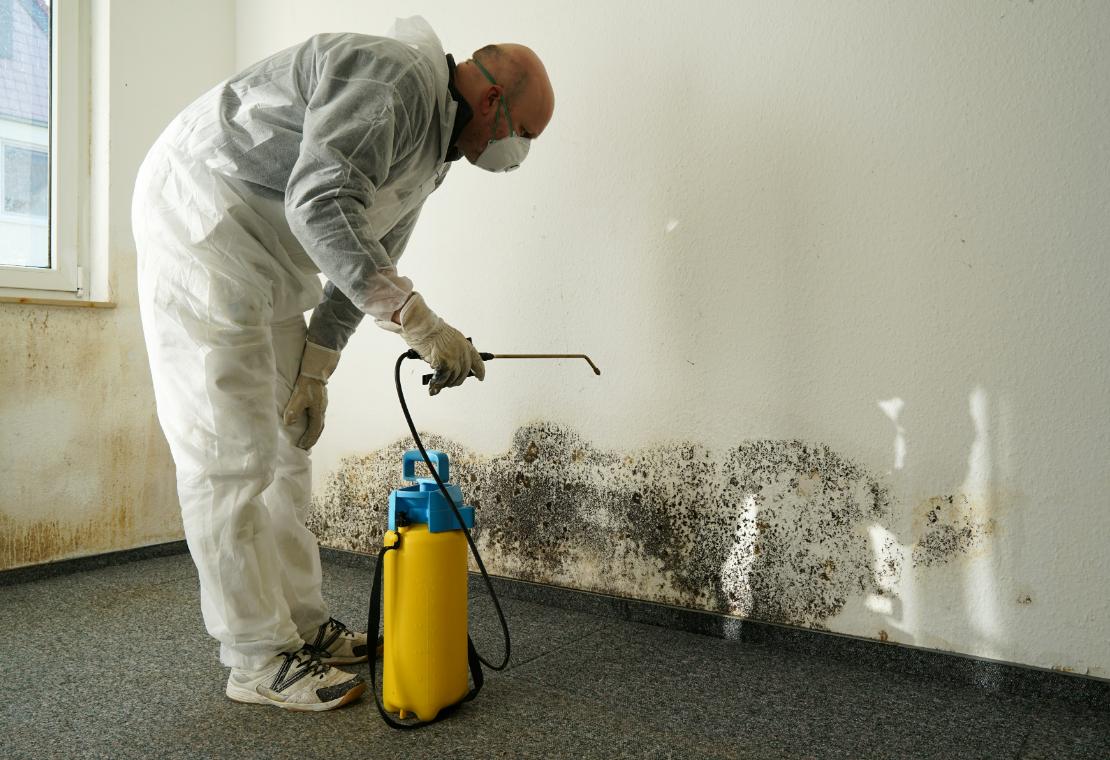
In Haggerston, effective mould removal involves more than just cleaning surfaces; it requires a comprehensive approach to mould remediation. Professionals begin by identifying root causes of mould growth, such as humidity levels, poor ventilation, and water damage. Mould cleaning in Haggerston focuses on eliminating visible mould and its spores while addressing the factors contributing to its proliferation. This ensures long-term mould prevention, making homes healthier and safer for residents.
Specialised equipment is used to assess humidity, ventilation, and signs of water damage in your property. The goal of mould remediation in Haggerston is not only to remove existing mould but also to implement strategies that prevent its future emergence. This includes treatment of walls, ceilings, and floors, while soft furnishings are typically excluded from the process. By ensuring optimal moisture balance and controlling condensation, professionals can effectively restore your environment and protect against future mould issues.
In Haggerston, mould remediation starts with a comprehensive inspection to identify the extent of the mould infestation. Once assessed, we utilize HEPA air filtration systems to capture airborne spores, ensuring a safe breathing environment. Our controlled treatment protocol includes the application of HOCl (hypochlorous acid), a powerful yet safe disinfectant that effectively neutralizes mould at the source. Complementing this, we employ ULV fogging technology, which provides an even distribution of treatment across all surfaces and airspaces, ensuring thorough coverage and eliminating hidden mould.
Following the chemical treatment, physical mould removal is carried out using professional-grade equipment equipped with H-Class filtration to safely extract mould particles from your property. The process is capped off with final air cleaning, ensuring the air quality is restored. Our mould remediation in Haggerston offers long-term protection by preventing regrowth, improving indoor air quality, and ensuring stability in your living environment. With our expert mould removal services in Haggerston, you can breathe easier knowing your home is safe and healthy.
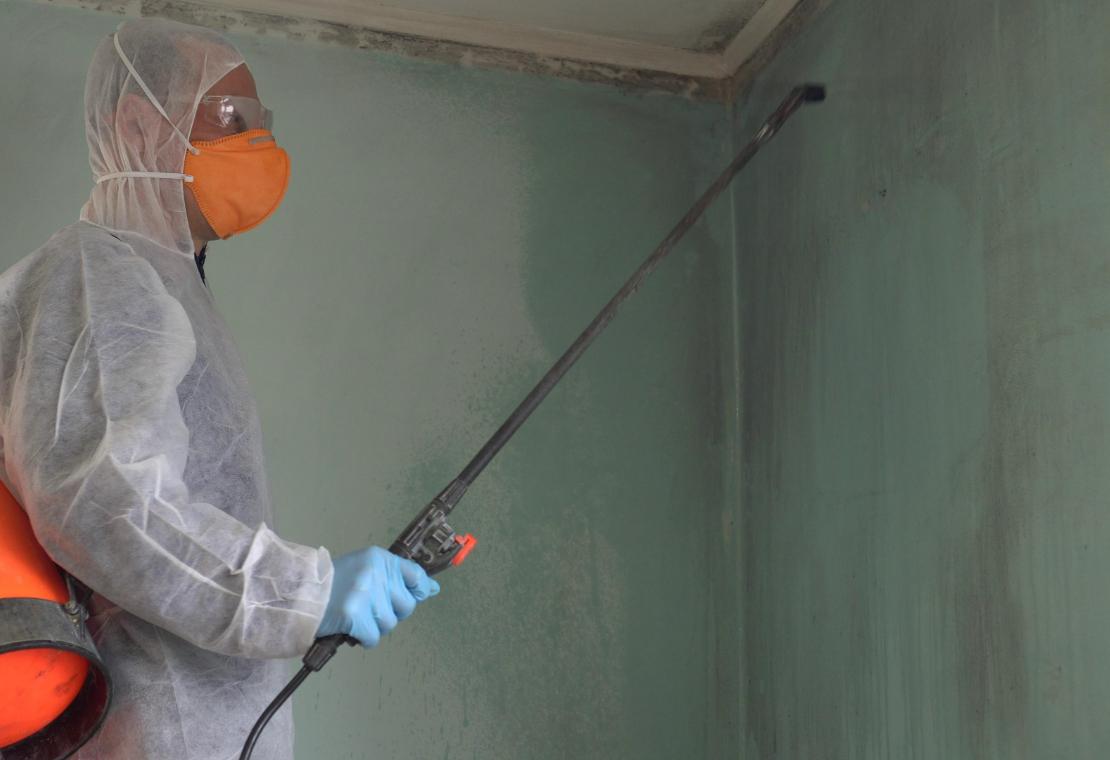
Booking mould cleaning is quick and designed to get results without unnecessary delays.
Share what you’re dealing with, whether it’s visible mould, damp patches, or a recurring problem. This helps determine the right approach, from mould cleaning to full mould remediation.
A specialist checks the affected areas and identifies what’s causing the mould, such as excess moisture, condensation, or poor ventilation. This ensures the issue is treated properly, not just on the surface.
You’ll get a straightforward quote based on the level of contamination and the type of mould removal required. The service is tailored to ensure effective results and long-term protection.
The treatment removes mould and improves indoor air quality, helping to prevent future growth and create a healthier living space. It also targets the root cause of the problem for longer-lasting results.
Mould removal requires more than basic cleaning, which is why it’s handled by trained mould remediation specialists experienced in treating both visible and hidden contamination. Each specialist assesses the full extent of mould growth, including underlying causes such as excess moisture, condensation, and ventilation issues, ensuring the problem is addressed properly rather than just on the surface.
Number of bookings: 205
With Fantastic Services for: 3 years
Other specialities:
Number of bookings: 214
With Fantastic Services for: 3 years
Other specialities:
Number of bookings: 8301
With Fantastic Services for: 6 years
Other specialities:
What the reviews say
"Quick and effective rodent control service. Their timely response and efficient methods resolved the problem with expertise."
Alongside professional mould removal and mould cleaning, a range of additional property care services is available to help maintain a healthier indoor environment.
Mould can spread quickly and impact both health and property if not treated in time. Book a service today to remove mould, improve indoor air quality, and restore a cleaner and healthier living environment.
A musty smell in a ground-floor flat with nothing visible on any wall usually means the problem is under the floor. Haggerston sits low and close to the canal, and its Victorian terraces and older estate houses in E2 were built with suspended timber ground floors over a shallow ventilated void. That void only does its job while air can cross it, and a century of added paving, raised borders, render taken down to the ground and painted-over airbricks has left a great many of them effectively sealed.
With no cross-flow, the air under the boards sits at high humidity indefinitely and nothing evaporates. Joist ends and wall plates bedded into damp masonry stay wet, the underside of the boards grows a felt of fungal material, and spores drift up through gaps at the skirting and around pipe penetrations into the room. The floor feels cold and gives slightly underfoot near the external wall. None of this is visible from above, which is why the smell arrives long before any mark and why treating the walls alone achieves nothing.
Three different things get called the same name and the difference determines the scale of the work. Surface mould on the underside of boards wipes and treats off once the void is dried and ventilated. Wet rot softens and darkens timber locally, exactly where it stays wet, and is dealt with by removing the moisture and cutting out the affected timber. True dry rot travels through masonry with visible strands, can reach timber some distance from the original source and has a distinct mushroom smell; it needs the moisture source removed and a considerably wider strip-out. Calling wet rot dry rot is expensive, and the reverse is worse.
Very little of this requires major disruption. A single board is lifted in a corner, or a borescope goes in through an airbrick, and the void is viewed and photographed. Moisture readings are taken at joist ends and wall plates rather than in the middle of a joist, since the ends are where failure starts. The number and position of airbricks is counted against the floor area they are supposed to serve, and external ground level is measured against the internal floor. Where the void is shallow or partly filled with builder's rubble, that shows up immediately and explains a great deal.
Remedies are usually modest and permanent: clearing blocked airbricks, forming new ones on the opposite elevation to create a through-path, sleeving a vent through a thickened wall, lowering external ground or cutting a drained margin along it, and fitting telescopic vents where under-floor insulation has been added. Where paving has been laid up over the airbricks, a channel or a lowered strip restores the airflow without relaying the whole patio. The same conditions and the same solutions are found next door in E2, and Bethnal Green mould removal specialists covers that district.
Lifting and refixing boards without splitting them, forming a permanent access hatch and fitting vents is practical joinery covered by our specialists in the area. Sub-floor voids are the main rodent highway in terraced housing, and where droppings or runs are found alongside the damp, fully insured flea treatment in Wapping deals with the infestation before the floor is closed. Once boards are back down the room needs a thorough clean, since lifting a floor releases a century of dust, and cleaning services prices in Wapping handles that. Method and guarantee detail is on our national mould removal and remediation service.
An inspection takes a couple of hours and leaves the floor as it was found, with one board refixed and a written record of the void condition, readings at timber contact points and photographs from the borescope. Furniture needs clearing from the perimeter of the room rather than from the whole floor, and any fitted carpet in the inspection corner will have to be lifted at an edge. Remedial work is priced by floor area, by the number of new vents formed and by whether timbers need replacing rather than drying. Drying the void, where that is required, runs for an agreed period with readings repeated at the end.
Skip the line, request and
book a service online