Mould Removal and Remediation Hackney Wick
Expert mould treatment services focusing on black mould, damp walls, and long-term prevention of mould recurrence.


Expert mould treatment services focusing on black mould, damp walls, and long-term prevention of mould recurrence.
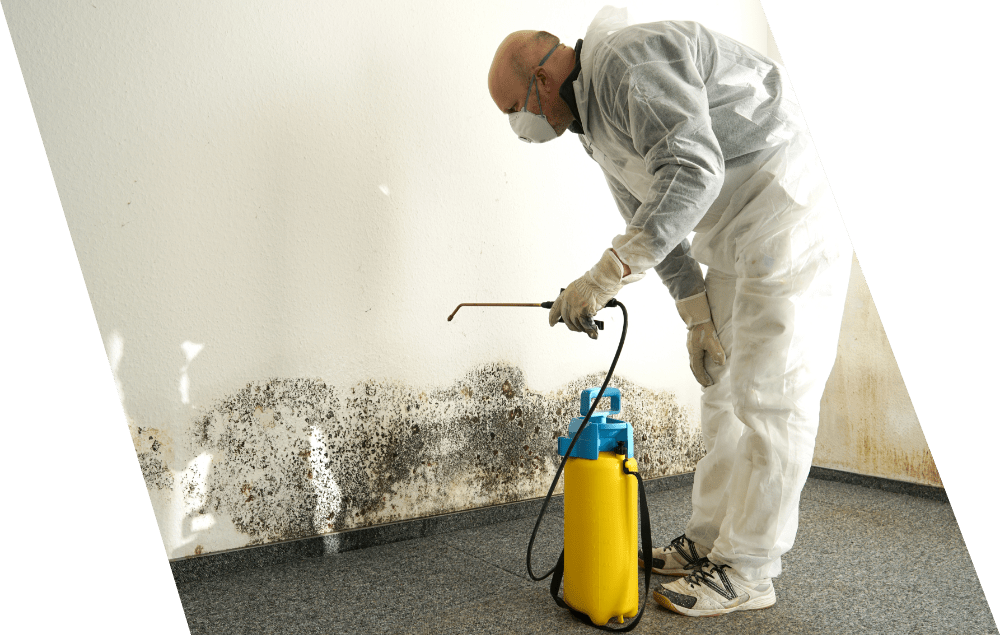
The cost of mould removal depends on the size of the affected area and the type of treatment required. After a detailed inspection a clear, personalised quote is provided based on the scope of work.

Mould removal in Hackney Wick entails a thorough understanding of the conditions that foster mould growth. Mould cleaning services focus on identifying the root causes, including excess humidity and inadequate ventilation. Mould remediation in Hackney Wick must, therefore, address these underlying issues, ensuring a sustainable solution that goes beyond mere surface cleaning. This holistic approach helps to prevent future mould outbreaks, creating a healthier living space.
Professionals are equipped with the latest tools to accurately assess humidity levels, ventilation efficiency, and potential water damage. Mould remediation aims to eliminate visible mould while implementing measures to avoid recurrence, such as treating walls, ceilings, and floors. Soft furnishings may need to be addressed separately. By focusing on condensation control and maintaining a proper moisture balance, experts provide effective mould prevention strategies for homeowners in Hackney Wick.
The mould remediation process in Hackney Wick begins with an in-depth inspection to determine the severity of the mould problem. Following this, we inject the area with HEPA air filtration, which effectively traps mould spores in the air. Our structured approach includes controlled treatment using HOCl, a safe and efficient solution that eliminates mould at its root. We further enhance this process with ULV fogging technology, allowing for an even application across surfaces and hard-to-reach areas to ensure no spore is left behind.
After thorough treatment, we physically remove mould using high-grade tools featuring H-Class filtration to capture any residual particles. The final phase involves advanced air purification methods aiming for pristine air quality. Our mould remediation services in Hackney Wick are designed to deliver lasting effects, preventing future regrowth, improving air circulation, and ensuring a long-term stable environment. Trust our mould removal experts in Hackney Wick to safeguard your home from harmful mould.

Booking mould cleaning is quick and designed to get results without unnecessary delays.
Share what you’re dealing with, whether it’s visible mould, damp patches, or a recurring problem. This helps determine the right approach, from mould cleaning to full mould remediation.
A specialist checks the affected areas and identifies what’s causing the mould, such as excess moisture, condensation, or poor ventilation. This ensures the issue is treated properly, not just on the surface.
You’ll get a straightforward quote based on the level of contamination and the type of mould removal required. The service is tailored to ensure effective results and long-term protection.
The treatment removes mould and improves indoor air quality, helping to prevent future growth and create a healthier living space. It also targets the root cause of the problem for longer-lasting results.
Mould removal requires more than basic cleaning, which is why it’s handled by trained mould remediation specialists experienced in treating both visible and hidden contamination. Each specialist assesses the full extent of mould growth, including underlying causes such as excess moisture, condensation, and ventilation issues, ensuring the problem is addressed properly rather than just on the surface.
Number of bookings: 123
With Fantastic Services for: 2 years
Other specialities:
Number of bookings: 298
With Fantastic Services for: 3 years
Other specialities:
Number of bookings: 3178
With Fantastic Services for: 4 years
Other specialities:
Alongside professional mould removal and mould cleaning, a range of additional property care services is available to help maintain a healthier indoor environment.
Mould can spread quickly and impact both health and property if not treated in time. Book a service today to remove mould, improve indoor air quality, and restore a cleaner and healthier living environment.

Removing mould from a space somebody lives and works in is a containment job before it is a cleaning job. Hackney Wick has a concentration of converted industrial units and live-work studios in E9 where one open volume holds a bed, a desk, tools, materials and finished work, and there is no second room to shut the dust into. Disturbing a colonised wall in that setting without controlling the air first spreads spores and debris across everything in the space, including the things that are hardest to clean.
The first hour on site is spent building an enclosure rather than touching the growth. Polythene sheeting on a temporary frame separates the work area from the rest of the volume, with a zipped access flap and taped edges at floor, wall and ceiling lines. Openings within the zone, including any ventilation terminal that would carry dust elsewhere, are sealed or isolated. Equipment and stock either come out of the space entirely or are wrapped in place. Floor protection runs from the enclosure to the door, because that route will be walked repeatedly with bagged waste.
Containment on its own is not enough, since any enclosure leaks. An extraction unit draws air out of the zone through a filter and discharges it outside, so the enclosure sits at slightly lower pressure than the space around it and leakage flows inwards rather than out. A filtered air cleaner runs inside the zone to reduce the airborne load while work proceeds. Sequence matters: equipment is switched on before anything is opened up and left running afterwards while the air settles, rather than being packed away the moment the wall looks clean.
Contaminated plasterboard is cut back with hand tools rather than dry-sanded, since sanding produces the finest and most mobile dust of anything done on a site like this. Material is bagged inside the enclosure and the bags wiped before they leave it. Operatives work in coveralls with appropriate respiratory protection and gloves, and tools are cleaned before they come out. The enclosure itself is wiped down before it is taken apart, and the sheeting is disposed of as waste rather than folded up for reuse.
Industrial fabric responds differently from domestic plasterboard, which is useful here. On dense concrete, painted steelwork and brick, growth sits in the coating and in the dust held on a rough surface rather than within the substrate, so mechanical cleaning followed by a treatment left to dwell for its full time achieves a durable result without cutting anything out. That keeps the character of a converted unit intact. The same method is used nearby, and Homerton mould removal services covers the adjoining district.
Once the enclosure comes down, boarding, boxing and fixings have to go back, and handyman across Homerton covers that stage. Large industrial buildings with yards, service voids and loading doors carry a standing pest risk, and our local team deals with activity found during the work. A whole-volume clean afterwards, including at height, is handled by cleaning services for flats in Leyton. Containment standards, products and guarantee terms are set out on Fantastic Services.
Practical requirements are worth confirming when booking. The work needs power for extraction and air cleaning, water access, a route to the door that can be protected, and somewhere waste can be staged before it is removed. Where the unit can be vacated for the day the job is faster and the result is better, though occupied working is normal and planned around. Equipment usually stays in place beyond the working day so the air is still being filtered overnight. Pricing reflects the enclosure size, the equipment on site and how long it runs, with strip-out and reinstatement quoted as separate items.
Skip the line, request and
book a service online