The rear extension is where Bow houses fail. The narrow back addition on an E3 terrace, the closet wing holding a galley kitchen with a bathroom above it, was frequently built in half-brick, one skin thick, under a shallow lean-to or a flat roof added later. It puts the two wettest rooms in the house against the coldest walls in the house. Mould grows there while the front rooms show nothing at all, and households often assume they are doing something wrong rather than living in a poorly built appendage.
A wall one brick thick behaves differently
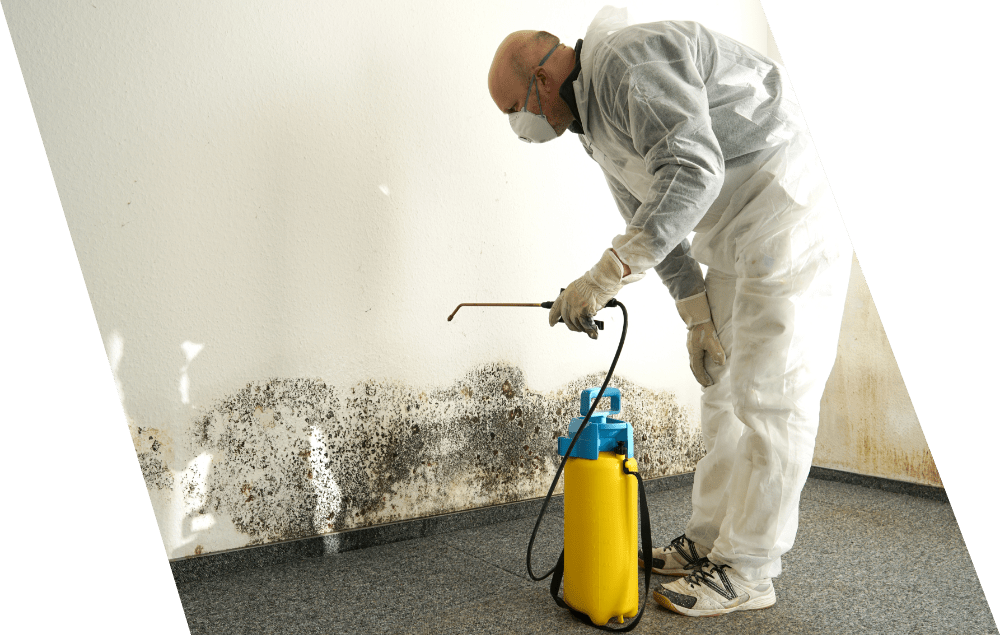
There is no cavity, no insulation and very little thermal resistance in a half-brick wall, so its internal face sits close to outside temperature for most of the winter. Plaster applied directly to that brick has nothing to buffer the moisture a shower or a boiling pan puts into the room, so condensation forms within minutes of the room being used and takes hours to clear. The pattern is distinctive: heavy growth to about waist height on the external wall, around the window reveal, and in the corner where the addition meets the main rear wall of the house.
Lining it without creating a new problem
Insulated lining is effective on this construction but unforgiving of poor detailing. Board has to be bedded continuously so no void is left behind it, because an air gap behind a lining becomes a cold cavity that collects condensate out of sight. The build-up is returned into window and door reveals and closed at floor and ceiling junctions, otherwise the cold path simply moves to the edges. Vapour control has to match the system chosen, and on a solid wall that needs to dry inwards a breathable lime-based approach is often the better answer than a sealed one. Any fitted unit is held off the new surface on battens.
The roof above the back addition
Half the problems blamed on the wall come from above it. These additions typically sit under a parapet gutter shared with the neighbouring house, or a later flat roof whose upstand against the main rear wall has failed. Old felt ponds where it has sagged between joists, a valley silts up with moss, and lead or flashing at the abutment lifts. Water then tracks along a joist and appears a metre or more from the actual defect, which is why internal staining is a poor guide to where the repair belongs. Inspection from above, ideally during or just after rain, is worth far more than guesswork from inside.
Party walls and shared repairs
Parapet gutters and abutments on back additions are usually shared, and a repair on one side without the other lasts until the next storm. Agreeing the line of the repair with a neighbour, and access across their property if the gutter is only reachable that way, is part of organising the job rather than an afterthought. Resetting a loose flashing, renewing a failed upstand seal and refitting an extract cowl is work covered by the service in full. Damp voids in these lean-to structures are also a common harbourage, and cockroach control in Bow deals with that where an inspection finds evidence.
Comparable housing nearby
The same closet-wing construction runs right across the district, and the mould removal team in Mile End covers an adjoining area where the back additions are near-identical. After lining works and plastering, a kitchen or bathroom needs a full clean before it goes back into service, and Mile End domestic cleaning handles that stage. Treatment methods, materials and guarantee terms are described on professional black mould removal.
Order of works and what it depends on
Sequence decides whether this holds. Roof and abutment repairs come first, then a monitored drying period, then lining, treatment and making good. Attempting all of it in one visit in February is how a job fails, because a wall lined while still wet traps the moisture behind the new surface. Weather governs the roof stage, so a slot is agreed with some flexibility built in. Pricing separates the stages: inspection, external repair, drying by duration, then internal works quoted by wall area and by whether insulated lining or plaster replacement is included. Access to the rear, including whether the addition can be reached without going through the house, is confirmed when booking.