The wettest part of a Victorian terrace is usually the part nobody can see from the ground. Behind the main roof, where the rear back-addition runs out towards the garden, there is very often a narrow gutter tucked between the return and the neighbour's return, draining through a single small outlet. In Canonbury, where whole streets were built to that pattern and most houses are now flats, that hidden gutter is behind a large share of the damp appearing at the top of a rear bedroom wall.
How a back-addition actually sheds water
The two returns of a pair of houses lean towards each other and the valley between them is formed as a lined gutter — historically lead, sometimes asphalt or a later single-ply patch — sitting on boards with very little fall. Rainwater from both slopes arrives in that channel and leaves through one outlet, often at the far end from where anyone can reach. Alongside it, parapet walls with coping stones separate one property from the next, and the gutter is dressed up behind an upstand. It is a sound arrangement when it is clear and intact, and a reliable source of internal damp when it is not.
The ways it fails
Leaf litter and moss collect at the outlet and dam it. Once water ponds, it finds the weak points: a split in lead at the upstand where it has been flexing for a century, a lap that has opened, a cracked fillet where the gutter meets the parapet, or a nail hole under standing water. In a freeze the ponded water lifts the lining further. Parapet copings with failed joints let water straight into the wall head. Nesting material dropped into the channel is a common cause of blockage, and where a roof void or gutter run is found occupied, trusted flea treatment in Canonbury handles that before repairs are carried out.
Where it shows up inside
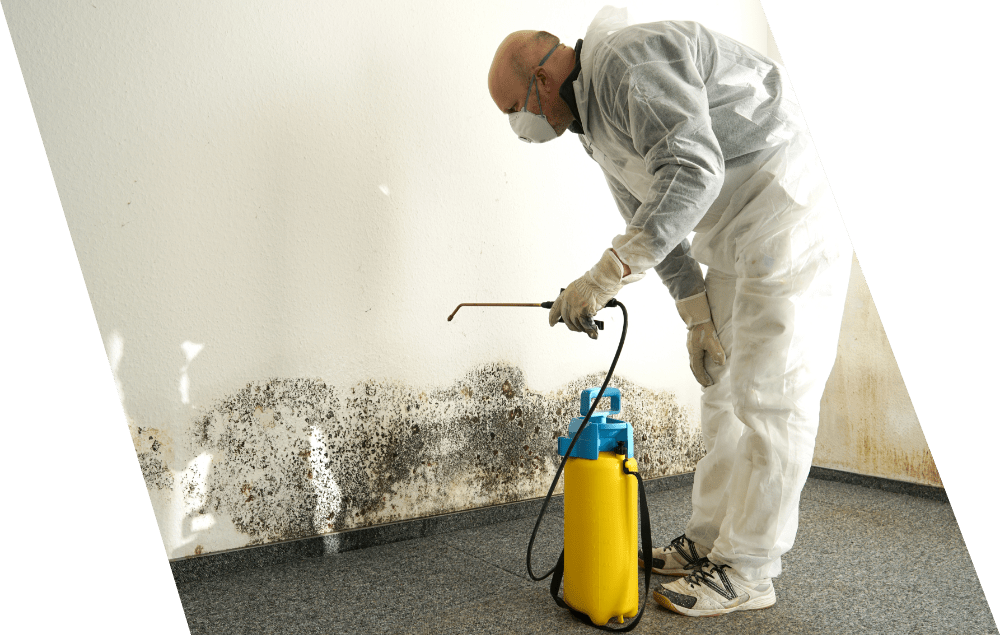
The signature is distinctive. Damp at ceiling level in the rear bedroom, strongest in the internal corner where the return meets the main house. A band of staining along the top of the party wall. Mould in a built-in cupboard backing onto that wall, often before anything is visible in the open room. Paint blistering on the reveal of a rear window directly below. It appears within a day of heavy rain and fades between wet spells, which is the clearest distinction from a purely internal humidity problem — that one tracks the season, not the weather. our mould removal and remediation team sets out how those two patterns are separated.
Why treating the surface fails here
This is liquid water arriving in quantity, not vapour landing on a cold surface. Applying a biocide and repainting removes the appearance for as long as the weather stays dry, and the patch returns with the next downpour. Worse, plaster and lath that are being soaked and dried repeatedly lose their key, and the joist ends and wall plate buried in the wall head at exactly that point are the timbers most at risk of decay in the whole house. Leaving it for another winter converts a roofing repair into a structural one. Similar failures across the neighbouring district are covered by mould removal for homes in Pentonville.
Access, neighbours and agreeing the repair
A shared valley gutter belongs to two properties, and a proper repair generally needs both sides clear and both parapet edges dressed. In practice this means a conversation with next door, and where the houses are in flats, with a freeholder or managing agent as well. Reaching the gutter usually calls for a tower or scaffold through the rear, occasionally roof access through a hatch. Clearing outlets, patching lining, renewing a fillet and making good plasterwork afterwards is covered by Canonbury odd jobs.
Sequence of work and what to expect
The gutter is dealt with first, then the wall is allowed to dry, which takes weeks rather than days in a solid wall and is judged on meter readings rather than appearance. Treatment and replastering follow, with timber checked and cut back where it has gone soft. Only then is decoration worth doing. Quoting separates the roof-level work, which depends on access, from the internal remediation, which depends on how much plaster is being removed. Rooms that have had ceilings down and walls hacked off need a proper clean before furniture returns, and our Islington team handles that end of it.