


Mould Removal and Treatment Mile End
Trusted mould remediation specialists providing safe, effective, and complete mould removal for homes and businesses.

Trusted mould remediation specialists providing safe, effective, and complete mould removal for homes and businesses.
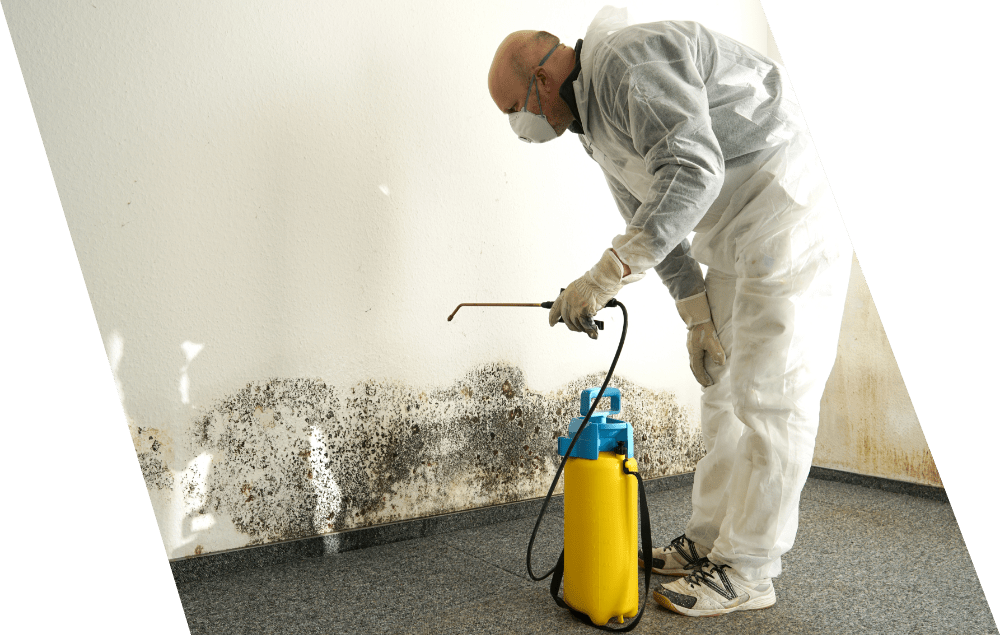
The cost of mould removal depends on the size of the affected area and the type of treatment required. After a detailed inspection a clear, personalised quote is provided based on the scope of work.
| Small mould area (e.g. around a window or corner) | Medium mould area +£100 (large section of a wall affected) | Large mould area +£150 (more than one wall or ceiling) | ||||
|---|---|---|---|---|---|---|
| Room | Standard | Fantastic Club* | Standard | Fantastic Club* | Standard | Fantastic Club* |
| Bedroom | £350 | £320 | £450 | £420 | £500 | £470 |
| Bathroom | £350 | £320 | £450 | £420 | £500 | £470 |
| Kitchen | £350 | £320 | £450 | £420 | £500 | £470 |
| Living / Dining room | £350 | £320 | £450 | £420 | £500 | £470 |
| Hallway / Landing | £350 | £320 | £450 | £420 | £500 | £470 |
| Utility room | £350 | £320 | £450 | £420 | £500 | £470 |
| Paid inspection | £50 | |||||
| *Price for members of the Fantastic Club. The Fantastic Club is a yearly subscription of £89. | ||||||

Our dedicated mould removal service in Mile End kicks off with a comprehensive inspection and moisture assessment to evaluate the intensity of mould contamination and its causes. Mould is often the result of conditions such as condensation, high humidity levels, insufficient ventilation, or water damage. Identifying these sources is vital for effective mould remediation in Mile End. Our focus is on treating structural surfaces, including walls, ceilings, and floors, where mould typically develops, leaving soft furnishings untreated.
The mould cleaning process we offer extends beyond surface-level interventions. We also prioritize the removal of airborne mould spores to ensure a clean and safe environment. With our expertise in damp and mould removal, we aim not only to resolve current mould infestations but to thwart future growth, thereby protecting the health of your household and preserving indoor air quality. Our approach ultimately prevents structural damage, fostering long-term safety and wellness in your living space.
In Mile End, successful mould remediation starts with a comprehensive inspection and moisture assessment, utilising professional hygrometers to uncover hidden dampness. This crucial first step in mould removal allows specialists to identify problem areas and implement strategies to prevent recurrence. To maintain safe indoor air quality, HEPA filtration systems and air scrubbers are used to capture airborne mould spores during the treatment phase, ensuring a healthier environment as the process unfolds.
The skilled application of HOCl (Hypochlorous Acid) treatment follows, offering a non-toxic solution that effectively neutralises mould and bacteria at the microscopic level. The use of ULV (Ultra-Low Volume) fogging technology ensures the even distribution of treatment, infiltrating challenging areas such as corners and gaps. Physical mould removal is then executed using advanced equipment with H-Class filtration, containing any harmful particles. The concluding steps include air purification, reducing airborne spores, and improving indoor air quality, which are vital components of damp and mould removal in Mile End.

Booking mould cleaning is quick and designed to get results without unnecessary delays.
Share what you’re dealing with, whether it’s visible mould, damp patches, or a recurring problem. This helps determine the right approach, from mould cleaning to full mould remediation.
A specialist checks the affected areas and identifies what’s causing the mould, such as excess moisture, condensation, or poor ventilation. This ensures the issue is treated properly, not just on the surface.
You’ll get a straightforward quote based on the level of contamination and the type of mould removal required. The service is tailored to ensure effective results and long-term protection.
The treatment removes mould and improves indoor air quality, helping to prevent future growth and create a healthier living space. It also targets the root cause of the problem for longer-lasting results.
Mould removal requires more than basic cleaning, which is why it’s handled by trained mould remediation specialists experienced in treating both visible and hidden contamination. Each specialist assesses the full extent of mould growth, including underlying causes such as excess moisture, condensation, and ventilation issues, ensuring the problem is addressed properly rather than just on the surface.
Number of bookings: 213
With Fantastic Services for: 2 years
Other specialities:
Number of bookings: 8301
With Fantastic Services for: 6 years
Other specialities:
What the reviews say
"Quick and effective rodent control service. Their timely response and efficient methods resolved the problem with expertise."
Number of bookings: 139
With Fantastic Services for: 2 years
Other specialities:
Alongside professional mould removal and mould cleaning, a range of additional property care services is available to help maintain a healthier indoor environment.






























Mould can spread quickly and impact both health and property if not treated in time. Book a service today to remove mould, improve indoor air quality, and restore a cleaner and healthier living environment.

Damp and mould are treated as a hazard in law, not as a housekeeping failure, and in Mile End that distinction is tested more often than in most places. E3 holds a dense stock of shared houses and small purpose-built flats let room by room, and a licensed house in multiple occupation carries conditions covering ventilation, heating and the condition of the fabric that the licence holder has to meet. Where a room grows mould every winter, the question of who is responsible for putting it right has a legal answer rather than a negotiable one.
A property let for residential occupation has to be fit for human habitation, and damp and mould is one of the hazards assessed under the housing health and safety rating system used by local authority environmental health teams. A dwelling with no working mechanical extraction in a windowless bathroom, defective glazing, a persistent unresolved leak or inadequate heating is not compliant, regardless of how the occupants live. Councils can require works and set timescales. Social landlords work to statutory timescales for investigating and acting on reports of damp and mould, which shortens the argument considerably.
Complaints made by phone rarely move anything. What moves a case is a dated written assessment naming the cause, listing recommended works, and supported by readings and photographs taken at identified positions. An environmental health officer, a letting agent or a deposit adjudicator will all read the same document and reach the same conclusion from it. Assessments are booked as standalone visits and are not conditional on the recommended works being ordered, which matters when a tenant needs the report before anyone has agreed to pay for repairs.
Mould found at the end of a tenancy is routinely attributed to how the occupants lived, and deductions get proposed on that basis. Deposit scheme adjudicators look for cause, not for who last wiped a wall, so the useful counterweight is an assessment showing a structural or ventilation origin, ideally raised during the tenancy rather than produced afterwards. A check-in inventory that records the condition of the walls, and correspondence reporting the problem when it first appeared, do more than photographs taken on the last day. Landlords benefit from the same discipline for the opposite reason.
The void period is the only time real work is easy, and in a high-turnover area it gets squeezed to a few days. Treating the growth, drying the surface, making good and fitting proper extraction before new occupants arrive costs less than repeating a cosmetic repaint every summer. Small building works alongside remediation, such as fitting a vent, replacing a grille or making good plaster, are covered by trusted furniture assembly in Mile End. Shared kitchens and high occupancy also make these houses attractive to pests, and pest control services in Mile End deals with an infestation found during the same turnaround.
The same licensing conditions and the same construction run through the neighbouring streets, where the Bow branch covers an adjoining district. Once works are finished a let property normally needs a full clean to inventory standard before it is handed over, and Bow cleaning services specialists deals with that. What a full remediation involves, once works have been agreed, is set out on experienced black mould removal.
Practicalities in a tenanted property are as important as the technical work. Entry needs proper notice and a time that suits the occupants, and in a house let room by room that often means working around shift patterns and agreeing which communal areas can be closed off. Where an agent holds keys, confirming that in advance avoids a wasted visit. Assessments are priced as a fixed visit with a written report; remediation is quoted by the number of rooms and by whether extraction, plaster repair or making good is included. The report separates urgent items from those that can wait, which is what allows a landlord to programme work and a tenant to evidence a request.
Skip the line, request and
book a service online

