In a block served by a central plant room, some flats run too warm and others run cold, and both ends of that range produce mould. Much of the newer housing in Bethnal Green, and a good deal of the refurbished estate stock, is heated this way: hot water is generated in one place, carried up through risers and delivered to each flat through a heat interface unit in a cupboard. The system is efficient in principle. In practice the pipework and the cupboard it lives in cause a set of damp problems that have nothing to do with how the household behaves.
Heat that arrives whether it is wanted or not
Riser pipework runs hot all year, because hot water has to be available on demand. Where the insulation on those pipes is thin, damaged or missing at the fittings, heat leaks into the cupboard and from there into the hall. Flats near the top of a riser, or next to it, can be uncomfortably warm in midwinter with every valve closed. The occupier's only control is a window, which then gets opened permanently, and the flat is heated and ventilated at the same time all season.
The cupboard itself
An interface unit sits in an enclosure that is warm, unventilated and usually packed with coats, bedding and a vacuum cleaner. Textiles stored against a warm pipe and a cold external wall are a classic combination: the fabric takes up moisture from the flat's air, the outer face of the enclosure stays cool, and growth develops on the back of stored items long before it shows on any wall. Opening the door after a few months produces a smell rather than a visible patch.
Why the cold flats fare no better
At the other end of a network, flats can struggle to get enough heat, particularly where the unit is undersized for the flat or a valve has stuck. Those households heat one room, close the doors and dry washing indoors because the drying cupboard never gets warm. The moisture concentrates in the bedrooms, and the coldest external corner takes it. Two flats in the same block, on the same system, can present with opposite causes and identical-looking growth.
What can be changed and by whom
Pipe insulation in risers and cupboards is generally the responsibility of whoever manages the block, and getting it improved is the single most effective step in an overheated flat. Inside the flat, an occupier can clear and ventilate the enclosure, keep absorbent items off warm and cold surfaces alike, and press for the unit's controls to be checked. Where a door has swollen and no longer latches, that is both a security matter and a sign of sustained damp, and is covered by East London locksmith team.
Treating a flat on a shared system
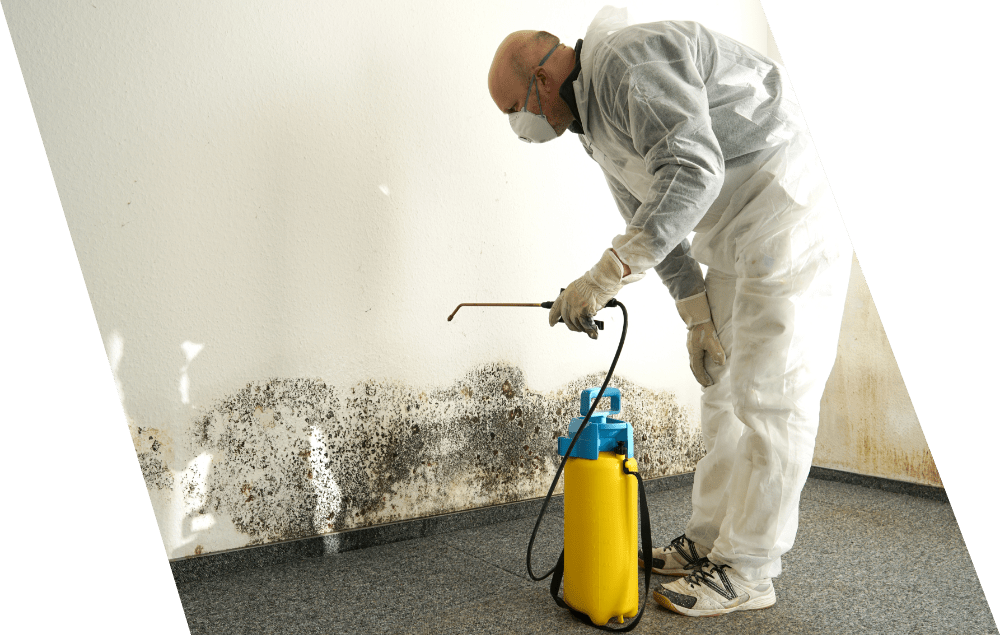
Remediation starts with the enclosure emptied and dried, growth removed from the structure and from any surface that can be salvaged, and porous stored items assessed separately. Affected wall and ceiling areas are cleaned and treated, and repeatedly wetted plaster is cut back where it has failed. Small repairs around the enclosure, shelving replaced and a vent formed in a door, are the sort of work handled by handyman cover across Bethnal Green. Warm, hidden enclosures also attract insects, and that side is covered by our Bethnal Green team.
Arranging the work
A first visit covers the flat, the enclosure and the hall together, with readings taken in the warmest and coldest rooms on the same day. Charges follow the area treated, the number of rooms and whether any lining is removed, so nothing is quoted before the inspection. Access to a communal riser, if it proves necessary, has to be arranged through the block's management. Comparable work in the streets to the north is covered by Haggerston mould removal services, and the general approach is set out under local black mould removal.