Moisture produced in a lower-ground kitchen rarely stays in that kitchen. In the tall, narrow terraces around Angel, where a house may run to four storeys over a basement on a plan barely wider than two rooms, the building behaves like a flue. Warm air rises through it continuously, carrying whatever water vapour it has picked up on the way, and deposits that load at the top. This is why the mould so often turns up in a top-floor bedroom belonging to someone who neither cooks nor showers there.
The pressure that drives it
Warm air inside is lighter than cold air outside. In a tall building that difference produces a small but constant upward pressure: air is drawn in at low level and pushed out at high level, with a neutral band somewhere in between where nothing much happens. The taller the house and the colder the day, the stronger the effect. It does not need a fan, an open window or a draught anyone can feel, and it runs all winter whether or not the household is at home.
The routes air actually takes
The paths are unglamorous. Gaps between floorboards and at the perimeter of each floor, the void alongside a soil pipe, the opening cut for a waste, the shaft left where services run up, and above all the staircase, which in a narrow terrace is a continuous vertical channel from bottom to top. Original houses had chimneys doing some of this work in a controlled way; once those are closed, the remaining leaks carry the whole flow, and they carry it straight past bedroom ceilings.
Why the top floor pays for it
At the top of the house the rising air meets the coldest surfaces in the building: the ceiling under an uninsulated void, the head of the stairwell, the corners of a rear bedroom on an exposed elevation. Vapour that was harmless at second-floor level condenses there. The usual clue is a mould pattern that ignores the room it is in. Nothing in that bedroom produces moisture, the window is opened every morning, and it still grows, while the kitchen three floors below stays clear.
What actually reduces the flow
Two interventions matter. The first is removing moisture where it is made, with extraction that genuinely runs at the point of production rather than a token fan on a long duct. The second is sealing the air paths at the top of the house so the flow has nowhere to discharge into the structure, which means the ceiling line of the highest storey, the hatch, and every service penetration on that floor. Sealing at the bottom without sealing the top simply moves the problem along.
Treatment through a tall house
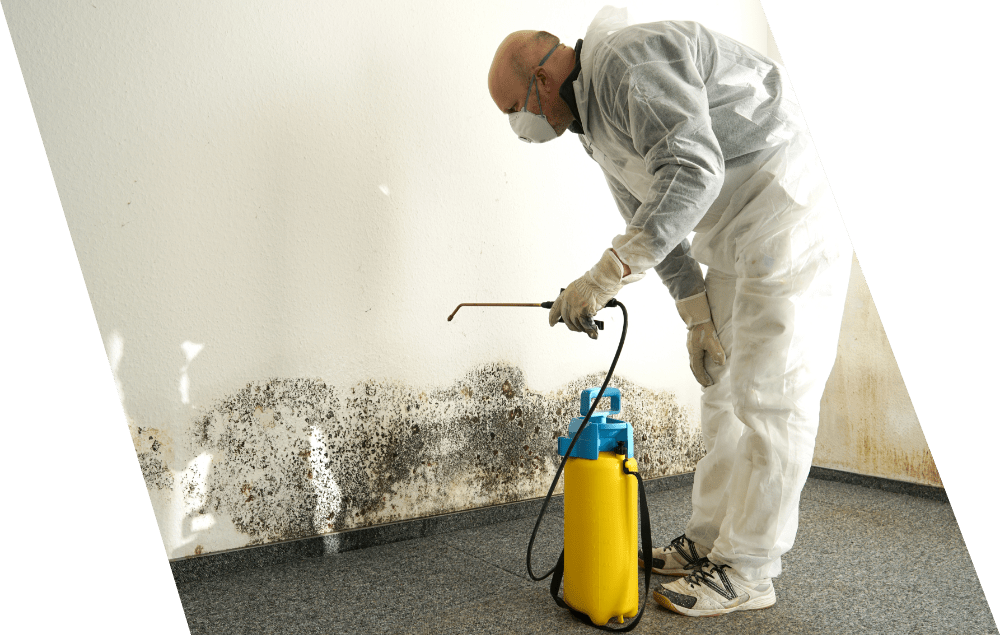
Work of this kind is rarely confined to one room. Growth is cleaned and treated on the affected surfaces, absorbent finishes that have been repeatedly wetted are cut out, and the sealing work is done alongside so the room is not simply redecorated back into the same conditions. Access is the practical constraint: four flights of narrow stairs with winders limits what can be carried, so equipment and waste are sized accordingly. Comparable multi-storey work nearby is covered by Pentonville mould removal team.
Practicalities of a booking
An initial visit covers the full height of the house rather than the complaining room, since the cause is usually elsewhere. Cost follows the number of rooms treated, the amount of sealing and any finishes being replaced. Loose fittings, hatch surrounds and staircase joinery often need attention once sealing is done, work suited to our handyman service in Angel, and a house with open service voids frequently has unwanted occupants in them, which is dealt with by pest control throughout Angel. Post-works clearing across several floors is covered by weekend after builders cleaning in North London, and the overall method is described under our mould removal and remediation service.