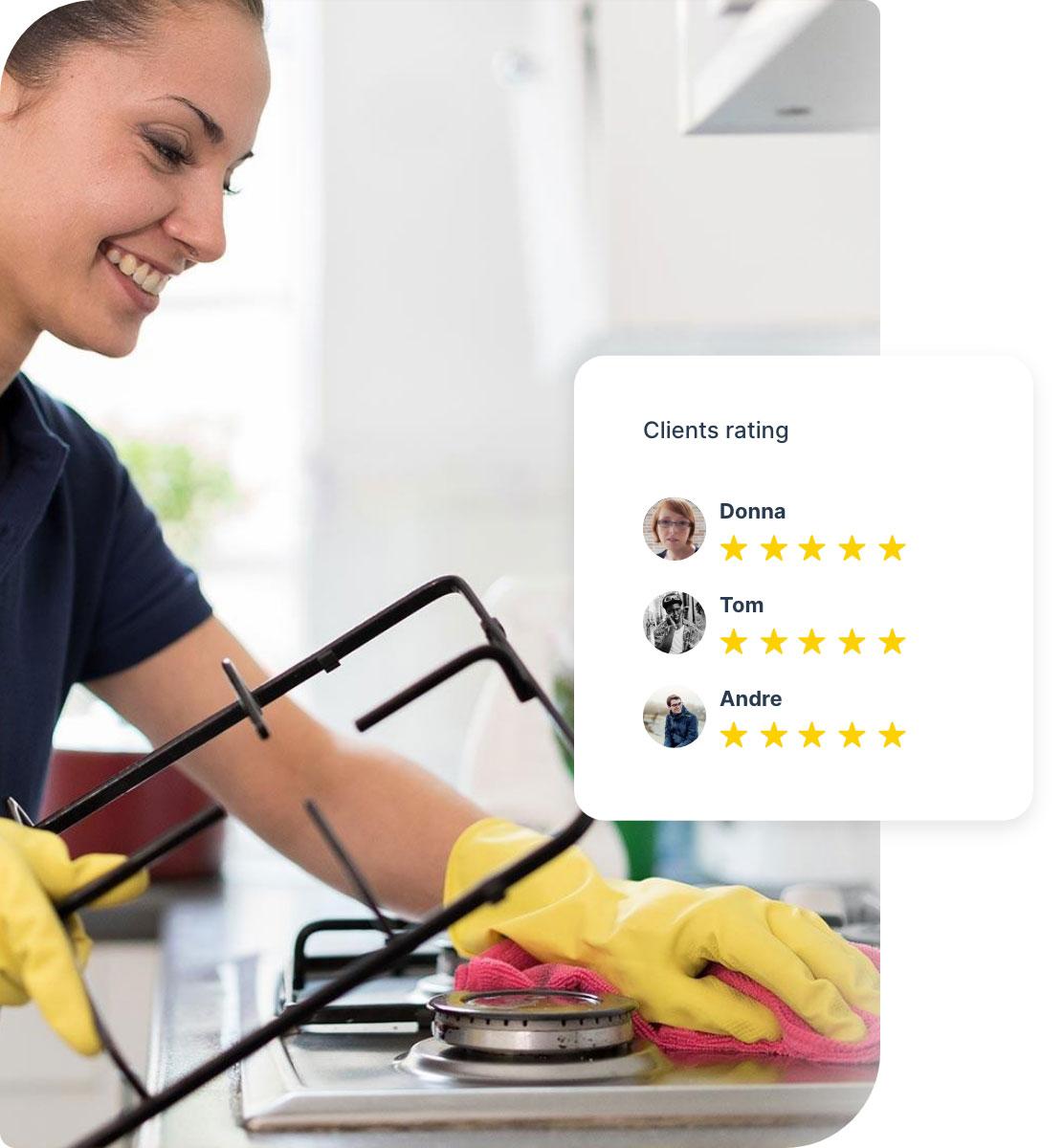
Letting somebody work in a home unsupervised is a trust decision before it is a cleaning decision, and most of the questions people actually want answered have nothing to do with technique. Who is coming, what happens if they are ill, who is responsible if a glass gets broken, whether the products are safe around a cat, and whether anyone will notice if the instructions are ignored. Those are reasonable questions and they are easier to settle before a first visit than afterwards.
What to establish before anyone is booked
Three things are worth confirming with any cleaning arrangement: that the work is insured against accidental damage, that the person attending has had their identity and right to work verified, and that there is cover when the regular cleaner is unavailable. A household relying on a single individual with no backup discovers the gap during half term or a bout of flu. It is also worth knowing who to contact when something needs raising, and how quickly a response is expected.
Products, equipment and the surfaces they have to suit
Ordinarily the cleaner arrives with everything needed, which avoids the situation where a visit stalls because a household has run out of something. Where a home has strong preferences, whether for fragrance-free products, for particular brands, or because someone in the house is sensitive to chemicals, those can be supplied by the household and used instead. What matters is that the arrangement is explicit, since assumptions about equipment are a common source of a disappointing first visit.
A cleaner cannot tell by looking that a worktop is honed limestone rather than a composite, that a floor is oiled rather than lacquered, or that a wall is painted in a chalk finish that marks if touched with a damp cloth. Natural stone is damaged by acidic descalers, waxed timber by anything alkaline, and induction hobs by abrasives. Ten seconds spent listing the vulnerable surfaces at the start prevents damage that no amount of goodwill afterwards can reverse.
The boundaries of a cleaning visit
Cleaning does not include tidying a household's possessions into places the cleaner has chosen, moving heavy furniture unaided, working at height beyond a small step, cleaning the outside of upper-floor windows, or dealing with animal or human waste beyond the ordinary. Clearing an accumulation of belongings is a different job with different equipment, and for anything of real bulk it needs man and van for landlords in Hackney rather than a cleaning booking.
How instructions actually get followed
Written priorities beat verbal ones, a short note left out beats a remembered conversation, and one named contact in the household beats three people giving different instructions. Feedback given early and specifically, rather than after three months of quiet dissatisfaction, is what shapes a visit into something that fits. The same principles apply in the neighbouring streets covered by Dalston weekly cleaning, where a good proportion of arrangements are for shared flats with several occupants.
One visit or a standing arrangement
A single booking suits a specific event: a property being handed back, a flat before a viewing, a house after builders. A repeating slot suits maintenance and gets steadily better as the cleaner learns the home. Most households start with one and move to the other, and the ongoing option is described under professional home cleaning in Hackney, priced by the length of the visit rather than by room count.
Keys, entry and what happens when nobody is in
Weekday visits to an empty home are normal and produce better results than cleaning around a household. Keys held under a written agreement, a keysafe with a changeable code, or a temporary code on a smart lock all work; an arrangement based on a neighbour being in does not, because it fails on the first day the neighbour is out.
Getting started
A first conversation covers property size, the rooms in scope, anything excluded, access, pets and any allergies, and it should end with an agreed duration rather than an open-ended promise. A first visit is usually longer than subsequent ones because it absorbs the backlog. The full set of services available around the home is listed on professional home cleaning.