Pulling ivy off a wall in one long sheet is how soft lime pointing ends up on the ground along with it. The plant does not twine or cling with tendrils; it produces adventitious rootlets that push into every open joint, crack and soft patch, and where the mortar is nineteenth-century lime rather than cement, those roots have found plenty to hold. On the older terraces and boundary walls of E8, ivy removal is therefore a slow, judgement-based job rather than a strong pull, and half the decision is whether it should come off at all.
Taking a climber off masonry without taking the wall with it
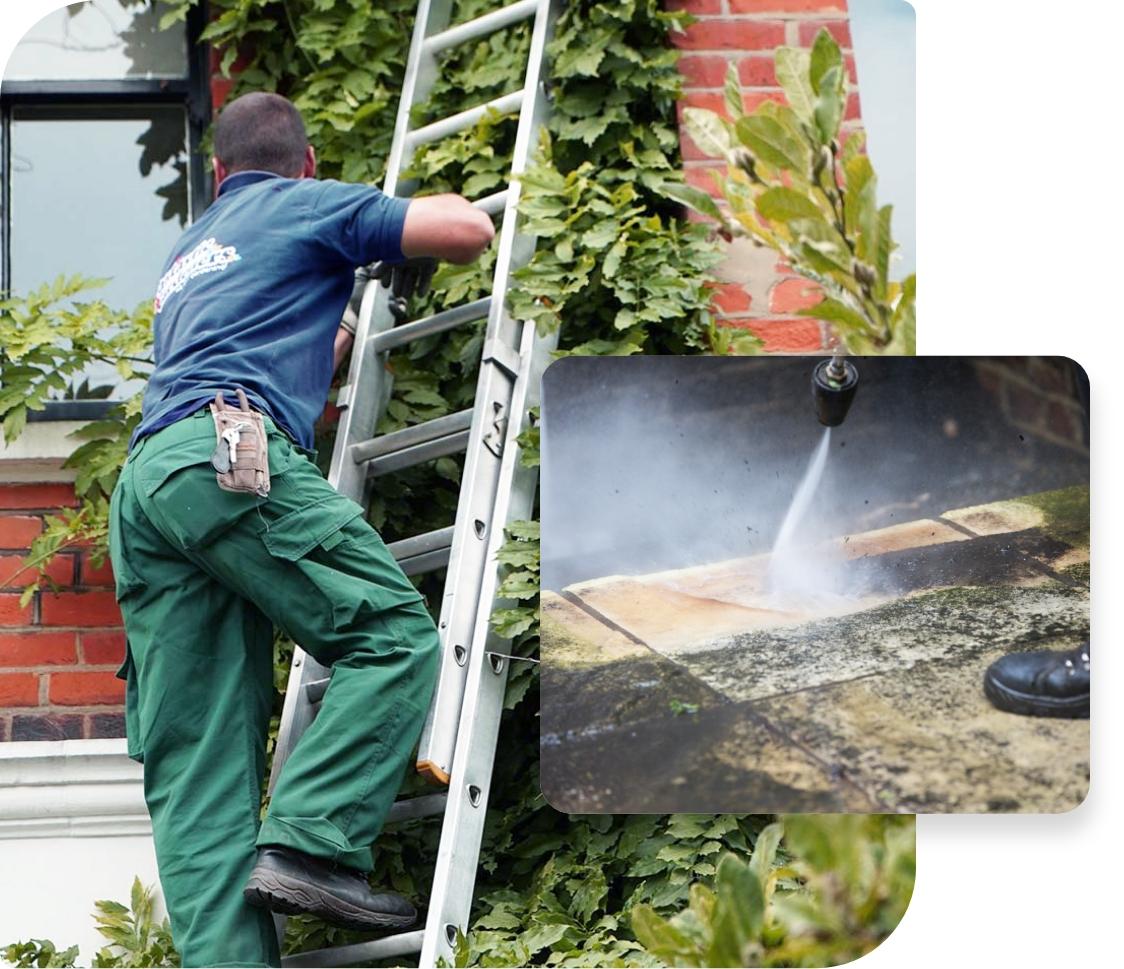
The method is to sever the stems at the base first and leave the top growth to die back for several weeks. Dead rootlets release their grip far more readily than living ones. The growth is then eased off in short sections with the flat of a scraper worked under the stem rather than levered outwards, following the line of the brick courses. Anything that resists is cut flush and left to weather off. Stems that have grown behind a downpipe, under a sill or into a soffit are teased out individually.
When the ivy is better left in place
On a sound wall, an established evergreen cover moderates temperature swings, sheds rain off the face and supports a great deal of wildlife, including late nectar and winter berries at a time of year when nothing else offers either. The sensible compromise on many properties is to keep it and control it: clipped hard back from gutters, window reveals, roof edges and the tops of walls once a year, and kept off timber entirely. That annual trim is a far smaller job than a full strip, and it belongs inside the recurring schedule of the service in detail.
Buddleia, sycamore and the seedlings in the mortar
Self-sown woody plants are the other structural threat on these boundaries. Buddleia germinates in a joint, and within three years its roots are doing the work of a wedge. Sycamore and ash seedlings behind a shed do the same more slowly. Cutting the top off simply produces a multi-stemmed regrowth, so the stump is dug out where the masonry allows and treated where it does not. Left alone, a seedling in a parapet or a retaining wall eventually costs more in bricklaying than any garden work.
Brambles and the crown that has to come out
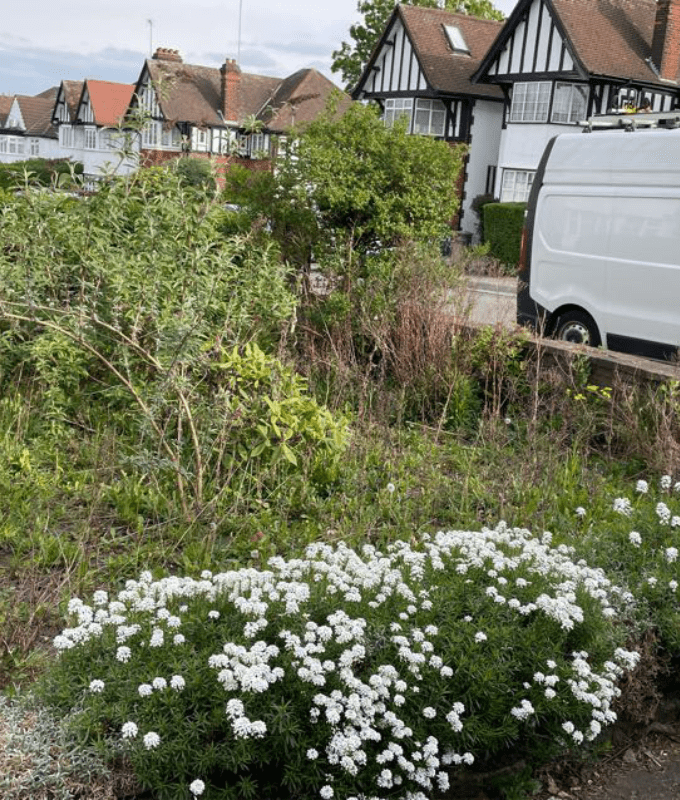
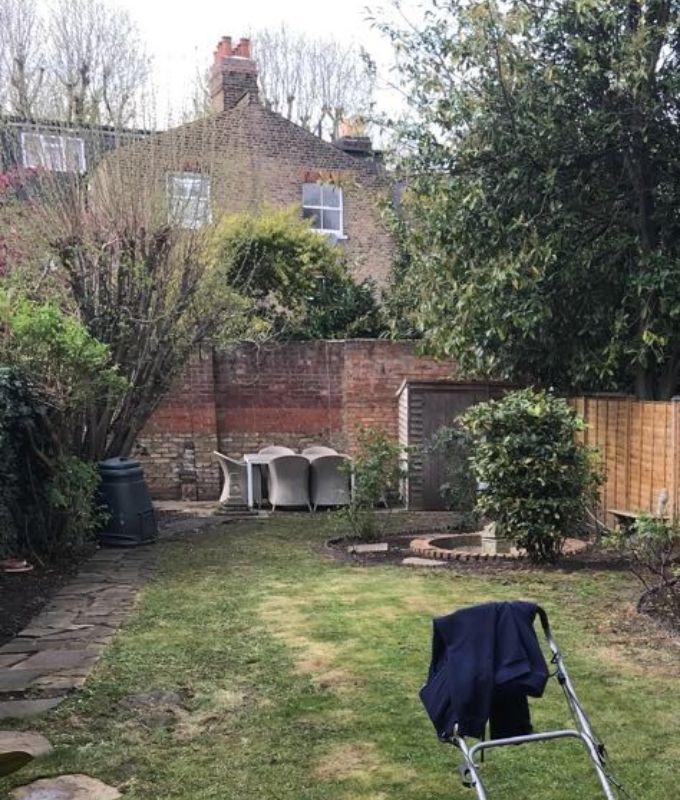
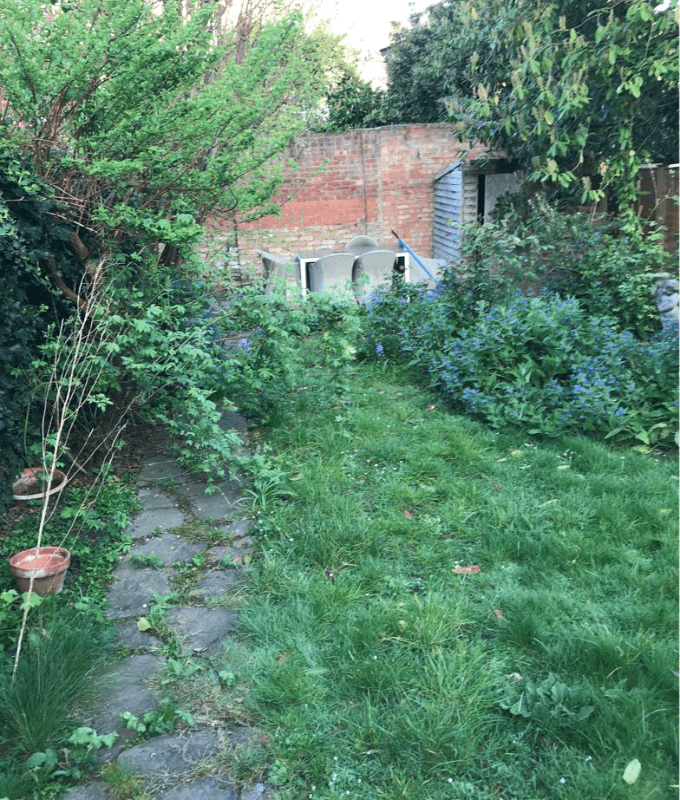
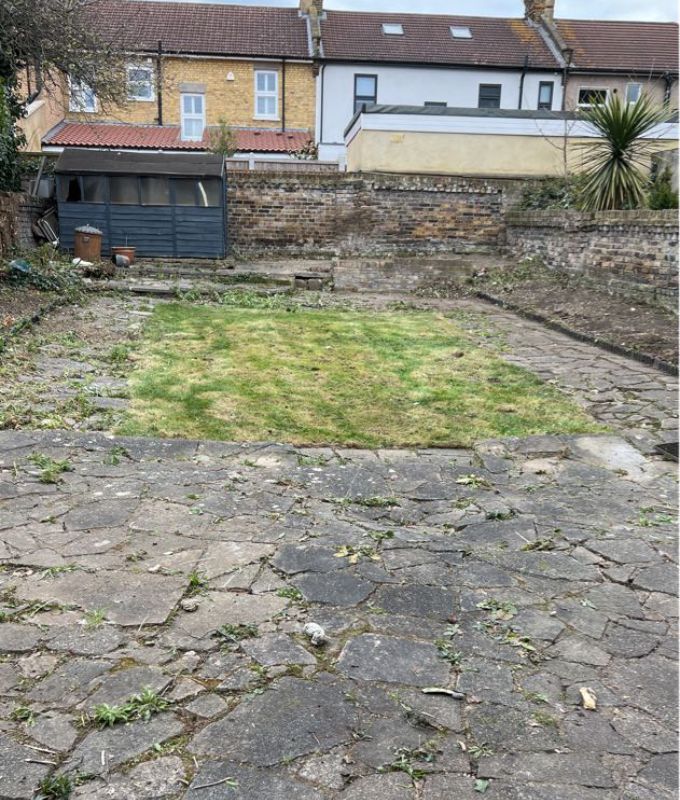
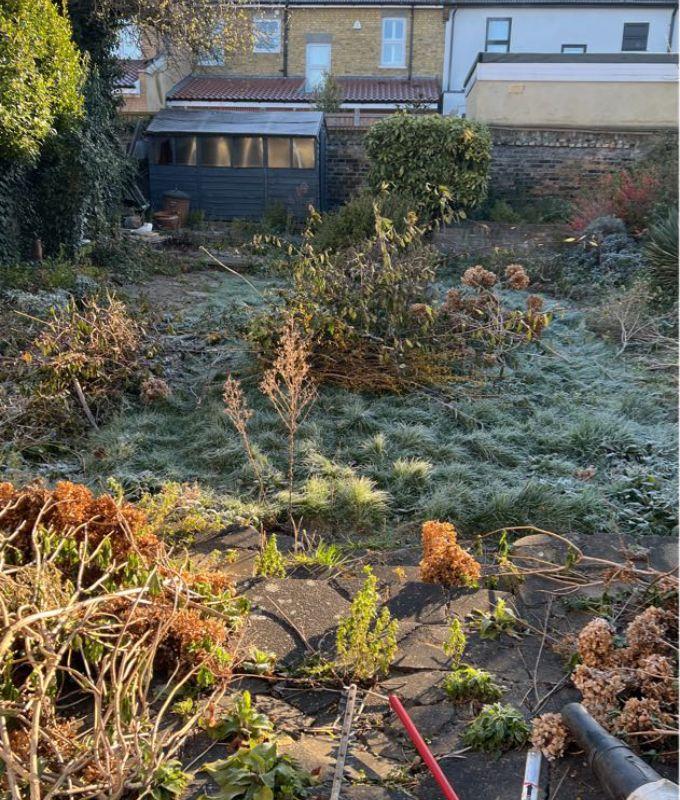
A bramble thicket is cut down in layers, canes pulled clear as they are severed so nobody is working inside a tangle, and then the root crowns are dug. Miss the crowns and the whole thing returns in one season, which is why a strimmer alone is never a solution. Old thickets conceal fencing, paving, drain covers and a surprising amount of dumped material, all of which has to be found before machinery goes anywhere near it. The gardens covered by the local team, a few streets west, present the same layered mess.
What is sheltering in the overgrowth
An undisturbed tangle against a warm wall is the best cover a rat will find in an inner-city garden, and the runs are usually visible at the base once the top growth goes. Clearance removes the shelter but does nothing about an established population, and treatment at that stage is a matter for the pest control team in Hackney. Nesting birds are the other consideration between March and August, and dense ivy in particular is checked before anything is cut.
The wall face afterwards
Stripped brickwork is never clean. It carries the pale tracery of dead rootlets, patches of algae where the leaf sat against it and open joints that need pointing. The rootlet residue weathers off slowly on its own or comes away with the surface treatment that trusted pressure washing in Dalston provides, which is a different trade and a different machine from anything used in a garden.
Volume, timing and how a clearance is quoted
Clearance is priced after somebody has seen it, because the variable is the density of the growth and the route out, not the square metres. Ivy, bramble and conifer are heavy and awkward, and a boundary strip can fill a vehicle twice over, so removal is arranged as its own load along the lines of man and van cover across Hackney. Winter is the best season for the structural work, with birds absent and the framework plainly visible. A regular round afterwards stops the same job coming back round in three years.