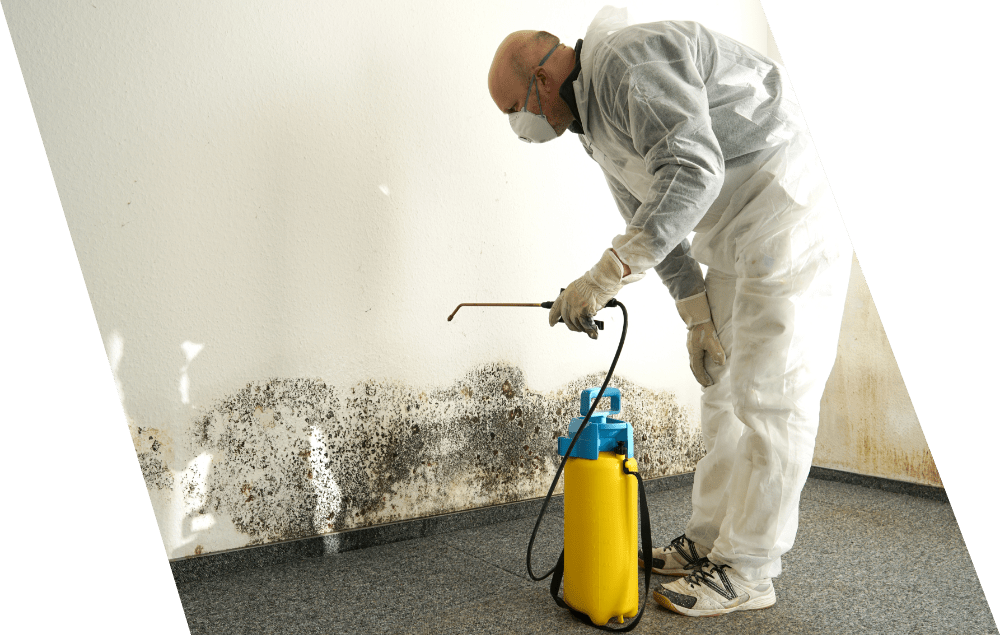
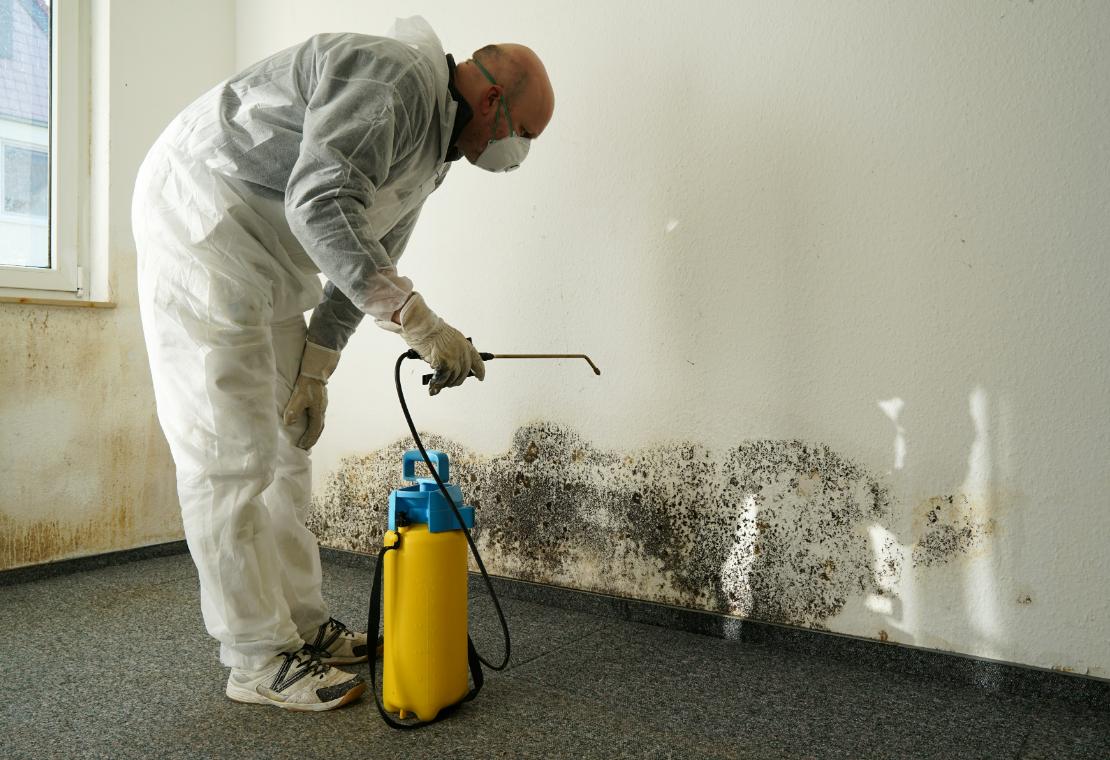
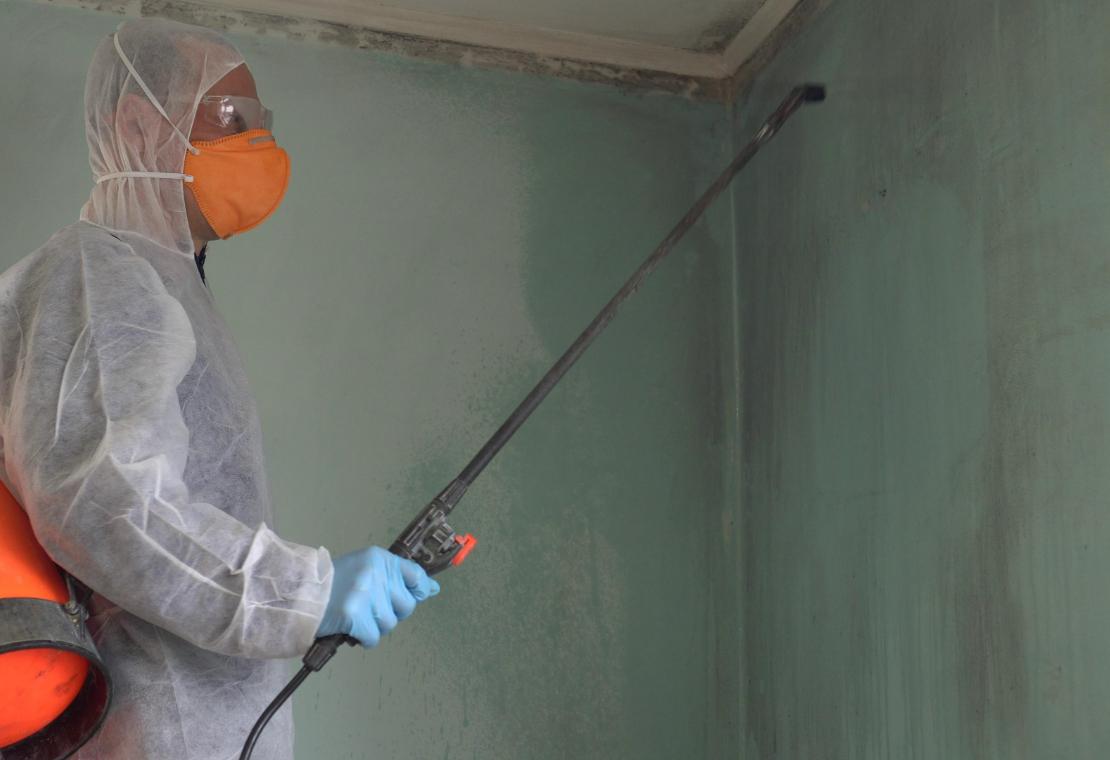
Mould is thought of as a winter problem, which is why it catches building managers out in Aldgate in August. EC3 is largely modern commercial and residential towers with sealed facades and mechanical cooling, and in a cooled building the cold surface is created deliberately. Chilled pipework, a cooling coil, a slab edge behind a riser panel: any of those can sit below the dew point of humid summer air drawn into the building, and that is all a colony needs to establish somewhere nobody looks.
Sweating pipework and failed vapour barriers
Chilled water and refrigerant lines are insulated with a vapour-tight outer layer, and the integrity of that layer is the whole point of it. Where a joint was never sealed, where a hanger has compressed the insulation flat, or where a section was cut out for other works and reinstated badly, moisture condenses directly onto the cold pipe and runs along it. It then drips onto boxing, plasterboard and ceiling tiles, and the growth appears on those materials rather than on the pipe itself, which is why the visible symptom is often a metre or more from the defect.
Facade and slab-edge details
Curtain walling relies on a thermal break at the frame and a detailed perimeter at each slab edge. Where the break is bridged or the perimeter detail is compromised, the internal face runs cold in winter, and a perimeter fan coil unit can produce something similar in summer. Growth behind a perimeter panel, in a blind pocket or under a raised floor near the facade is a detailing symptom rather than a housekeeping one, and cleaning it without addressing the detail simply schedules the next visit.
Risers, voids and the places nobody inspects
Every tall building has spaces that are opened once a decade. Riser cupboards holding pipework and a condensate pump, unventilated and warm. Ceiling voids above meeting rooms. Plenums under raised access floors, where a small leak spreads sideways across a large area and is found only when a floor tile is lifted for a cabling job. Bringing these into a planned inspection routine, with readings taken at fixed positions, turns a recurring surprise into a maintenance item.
Working in an occupied building
Practical constraints in EC3 are considerable and they shape the programme. Access permits, inductions, out-of-hours working, a booked lift for equipment and dust control in a live office all have to be arranged before a technician arrives. Enclosures are built where work is near occupied desks. Access panels, refitting boxing and replacing ceiling tiles after works is covered by fully insured TV wall mounting in Aldgate, and it is scheduled into the same out-of-hours window. Warm risers and catering areas in these buildings also carry a pest risk, and Aldgate pest control services handles activity found during an inspection.
Across the City, and handing floors back
The same building types and the same summer condensation mechanism appear across the City, and black mould removal in Temple covers an adjoining district. Once works are complete, affected floors and back-of-house areas need a full clean before they are handed back, and home cleaning in Shoreditch deals with that. Assessment procedure, treatment methods and guarantee terms are described on affordable mould removal and remediation.
How commercial work is scoped and handed over
The starting point is a survey of the affected zones and the plant serving them, producing a schedule of locations with photographs, surface and air readings and an identified cause for each. Works are then priced by area and by shift pattern, since night working changes the labour rather than the method. The handover to a facilities team is the part that pays for itself: a marked-up plan of what was found, which insulation and condensate runs were repaired, and a recommendation for inspecting them on a cycle so the same void does not reappear on next summer's list.