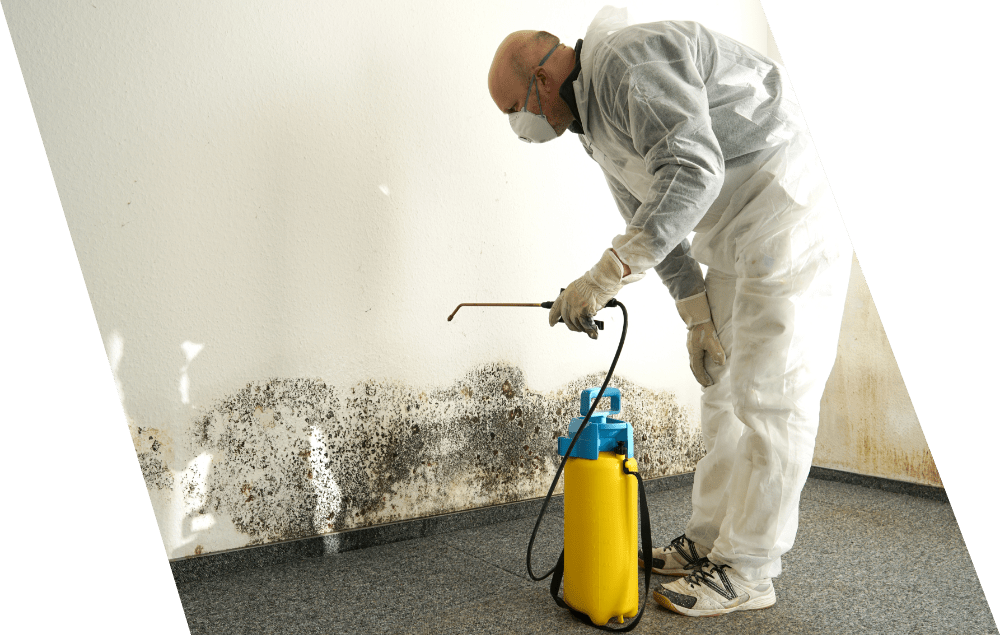
Below ground, mould is a waterproofing question rather than a ventilation one. Clerkenwell is full of EC1 buildings with basements, brick vaults running under the pavement and lower-ground floors converted into offices, studios and flats, and a structure surrounded by wet ground behaves nothing like a wall above it. Water arrives under pressure rather than as vapour, so any treatment applied to the inside face of that wall without a drainage strategy behind it is on borrowed time.
Three ways a basement is kept dry
British Standard guidance on below-ground waterproofing sets out the options and, importantly, ties the choice to what the room is for. Protection can be integral to the structure itself, applied as a barrier such as a tanking system, or provided by a drained cavity that accepts water and manages it away. A store expected to be slightly damp has a lower requirement than a habitable room or an office holding equipment and records. Most failures in converted buildings come from applying a store-grade solution to a space that is then used as an office.
Why a drained system needs maintaining
A cavity drain membrane behind a stud lining, a perimeter channel at floor level and a sump with a pump is a system with moving parts, and it is treated as maintainable plant rather than as a finish. A pump that has never been serviced, a float switch that has stuck or a channel silted with fines will back water up behind the lining, and the first symptom is usually mould on the lining rather than visible water on the floor. Access points for rodding the channel and for inspecting the sump therefore matter at design stage and are worth forming retrospectively where they were omitted.
Vaults, lightwells and where water gets in
The specific weak points in this sort of building are external. Pavement vaults with shallow brick arches sit beneath a trafficked surface and take water through failed pointing and around pavement lights. Lightwells depend on a single small gully, which silts up and floods the well in heavy rain. A downpipe discharging into a lightwell drain that no longer runs will fill the well within minutes. Inspecting those three things during rain tells you more than any amount of internal investigation.
Humidity in a room with no through-draught
Even a dry basement struggles with air. A room with one small opening cannot dilute the moisture produced within it, so humidity climbs and surfaces stay damp regardless of the waterproofing. Mechanical extraction, or a dehumidifier plumbed to a drain rather than emptied by hand, is usually part of the answer, particularly where the space holds stock, records or equipment. Forming an access panel, refitting a section of lining and clearing a lightwell gully is practical work covered by trusted odd jobs in Clerkenwell. Vaults and drains are classic harbourage, and pest control specialists in Clerkenwell addresses activity found alongside the damp.
Drainage trades and neighbouring basements
Installing a condensate drain, reconnecting a pump discharge or reworking a gully connection is plumbing work, and our plumbing service in Aldgate covers that trade. The same basement stock continues through the adjoining district, where mould removal across Finsbury and nearby areas deals with comparable buildings. Waterproofing options, treatment methods and guarantee terms are set out on mould removal and remediation for rented property.
What an inspection involves and how it is priced
A basement inspection is intrusive in a small way and revealing out of proportion to the disruption. A section of lining is taken off, the perimeter channel is checked and rodded where access allows, the sump is inspected and the pump is run through a cycle, and readings are taken on the structure itself rather than on the lining. Externally the lightwell, gully and pavement surface are examined. Pricing depends on floor area and on whether an existing system is being maintained, upgraded or replaced. The outcome includes a recommended servicing interval and a note of what a service record should show, since that is what keeps a drained system working for decades rather than years.