


Mould Removal and Remediation Services Shadwell
Professional mould removal solutions that address damp-related issues and ensure thorough decontamination of affected areas.

Professional mould removal solutions that address damp-related issues and ensure thorough decontamination of affected areas.
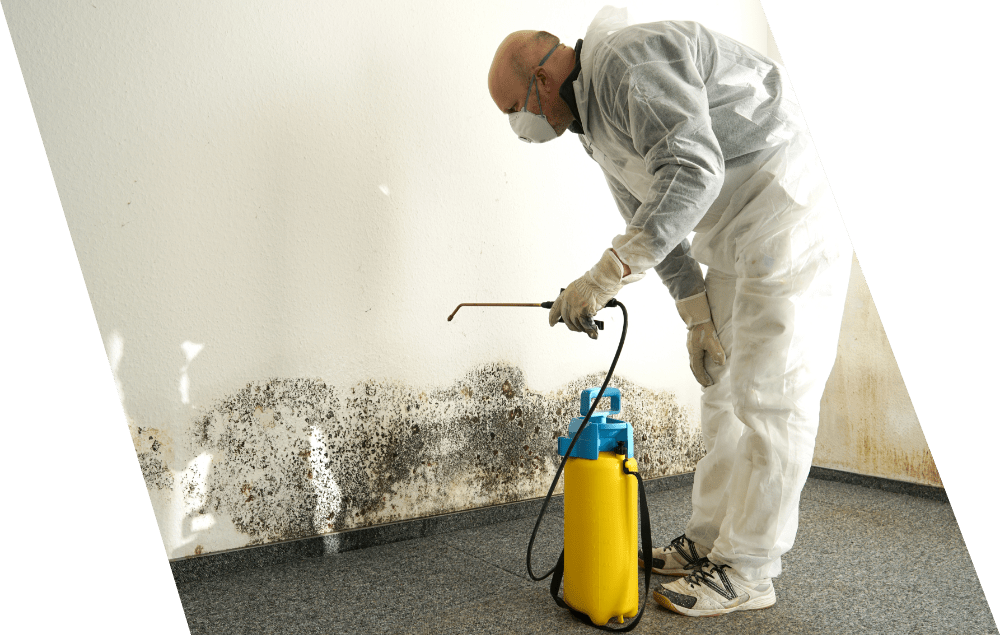
The cost of mould removal depends on the size of the affected area and the type of treatment required. After a detailed inspection a clear, personalised quote is provided based on the scope of work.
| Small mould area (e.g. around a window or corner) | Medium mould area +£100 (large section of a wall affected) | Large mould area +£150 (more than one wall or ceiling) | ||||
|---|---|---|---|---|---|---|
| Room | Standard | Fantastic Club* | Standard | Fantastic Club* | Standard | Fantastic Club* |
| Bedroom | £350 | £320 | £450 | £420 | £500 | £470 |
| Bathroom | £350 | £320 | £450 | £420 | £500 | £470 |
| Kitchen | £350 | £320 | £450 | £420 | £500 | £470 |
| Living / Dining room | £350 | £320 | £450 | £420 | £500 | £470 |
| Hallway / Landing | £350 | £320 | £450 | £420 | £500 | £470 |
| Utility room | £350 | £320 | £450 | £420 | £500 | £470 |
| Paid inspection | £50 | |||||
| *Price for members of the Fantastic Club. The Fantastic Club is a yearly subscription of £89. | ||||||

In Shadwell, the need for professional mould removal and remediation has led to the advent of advanced technology aimed at eradicating both visible and hidden mould growth. Mould spores are adept at spreading through the air and can easily infiltrate hard-to-reach spaces, making standard cleaning methods ineffectual. To ensure comprehensive safety, professional mould cleaning in Shadwell includes airborne treatments alongside surface removal, aimed at tackling all potential contamination sites within an environment.
The implementation of ULV (Ultra-Low Volume) fogging technology is pivotal, as it allows for the even distribution of treatment particles throughout the room, accessing spaces behind furniture, high ceilings, and intricate cracks. Alongside this method, the use of HOCl (Hypochlorous Acid) as a disinfectant offers a non-toxic solution that effectively neutralises mould and harmful microbes at a molecular level. Together, these strategies ensure a complete environmental treatment, enhancing indoor air quality and significantly lowering the risk of future mould growth.
In Shadwell, mould remediation involves a comprehensive strategy that not only targets current mould infestations but also aims to prevent future occurrences. This dual approach is executed through meticulous assessment of key factors such as humidity levels, ventilation, and potential water ingress that could encourage mould growth. By understanding the specific needs of your property, professionals can create a personalized mould removal Shadwell plan. This thorough mould cleaning Shadwell not only eliminates mould but also reinforces the environment against future issues.
Following treatment, professionals apply protective solutions that bond to treated surfaces, enhancing the durability of your indoor environment against mould regrowth while reducing airborne spore activity. Utilizing HEPA filtration systems and air scrubbers is essential during and after treatment to maintain cleaner indoor air quality. This holistic approach to black mould removal in Shadwell is crucial for protecting both your health and property, diminishing allergens, preventing structural damage, and fostering a significantly improved indoor living condition.

Booking mould cleaning is quick and designed to get results without unnecessary delays.
Share what you’re dealing with, whether it’s visible mould, damp patches, or a recurring problem. This helps determine the right approach, from mould cleaning to full mould remediation.
A specialist checks the affected areas and identifies what’s causing the mould, such as excess moisture, condensation, or poor ventilation. This ensures the issue is treated properly, not just on the surface.
You’ll get a straightforward quote based on the level of contamination and the type of mould removal required. The service is tailored to ensure effective results and long-term protection.
The treatment removes mould and improves indoor air quality, helping to prevent future growth and create a healthier living space. It also targets the root cause of the problem for longer-lasting results.
Mould removal requires more than basic cleaning, which is why it’s handled by trained mould remediation specialists experienced in treating both visible and hidden contamination. Each specialist assesses the full extent of mould growth, including underlying causes such as excess moisture, condensation, and ventilation issues, ensuring the problem is addressed properly rather than just on the surface.
Number of bookings: 214
With Fantastic Services for: 3 years
Other specialities:
Number of bookings: 298
With Fantastic Services for: 3 years
Other specialities:
Number of bookings: 3178
With Fantastic Services for: 4 years
Other specialities:
Alongside professional mould removal and mould cleaning, a range of additional property care services is available to help maintain a healthier indoor environment.
Mould can spread quickly and impact both health and property if not treated in time. Book a service today to remove mould, improve indoor air quality, and restore a cleaner and healthier living environment.

Converted warehouses look nothing like the housing the standard damp advice was written for, and they do not behave like it either. Exposed internal brickwork with no plaster and no insulation, slim steel-framed windows in deep reveals, ceilings at four metres or more, an open plan with few doors to close, and a mezzanine bedroom sitting in the warmest air in the flat. Shadwell has a concentration of these buildings near the old dock frontage, and mould in them appears in places that would make no sense in a terraced house.
In a tall space, warm moist air stratifies and collects at high level. The mezzanine and the upper part of the walls sit in that layer, which is precisely where the coldest large surfaces often are: the underside of a roof deck, a rooflight, a high window head, or a wall that receives no heat from radiators placed at floor level. Mould in a warehouse flat therefore tends to appear high and in corners near the ceiling rather than behind the sofa, and heating the room more simply drives more vapour upwards.
Original or replica metal-framed glazing is thermally poor and conducts heat straight out of the room. Condensation forms on the frames, runs down onto the cill and soaks into the brick or timber below, so growth appears along the bottom of the reveal and in the corners of deep openings. Secondary glazing, insulated reveal linings and improving air movement across the glazing all help; sealing the reveal against a cold frame without addressing the airflow tends to hide the water rather than remove it.
An internal face of bare brick is the architectural point of these flats and a permanent cold surface. It also cannot be insulated without losing the look, so the practical route is controlling the air rather than the surface: extract at source in kitchen and bathroom, background ventilation, and enough air movement that the wall face never sits at dew point for long. Where the wall is an external elevation exposed to driving rain, pointing and the condition of the outer face matter as much as anything internal.
Conversions tend to hide pipework in floating floors, boxed columns and dropped ceilings, and access to it is poor. A weeping joint in a concealed run can wet a substantial area of floor or a column before anything shows, and in an open-plan flat there are no small rooms to help localise it. Where readings suggest liquid water rather than condensation, the pipework has to be traced and repaired before treatment is worth doing, and the plumbing team in Chingford covers that side of the work.
Containment is harder here than in a cellular flat. Working areas are sheeted and isolated with temporary screens, air is filtered and extracted at the work face so spores are not pushed across the whole volume, and the job is taken in sections. Growth on bare brick and mortar is removed by filtered vacuum and treated without surface coatings that would change the finish, which is generally what the occupant wants preserved.
Reveal linings, secondary glazing, boxing opened up and closed again, an extract terminal cut through a thick wall, rooflight seals renewed: handyman cover across Whitechapel takes on that work, and it is what turns a treated flat into a dry one. Old warehouse parapets and rainwater outlets are also favoured by roosting birds, and fouling and nest material blocking an outlet is a common cause of water reaching a top-floor wall, so pest control cover across Tower Hamlets deals with that at roof level. Comparable converted stock a short distance away is covered by mould removal services across Whitechapel, and the treatment specification appears on the the full service page.
High-level access is the main practical consideration, since growth near a four-metre ceiling cannot be assessed from the floor and a tower or platform may be needed. Building management rules on working hours, lift use and roof access apply in most of these conversions, so knowing what they are before the visit saves a return trip. Pricing follows the wall and ceiling area treated, the access equipment required and whether containment has to be staged across an open-plan interior.
Skip the line, request and
book a service online





