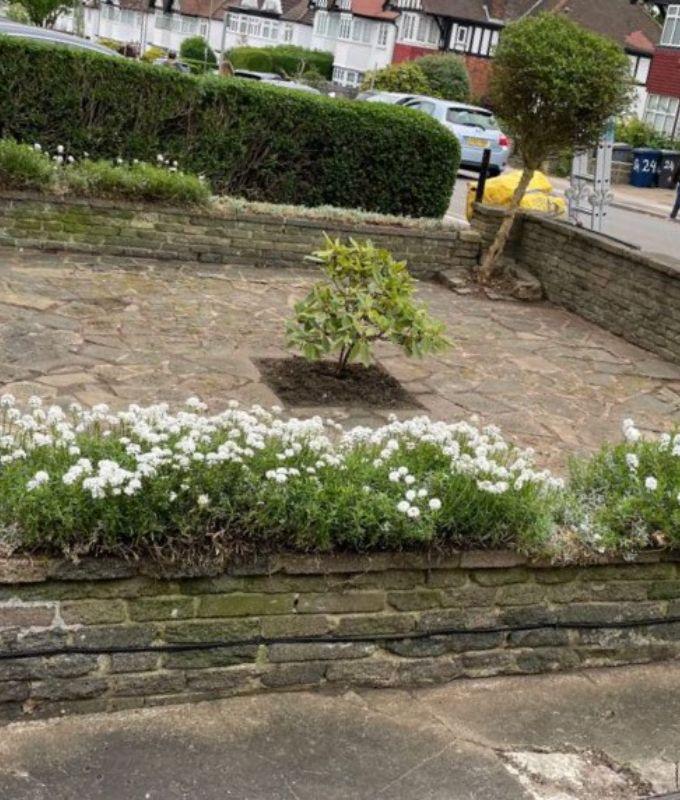
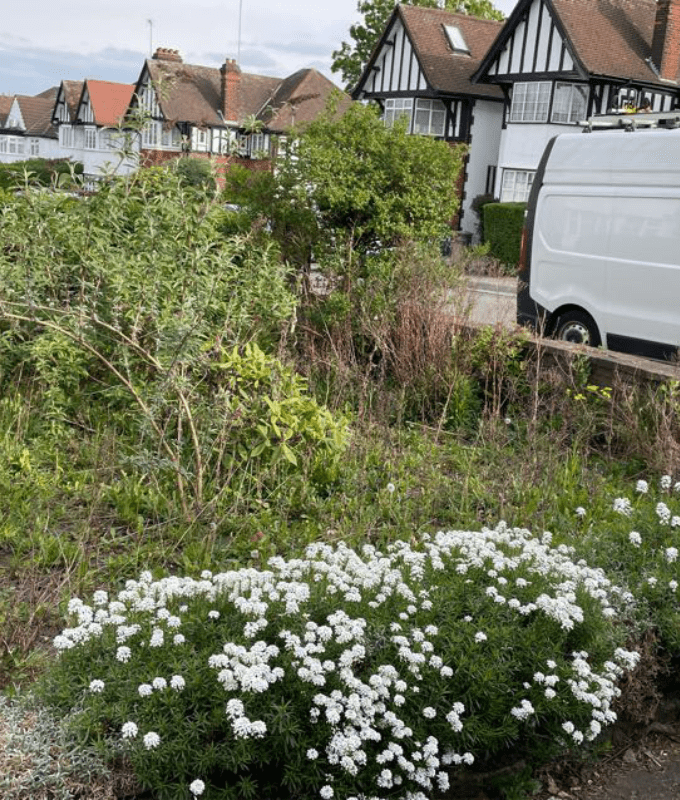
The front garden is the part of a property everybody sees and nobody spends any time in. In WD6 it has also been steadily disappearing: a hedge removed for visibility, a lawn replaced with hardstanding for a second car, a bed reduced to a strip of gravel with a shrub in it. What remains still has work to do. It presents the house, it stores the bins, it takes the weather off the front elevation, and it is where the only planting many passers-by will see. Maintaining what is left of it well matters more than its size suggests.
What a front boundary is for
A boundary to the pavement does three jobs at once: it defines the property, it keeps the front from becoming an extension of the street, and where it is planted it takes dust and noise off the house. A clipped hedge does all of that and provides cover for birds into the bargain. The constraints are practical. Growth must not overhang the footway, sightlines from a driveway must stay clear, and anything planted near a boundary needs a mature size that suits the space rather than one that will be fought annually. Cutting is planned around the nesting season, which applies to a front hedge exactly as it does to a rear one.
Planting that survives a front garden
Conditions here are harsher than at the back: more exposure, salt and grit thrown up in winter, compaction from people cutting the corner, and soil often confined to a narrow strip beside a hard surface that drains everything away from it. The plants that cope are tough, structural and mostly evergreen, with a limited palette repeated rather than a collection, since a small space reads better with fewer species. Raised kerbs or a low wall protect a strip of soil from vehicle wheels and make the difference between a bed and a wear pattern.
Weeds in paving joints
Block paving and slabs accumulate a fine grit in the joints, and that grit is enough to grow in. Pulling by hand removes the plant and the root and works well while seedlings are small. Once a mature rosette is established between blocks, pulling snaps the top off and leaves the root, so cutting out the joint and refilling it with fresh kiln-dried sand is the more durable fix. Mechanical removal with a joint knife or a wire brush beats repeatedly treating the same joints. A drive that is brushed a few times a season rarely develops the problem at all.
Moss and the slippery months
North-facing frontages and anything shaded by the house grow a moss and algae film through autumn, and on a sloping drive or a path to the door that becomes a genuine hazard rather than an appearance issue. Keeping leaves off the surface through the fall is most of the prevention, because a wet leaf mat is what gets the film started. Once it is established, the surface needs washing properly, and path and paving cleaning services in Watford handles that with the right pressure for the material, since block paving lifts and sand washes out of the joints under a lance used carelessly.
Bins, and keeping a strip of planting alive
Bin storage is the most common reason a front garden stops working. Containers parked on a bed compact it and kill what is under them; tucked against a hedge they damage the base of it and create a sheltered space nobody looks into. A defined hard standing for the bins, screened by planting rather than set inside it, solves both. Keeping the ground around a bin store clear and visible also removes half the reason anything would settle there.
How a front garden round works
Fronts are usually a short visit at a regular interval rather than a long one occasionally, since the work is hedge trimming, joint weeding, sweeping and keeping the beds clean, and consistency is the whole point. It is quoted by the visit rather than by area. Where a property is being prepared for viewings, the front is done last so it is fresh on the day, and the inside is generally being handled in the same week by cleaning services across Borehamwood or, for a full reset, what the service covers. Neighbouring gardens with larger frontages are covered by gardening prices in Radlett, and the general structure of recurring visits is described on our garden maintenance team.