What is tree crown thinning?
Tree crown thinning is a specialised tree maintenance technique performed to carefully remove smaller, often tertiary, branches throughout a tree's canopy. The primary goal is to reduce the overall density of the crown while maintaining the tree's natural shape and silhouette. This process allows more light to pass through the tree's foliage and disperses light and air evenly through the crown, improving airflow and enhancing the tree's health without stunting its natural growth cycle.
What is tree crown reduction?
Tree crown reduction is a specialized tree pruning technique that involves selectively cutting back branches to reduce a tree's canopy's overall size and height. Its purpose is to manage tree growth, improve aesthetics, reduce mechanical stress on individual branches or the whole tree, and mitigate safety risks associated with overgrown trees. This technique aims to maintain the tree's natural shape while making it dimensionally smaller, allowing sunlight to reach all its branches and reducing deadwood.
What is tree crown raising and why is it important?
Tree crown raising, also known as crown lifting, is a tree pruning method that involves removing the lower limbs of a tree to increase space beneath the canopy. It is important for providing clearance for pedestrians, vehicles, buildings, or signs, and for improving visibility or opening up a view. This technique also allows more light to reach areas closer to the tree. Performing crown lifting while the tree is young is best, as it encourages the tree to grow into a practical shape without extensive scarring later in its life.
The difference between crown thinning, reduction, lifting and restoration?
While all these methods involve altering a tree's canopy, they serve distinct purposes. Crown reduction reduces the overall size and height of the tree's canopy by cutting back primary branches. Crown thinning involves removing selected smaller branches throughout the crown to improve light penetration and airflow without altering the tree's overall size or shape. Crown lifting focuses on removing lower branches to increase space or clearance beneath the canopy. Crown restoration is a technique used to improve the structure of trees previously damaged or improperly pruned, helping them regain a more natural and healthy form.
When is tree crown reduction needed?
The most common reason for crown reduction is when a tree becomes too large for its own good. An overgrown tree with huge, overhanging branches can not only block sunlight from reaching your property, but can also become a health hazard during storms and bad weather.
When’s the best time of year to have tree crown reduction carried out?
As far as deciduous trees are concerned we recommend booking your crown reduction service in winter. This is the time of year when the trees will be leafless, making the procedure a lot safer and delivering better results. But winter aside, we also perform crown reduction during any other time of the year, as there are trees that require urgent treatment that can’t wait.
Why is tree crown thinning important?
When performed by professionals, tree thinning can improve the light levels passing through the tree’s canopy, while also reducing the wind taking its tow on its limbs.
What are the benefits of tree crown reduction?
The benefits of tree crown reduction are numerous. It improves tree health by allowing sunlight to reach all branches and reducing internal deadwood, enhances aesthetics by maintaining a balanced shape, and mitigates safety risks by reducing excess weight and preventing branches from interfering with structures or power lines. Crown reduction can also increase light penetration to the ground below, reduce wind resistance (lessening the risk of storm damage), and contribute to the tree's longevity by addressing structural imbalances.
Is crown reduction harmful to trees?
When performed correctly by trained arborists, crown reduction is not harmful to trees; in fact, it helps maintain tree health and enhances safety. It is a strategic approach that involves careful planning and pruning techniques to ensure minimal stress and promote healthy regrowth. However, improper pruning techniques, excessive reduction (e.g., removing more than 30-40% of the canopy), or indiscriminate cuts can indeed stress the tree, leading to decay, disease vulnerability, and structural problems.
Why do I need to employ a tree surgeon?
You need to employ a professional tree surgeon because tree surgery is a highly skilled and potentially dangerous occupation. Without correct training and experience, the work can be extremely hazardous, posing significant risks of injury or property damage. Improper pruning techniques can also lead to irreparable damage to your tree, causing stress, decay, and vulnerability to disease. Professional tree surgeons are fully insured, qualified, and use specialised equipment to ensure the job is done safely and effectively while promoting tree health.
When should you crown a tree?
"Crowning a tree" is a general term often referring to various crown maintenance techniques like thinning, reduction, or lifting. These services should be performed as part of a regular tree maintenance plan, with the specific timing depending on the tree's species, age, and desired outcome. Fast-growing trees may require more frequent attention. The dormant season (late autumn to early spring) is generally ideal to minimize stress, but urgent treatments for safety risks can be done at any time.
How often should tree crowns be maintained?
Tree crowns typically need maintenance every 3-5 years, but the exact frequency depends on the tree species, its growth rate, age, and environmental conditions. Fast-growing trees may require more frequent attention to prevent overgrowth, while slower-growing trees might only need attention every five years or so. Regular maintenance is crucial for ensuring healthy growth, preventing diseases and structural issues, and keeping the tree safe and visually appealing.
When to get your tree’s crown lift?
We can perform crown lifting during any stage of your tree’s life. However, it’s best to do so while the tree is still young. This way, it will grow into a practical shape once it gets older and won’t be barred with scars.
How does crown reduction work?
Crown reduction works by selectively pruning the outer portions of a tree's branches, focusing on reducing both its height and spread while maintaining its natural shape. Professional tree surgeons carefully assess the tree's structure and health, identifying branches to be cut back to suitable growth points. This precise technique allows the tree to cope with foliage loss correctly and promotes healthy regrowth, preventing excessive shooting further back in the canopy, ensuring a balanced and aesthetically pleasing tree structure.
How to crown lift a tree?
Professionally lifting a tree's crown involves assessing the tree to determine how high the lift needs to go, then carefully removing the lower branches. Cuts are made cleanly and precisely, just outside the branch collar, to promote healing and prevent decay from spreading to the trunk. For thicker, heavier branches, the cutting is often done in phases, removing portions gradually. Specialists ensure the tree's shape is maintained in a balanced way and remove all waste, leaving the property tidy.
How much to prune?
When pruning large or mature trees, it is generally advised to avoid removing more than 25% of the live crown in any one year, even for young trees. For specific crown thinning operations, typically between 10-15% of the live crown is removed, not exceeding 30% overall, to maintain uniform density and an evenly spaced branch structure. Crown reduction cuts should also be as small as possible and generally not exceed 100mm in diameter, unless absolutely necessary.
What tools are used for crown maintenance?
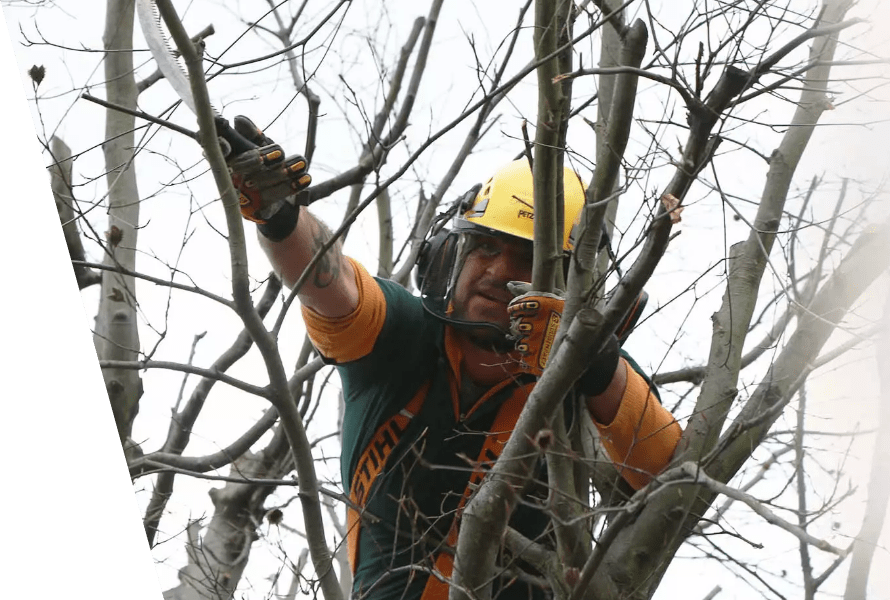
Professional crown maintenance involves using a range of specialised tools and safety gear to ensure efficient and safe execution. This includes pruning shears for smaller branches, various types of saws (like hand saws and chainsaws) for larger limbs, and potentially loppers for thicker branches that are too small for a saw but too large for secateurs. Crucially, arborists also use safety equipment such as helmets, gloves, harnesses, ropes, and appropriate footwear. Our service provides all professional equipment and safety gear, ensuring the experts are fully prepared.
What happens to all the waste, logs, timber, branches, etc?
Our tree surgeons ensure your garden is left tidy after the work is done, minimising any signs of their presence. Unless agreed otherwise, they will remove all waste and tidy the area by hand, often using a portable leaf blower to clear remaining debris. Most arisings from tree surgery operations are re-purposed, and any remaining green waste is responsibly disposed of or sent to power stations for biomass. You are also welcome to keep materials like wood chips or logs, but this must be requested beforehand so it can be included in the quotation.
Do I need permission to have work carried out on my trees?
Yes, you may need permission to have work carried out on your trees, particularly if the tree is protected by a Tree Preservation Order (TPO) or if it is located within a conservation area. In such cases, you must obtain approval from your local council before any work is carried out. Performing work without permission on protected trees is considered an offense. Our tree surgeons have experience getting permission for and working on protected trees.
Can trees damage my property?
Yes, trees can potentially damage your property, especially if they are overgrown, diseased, or not properly maintained. Large, overhanging branches can pose a danger during storms and bad weather, potentially causing damage to buildings, vehicles, or fences. Roots can also cause issues if they interfere with foundations or underground utilities. Crown maintenance services like reduction, thinning, and lifting are performed to restore tree crowns to a safe size and prevent such interference with non-organic objects.
How much does professional tree crown reduction cost?
The cost of professional tree crown reduction depends on several factors, including the tree's size, its species, its location and accessibility, and the complexity of the reduction required. Larger trees, those in difficult-to-access areas, or those requiring significant reshaping will typically cost more. Our service offers competitive pricing, and a personalized quote is provided over the phone once you’ve sent pictures and information about the work you want done.
Can I perform tree crown maintenance myself?
While minor pruning might be attempted by a homeowner, comprehensive tree crown maintenance services like reduction, thinning, or lifting are highly skilled tasks that should always be performed by trained arborists or professional tree surgeons. These techniques require knowledge of tree biology, proper pruning methods to avoid irreparable damage, and strict safety protocols due to the inherent hazards of working at height and with large branches. Our service provides fully insured and licensed tree surgeons to ensure the job is done safely and effectively.