


Mould Removal and Remediation Services Poplar
Reliable mould removal and remediation services that treat affected areas, improve ventilation conditions, and reduce humidity-related mould growth.

Reliable mould removal and remediation services that treat affected areas, improve ventilation conditions, and reduce humidity-related mould growth.

The cost of mould removal depends on the size of the affected area and the type of treatment required. After a detailed inspection a clear, personalised quote is provided based on the scope of work.
| Small mould area (e.g. around a window or corner) | Medium mould area +£100 (large section of a wall affected) | Large mould area +£150 (more than one wall or ceiling) | ||||
|---|---|---|---|---|---|---|
| Room | Standard | Fantastic Club* | Standard | Fantastic Club* | Standard | Fantastic Club* |
| Bedroom | £350 | £320 | £450 | £420 | £500 | £470 |
| Bathroom | £350 | £320 | £450 | £420 | £500 | £470 |
| Kitchen | £350 | £320 | £450 | £420 | £500 | £470 |
| Living / Dining room | £350 | £320 | £450 | £420 | £500 | £470 |
| Hallway / Landing | £350 | £320 | £450 | £420 | £500 | £470 |
| Utility room | £350 | £320 | £450 | £420 | £500 | £470 |
| Paid inspection | £50 | |||||
| *Price for members of the Fantastic Club. The Fantastic Club is a yearly subscription of £89. | ||||||
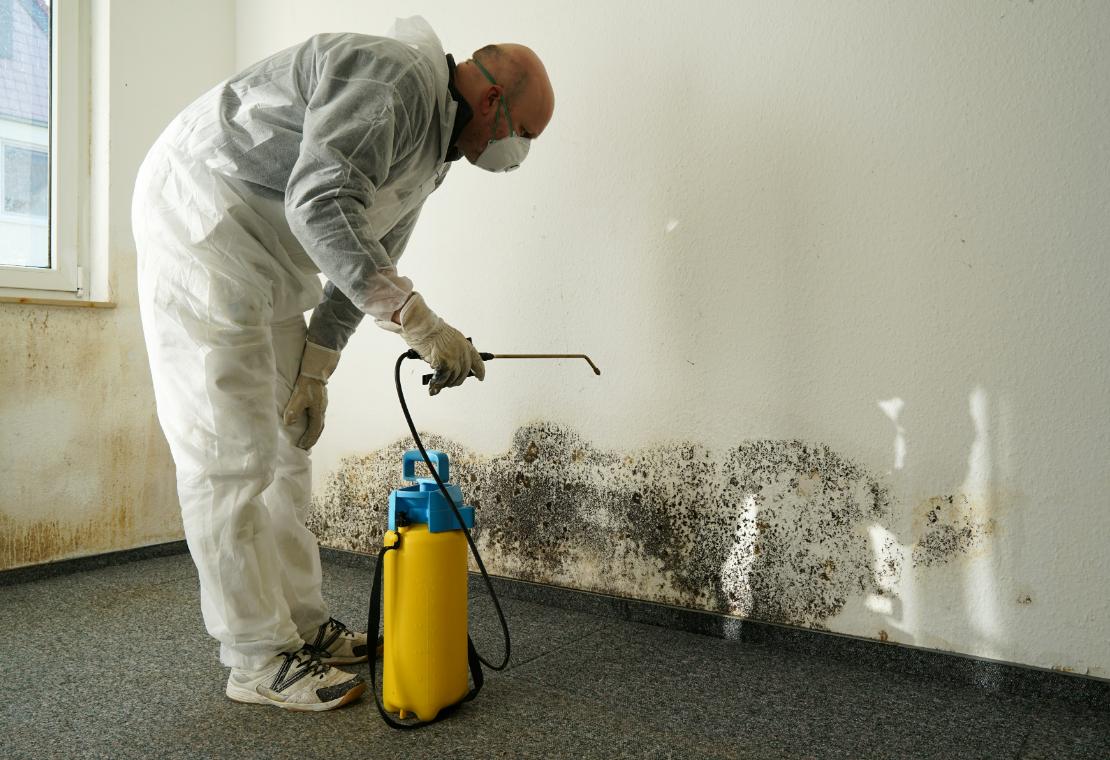
Our mould removal service in Poplar offers an extensive inspection and moisture assessment to evaluate the level of mould contamination and its underlying causes. Common contributors to mould growth include condensation, elevated humidity, inadequate ventilation, and past water damage. Recognizing and addressing these root causes is critical for achieving effective long-term results. The service specifically treats structural surfaces, such as walls, ceilings, and floors where mould tends to appear, while soft furnishings like carpets, sofas, and textiles are not included in this particular treatment.
When it comes to mould remediation in Poplar, our services extend beyond simple mould cleaning. We focus on removing airborne mould spores and integrating preventative strategies to inhibit future growth, which is essential for enhancing indoor air quality. Our professional approach safeguards your health, averts possible structural damage, and ensures long-lasting mould prevention. If you are facing issues related to black mould removal in Poplar or need reliable damp and mould removal services, our experienced team is here to provide you with effective solutions.
The mould remediation process in Poplar begins with a meticulous inspection and moisture assessment, employing professional hygrometers to locate hidden damp conditions. Recognising excess moisture is integral to preventing mould recurrence. HEPA filtration systems and air scrubbers capture airborne mould spores, ensuring that residents breathe safe air during the ongoing remediation efforts.
Following this, we apply Hypochlorous Acid (HOCl), an effective, professional-grade, non-toxic solution that works on mould, bacteria, and mycotoxins at a microscopic level. We utilise ULV (Ultra-Low Volume) fogging technology to disperse the treatment evenly throughout the space, reaching hidden areas such as corners and behind walls. Mould is then physically removed with high-performance equipment that features H-Class filtration to capture and contain contaminants. Finally, we implement air purification and preventive measures to greatly reduce airborne spores and enhance indoor air quality, providing residents with durable damp and mould removal in Poplar.
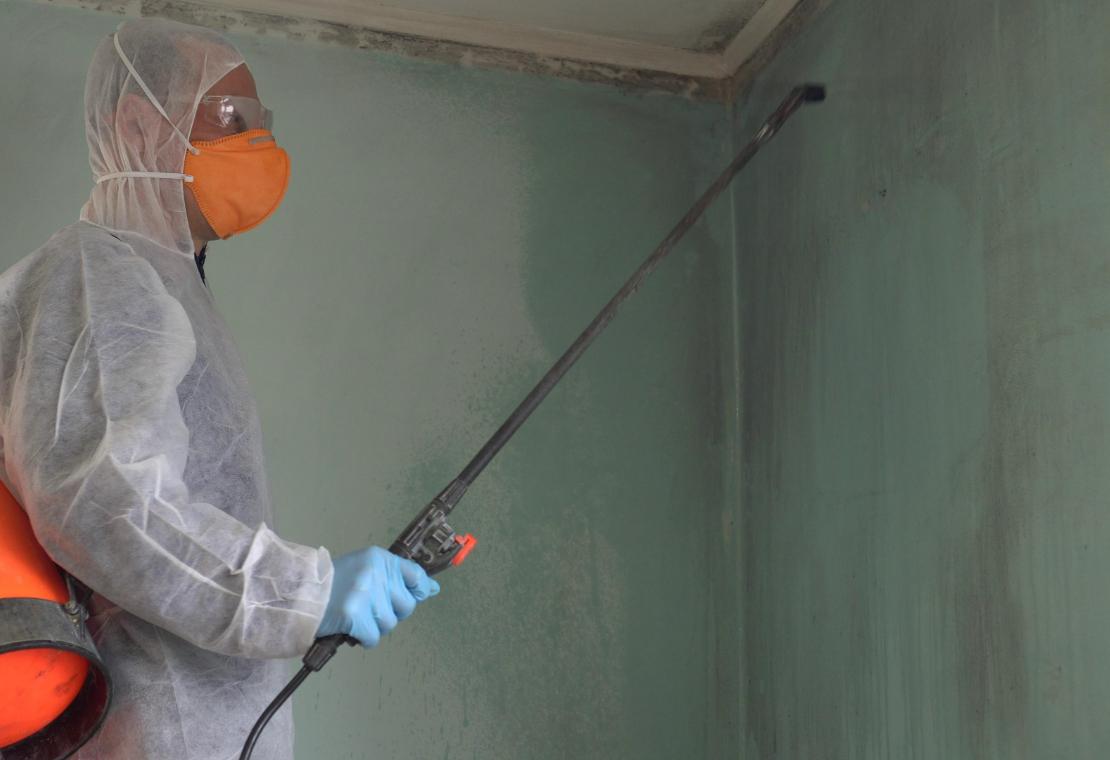
Booking mould cleaning is quick and designed to get results without unnecessary delays.
Share what you’re dealing with, whether it’s visible mould, damp patches, or a recurring problem. This helps determine the right approach, from mould cleaning to full mould remediation.
A specialist checks the affected areas and identifies what’s causing the mould, such as excess moisture, condensation, or poor ventilation. This ensures the issue is treated properly, not just on the surface.
You’ll get a straightforward quote based on the level of contamination and the type of mould removal required. The service is tailored to ensure effective results and long-term protection.
The treatment removes mould and improves indoor air quality, helping to prevent future growth and create a healthier living space. It also targets the root cause of the problem for longer-lasting results.
Mould removal requires more than basic cleaning, which is why it’s handled by trained mould remediation specialists experienced in treating both visible and hidden contamination. Each specialist assesses the full extent of mould growth, including underlying causes such as excess moisture, condensation, and ventilation issues, ensuring the problem is addressed properly rather than just on the surface.
Number of bookings: 139
With Fantastic Services for: 2 years
Other specialities:
Number of bookings: 205
With Fantastic Services for: 3 years
Other specialities:
Number of bookings: 298
With Fantastic Services for: 3 years
Other specialities:
Alongside professional mould removal and mould cleaning, a range of additional property care services is available to help maintain a healthier indoor environment.






















Mould can spread quickly and impact both health and property if not treated in time. Book a service today to remove mould, improve indoor air quality, and restore a cleaner and healthier living environment.
Where the precast concrete panels of a post-war block meet, there is a joint, and that joint is colder than the panel on either side of it. The reinforcement and the fixings that cross it conduct heat outwards, the insulation within the panel stops at its edge, and the result is a cool line running through the inside face of the flat. In the system-built blocks and maisonettes that make up much of Poplar's housing, mould does not appear randomly. It draws the plan of the building on the wall.
Growth that forms a straight line across a ceiling, a rectangle in the corner of a room, a horizontal band at floor level or a neat square around a wall fixing is following the structure behind the plaster. Panel joints, floor slab edges, ring beams, columns and steel lintels are all significantly colder than the fabric around them, so they condense first. Recognising the shape saves a great deal of time, because it immediately rules out both a leak and a housekeeping explanation.
Advice to open a window and run a fan is reasonable for a general humidity problem and close to useless for a cold bridge. A junction that runs several degrees below the rest of the wall will condense at a humidity level the rest of the room handles comfortably, so a household would have to keep the air unusually dry to protect that one line. The practical options are raising the surface temperature with insulation properly detailed across the junction, or raising it indirectly with a steadier heating pattern, and usually both.
Many blocks of this type have been externally over-clad or internally dry-lined as part of a refurbishment programme, and both can improve matters substantially. Both can also fail at the details. External insulation stopped short at a balcony slab, a window reveal or a party wall leaves the bridge in place; internal lining fitted to the flat face of a wall without returning into the reveals and up to the slab edge moves the cold line rather than removing it. When a flat has been upgraded and still has mould, the detail at the junctions is the first thing to examine.
Blocks with communal or district heating often give the resident little control, which produces two problems at once: rooms that overheat, prompting windows to be opened in winter, and rooms with no emitter at all that sit cold permanently. A bedroom with no radiator, closed off from a warm hallway, is the coldest surface in the home and will grow mould whatever the household does. Where the heating cannot be altered, the assessment has to work with thermal upgrade and ventilation instead, and say so plainly.
In blocks of this type, the wall, the roof, the windows and the heating plant are usually the landlord's or the freeholder's. A report needs to name the element, the mechanism and the recommended work, with readings and surface temperatures to support it, because that is what allows a housing officer, a managing agent or an environmental health officer to act rather than passing the matter back. Vague findings about condensation get vague responses.
Inside the flat the practical work is insulated reveal linings, plasterboard cut out and renewed where growth has gone through it, vents and extract fitted, and joinery made good, and Poplar handyman service carries out that side. Panel joints and service ducts in these blocks also form continuous routes for mice between flats and floors, so sealing penetrations only helps once existing activity has been dealt with, which is what fully insured mice and rat control in Poplar handles. Converted and period stock a short distance west is covered by a local professional, our cleaning services in Limehouse deals with the clean after plastering and decorating, and the survey and treatment approach is described on the the mould removal and remediation service page.
An assessment records surface temperatures alongside moisture and humidity readings, since the surface temperature is what explains a pattern of this kind. Access to each affected room and to the reveals is needed, and furniture is pulled away from the affected walls beforehand. Treatment is quoted by the area involved and whether lining is included, and where the finding rests with the building rather than the flat, the report is issued in a form that can be sent straight to whoever holds that responsibility.
Skip the line, request and
book a service online

