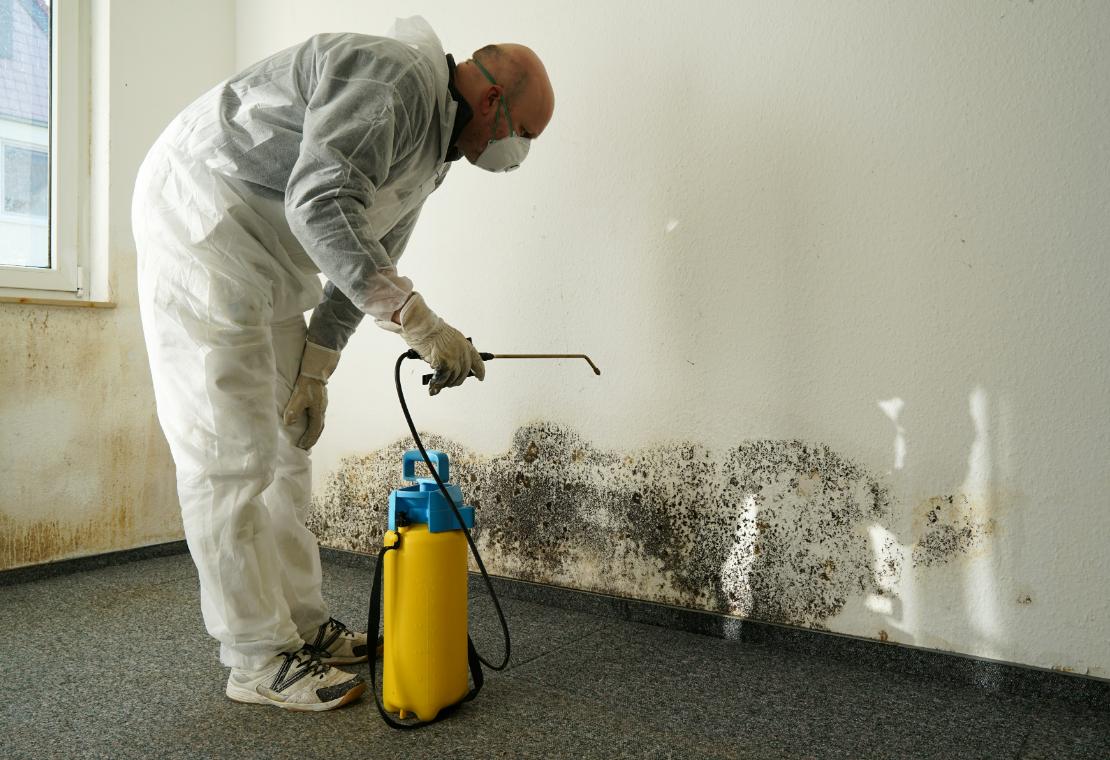
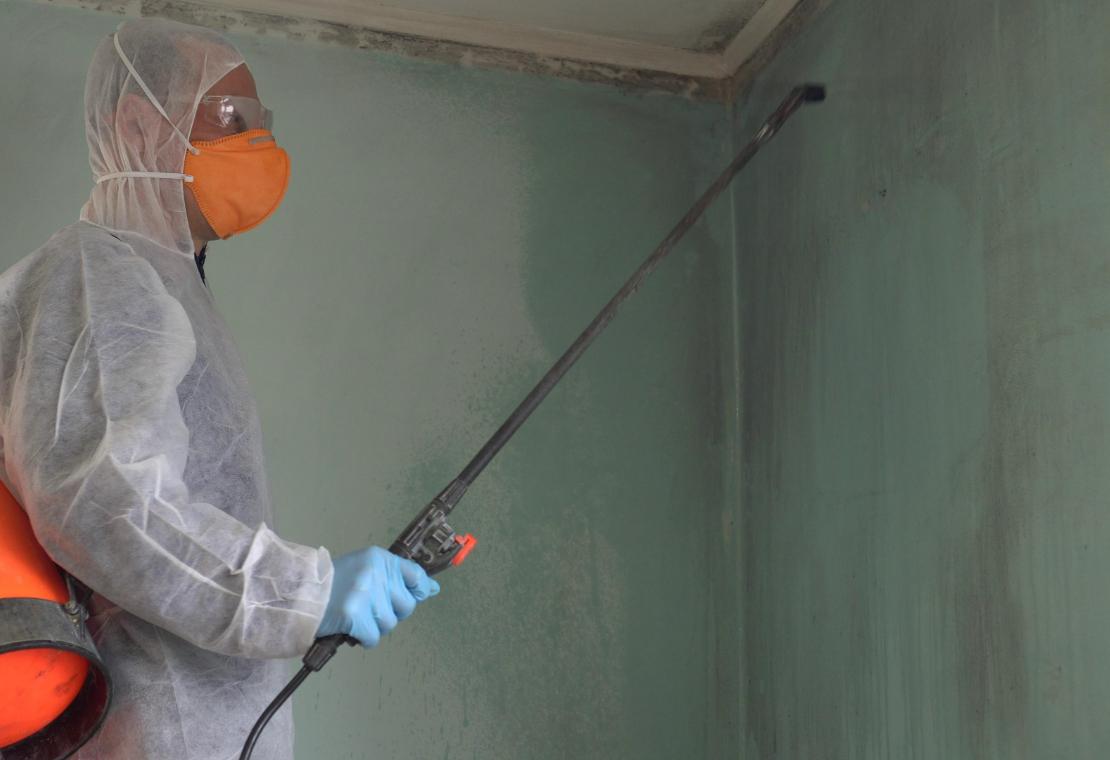
Weather arrives on this part of the peninsula with very little in its way. Buildings on the riverside edge of E14 take driving rain from across open water at wind speeds that push it horizontally into every joint, and at the upper levels of a block that pressure is enough to drive water through a defect that would never show on a sheltered elevation. A great deal of the mould found in these flats is penetrating damp at high level, and it is regularly misdiagnosed as condensation because it appears in winter.
What wind-driven rain does to a joint
Rain falling vertically runs off a wall. Rain arriving at an angle under wind pressure is forced into any opening it finds: an open perpend, a hairline crack in render, the gap behind a failed sealant bead at a window perimeter, a cladding joint whose gasket has hardened, a mortar bed under a coping. Once inside, it tracks downwards and sideways along whatever surface it meets and emerges internally some distance from where it entered, which is why the internal stain rarely sits opposite the defect.
Balcony thresholds and upstands
Balconies and roof terraces are the most frequent single source in these buildings. The threshold at the door should have an upstand and a drainage channel so that water cannot pond against it, and on a windward elevation the difference between a correctly formed threshold and a flush one is dramatic. Balcony outlets block with silt, leaves and moss; a blocked outlet on a balcony with a low threshold puts water straight over the line of the waterproofing. Growth then appears on the floor and skirting inside the door and along the wall beside it.
Reading the pattern for direction of travel
Penetration and condensation can be separated by behaviour. Water arriving through the fabric responds to weather events: it appears or worsens within a day or two of wind and rain from a particular direction, and dries back in settled spells. Condensation responds to temperature and occupancy, appearing in cold weather irrespective of rainfall and concentrating behind furniture and in corners. Keeping a simple note of when the staining changes, against the weather, is often more diagnostic than any single instrument.
Sealant is a maintenance item, not a permanent fix
Perimeter sealant at windows, doors and cladding joints has a service life and then hardens, shrinks and loses adhesion. On an exposed high-level elevation it fails sooner than the manufacturer's figure suggests. Replacing it means cutting out the old bead completely, cleaning and drying the joint, and applying a sealant suited to the movement the joint sees, not running a new bead over a failed one. Done properly it is inexpensive; deferred, it is the reason a flat needs replastering.
What is inside the flat and what belongs to the block
External walls, windows, cladding, copings, balcony waterproofing and outlets typically sit outside a resident's demise, so a finding at high level usually has to be raised with the managing agent. A report that names the element, sets out the evidence and recommends the specific repair is what allows that to progress. Internal treatment can proceed in the meantime, provided everyone understands it is treating the consequence.
Repairs, birds and cover nearby
Sealant cut out and renewed, a threshold detail corrected, an outlet cleared and re-formed, plasterboard and skirting cut out and replaced after drying: professional handyman in Poplar takes that on within the flat and on accessible external detailing. Sheltered balconies and parapets on exposed river frontages are also heavily used for nesting, and nest material blocking a balcony outlet or a rainwater head is a frequent underlying cause, so flea treatment in Limehouse deals with that side including proofing where the building agrees it. Lower-lying stock just inland is covered by a local pro near you, cleaning services across Isle of Dogs handles cleaning once repairs and treatment are finished, and the remediation method is on the our mould removal and remediation team page.
What happens on the visit
An inspection here looks at the affected room, the balcony or terrace and its threshold and outlets, the window perimeters, and the elevation from outside as far as it can be seen. Moisture readings are taken at several heights to establish where water is entering rather than only where it is showing. It is genuinely useful to know which direction the weather was coming from when the staining last worsened. Treatment is quoted by area once the ingress is identified, and external repairs at height are priced separately because access arrangements govern them.