Cross-contamination is the part of this trade that customers rarely see and professionals think about constantly. A cloth that has been round a toilet rim and then wiped a kitchen tap has undone the entire point of the visit, and nothing about the result looks wrong. Everything downstream of that problem — colour-coded cloths, separate buckets, a laundering routine, the order rooms are worked in — exists because visual cleanliness and hygienic cleanliness are not the same thing.
Colours, zones and why the system is rigid
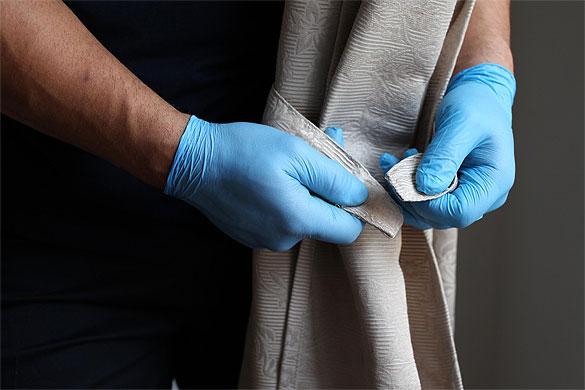
The convention is simple and deliberately inflexible: one colour for sanitary fittings, another for basins and baths, another for kitchens, another for general surfaces. Cloths do not cross zones, and once a cloth has been used it goes into a bag rather than back into a bucket. A household visit generates a surprising number of them, which is why cloths go home for a hot wash rather than being rinsed under a tap, where the rinse water simply redistributes what was picked up. Buckets follow the same logic, and the water in them is changed on a schedule rather than when it finally looks dirty, since it stopped cleaning anything a good while before that point.
Soil first, then disinfect
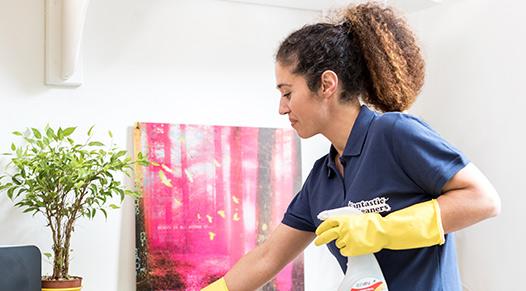
Disinfectants are deactivated by organic matter, so spraying one onto a greasy or soiled surface achieves very little. The sequence is detergent to remove the soil, then disinfectant on the clean surface, then the contact time printed on the label — usually minutes, not seconds. Wiping a product off immediately is the most common way a kitchen is left looking done and not being done. Chopping boards, bin lids, fridge handles and taps are where that distinction matters most.
Products that must never meet
Chlorine bleach and an acidic descaler released into the same confined bathroom produce chlorine gas, and the person at risk is whoever is kneeling beside the bath. Mixing is avoided by never decanting into unlabelled containers, by rinsing thoroughly between different products and by using one at a time. Dilution is followed as printed rather than improvised upward, since surplus product leaves a residue that is itself tacky and attracts soil faster than the surface did before.
What the vacuum is doing to the air
A machine without effective filtration passes fine particulate straight back into the room, which is why a house can feel dustier immediately after a clean. Sealed filtration handles that, and the bin or bag is emptied outside rather than over an indoor bin, where a cloud of exactly what was just removed is released again. Mop heads follow the same rule as cloths: laundered, not rinsed, and swapped between bathroom and kitchen floors. Filters are washed or replaced at the interval the manufacturer states, since a loaded one halves the suction and turns a capable machine into a poor one without any obvious warning.
Where a domestic visit stops
There are boundaries in this work. Nothing needing a ladder outside, no roof space, no clinical or pest-related waste, and no attempt to shift soiling that requires machinery. Deep extraction, void work and a full tenancy standard are separate jobs with their own equipment, and a check-out to an inventory standard is scoped under local end of tenancy cleaning in Islington. Ongoing upkeep at an agreed frequency is a different arrangement again, set out on Islington cleaning services specialists.
What to expect from a first attendance
A short walk round at the start settles the order of work, flags any surface with a product restriction — stone, waxed timber, unlacquered metal — and confirms where cleaning stops and tidying is left alone. Pricing is by time, so the walk round also sets a realistic expectation of what fits. Neighbouring households arrange the same thing through domestic cleaning services across Hoxton, and the wider service list is available under fully insured professional cleaners. Pets are best secured in a room that is not being worked on, both for their sake and for the sake of an open front door.










 Get the app