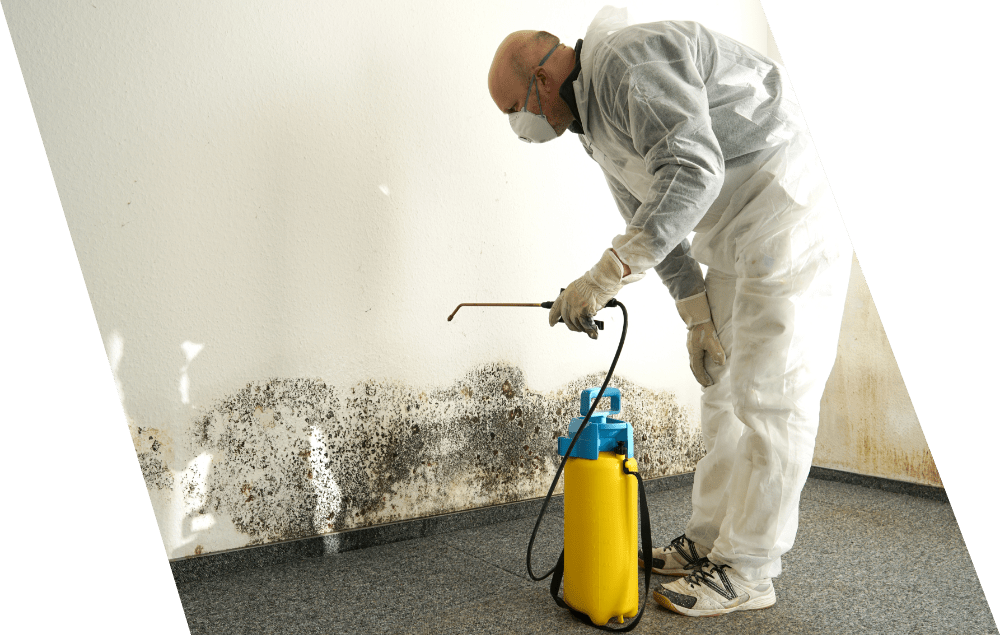
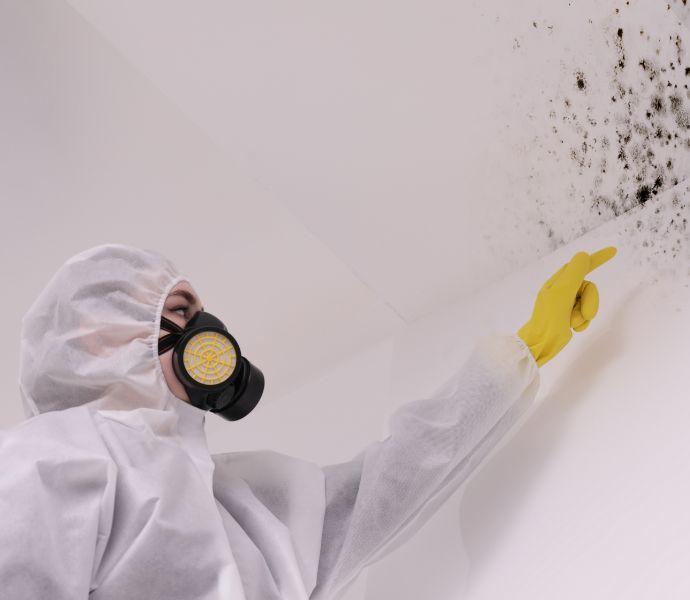
Mould grows in a pattern, and the pattern is a map of where a wall is coldest. A line two hand-widths deep above a window, a square block in the angle where two external walls meet, a band at floor level behind a sofa, a rectangle exactly the size of a wardrobe: each of those shapes points at a specific cold path through the structure, and in BR1 the shape is usually the most useful piece of evidence in the room.
Reading the shape of the growth
A straight horizontal line above an opening generally means a concrete lintel conducting heat out of the room faster than the brickwork around it. Growth in a corner indicates the classic geometric cold spot, where more external surface surrounds less internal air. A band at skirting level suggests the junction between the wall and an uninsulated floor. Spotting confined to a window reveal points at the reveal itself, which is often the thinnest, least insulated part of the whole elevation.
Surface temperature rather than damp
A technician measures three things: the air temperature, the relative humidity of the room, and the temperature of the wall surface itself. Those give a dew point, and growth establishes where the surface sits at or below it for long enough each day. This is why an affected wall can be bone dry to the touch at noon and growing mould by February. It is a heat-loss problem expressing itself as a biological one, and treating only the biology guarantees a repeat.
Knock-throughs, removed chimney breasts and concrete frames
Bromley's interwar semis have been altered more than most. A through-lounge formed by taking out a spine wall introduces a steel beam and its padstones, which is a cold bridge running the width of the house. A chimney breast removed to gain floor space takes away a warm, self-ventilating flue and often leaves a sealed void behind the new plasterboard. Nearer the town centre, blocks of the nineteen sixties and seventies have concrete frames where the frame itself is the coldest line in every flat.
What thermal imaging shows and what it does not
An infrared survey finds a cold path in seconds, provided the conditions allow it. It needs a meaningful difference between inside and outside temperature, which in practice means a heated house on a cold morning, and it needs an elevation out of direct sun. Read on a mild afternoon, an image shows almost nothing. Imaging is also not a moisture meter: it shows temperature, and a cold surface and a wet one look similar, which is why readings are taken alongside it.
Lining a cold bridge without moving the problem
Where insulated lining is the answer, the detail decides whether it works. A board fitted over just the affected area moves the coldest surface to the edge of the board, and the growth reappears in a neat outline around the repair. Lining therefore carries past the cold zone, returns into the window reveals, and continues to the wall and ceiling junction, with the vapour control layer kept continuous and taped at joints. Sockets and radiator brackets come forward, and skirtings and architraves are refitted afterwards, which is what handyman services in Bromley covers.
The voids that other things use as well
An uninsulated void behind a boxed-in chimney breast or under a suspended floor is warm, dark and undisturbed, and rodents find it long before anyone notices the damp. Where a survey finds droppings or gnawed insulation alongside the moisture, experienced pest control in Bromley deals with that directly rather than leaving it until after the remedial work is finished. The same surveyors work the neighbouring BR2 streets, so mould removal across Hayes and nearby areas runs on identical lines.
Checking that the repair has held
Good practice is to return in cold weather and repeat the surface temperature readings at the same points, and to leave a small humidity and temperature logger in the room through a winter month. Carpet edges against the treated wall hold the musty smell longer than the plaster does, and carpet cleaning across Bickley deals with that once the wall is dry. Treatment is quoted by the affected area and the method needed, with lining and making good priced separately, and the survey approach is described on experienced mould remediation.