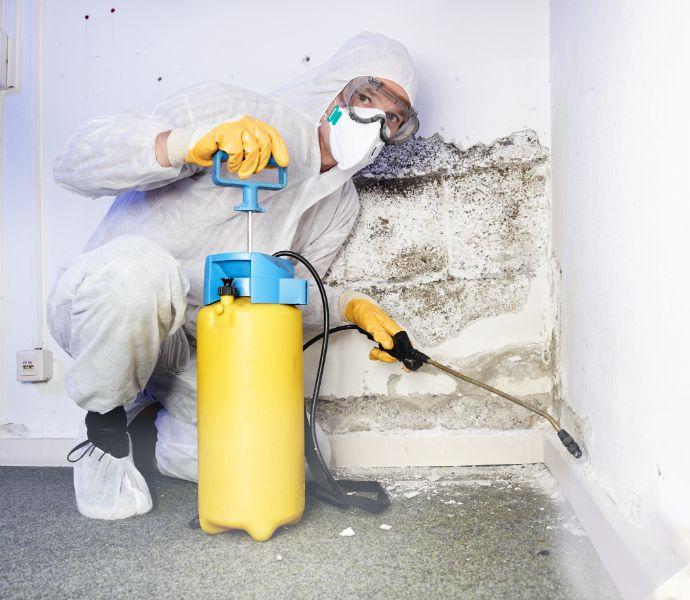
Think of a home as a system with moisture coming in and moisture going out. Everything a household does adds water vapour to the air, and only two things remove it: ventilation and absorption into cold surfaces. When the amount produced each day exceeds what the property can shift, the surplus settles on the coldest surfaces and mould follows. A great many Edmonton properties have no fault in them at all beyond a daily moisture load that has grown well past what the building was built to handle.
Adding up a day's moisture
Breathing and sleeping produce a steady contribution for every person in the property, doubled in a room where two people sleep with the door shut. Showering and bathing add a sharp burst. Cooking adds a large amount, particularly boiling pans without lids and long simmering. Washing up, mopping and wiping down all add more. Then come the sources nobody counts: an aquarium with its warm open surface, a collection of houseplants watered regularly, a dog that comes home wet, school kit and coats hung to dry on a bannister, a kettle left to boil dry. None of these is unreasonable, but they accumulate.
Why occupancy changes everything
The same house with two adults and with three generations behaves like two different buildings. Moisture production scales with the number of people, and so does the difficulty of ventilating, because more rooms are occupied, more doors are kept shut for privacy and more of the property is heated unevenly. N9 has a mix of Victorian terraces, interwar housing and post-war estate stock, and a good proportion of the family homes are working much harder than their original design assumed. That is not a criticism of how anybody lives; it is a design gap that has to be closed on the removal side.
Low ground and a damp outdoor baseline
The eastern side of the district sits on low, level ground where the water table is close to the surface and outdoor humidity stays high through the colder months. That matters because ventilation works by exchanging indoor air for outdoor air, and it only dries a property if the outdoor air is drier once it has been warmed. On a cold damp day that still holds, but on a mild damp day in autumn it barely does, which is why opening every window in November can feel as if it achieves nothing. Heat and air change have to work together.
Measuring instead of guessing
A cheap hygrometer left in the worst room for a fortnight is worth more than any amount of discussion. What it shows is the shape of the day: a peak in the morning, a peak in the evening, and whether the level ever comes back down in between. A property that returns to a reasonable level between peaks has enough removal capacity and a habit problem. A property that never comes down has a capacity problem, and no amount of routine change will fix it on its own. Readings also show which rooms are feeding which, since air moves from the wettest room to the coldest one.
Reducing the load and raising the removal
On the production side: lids on pans, the kitchen door shut while cooking, bathroom doors shut during and after use, cold water run into a bath before hot, wet clothing dried outdoors or in one room with the door closed and the window open. On the removal side: extraction that runs on after use, background ventilation that is actually open, and heating maintained at a steadier level rather than in short bursts in a single room. Where the gap is too large to close by habit, mechanical help is needed, and the assessment behind that decision is covered under the service in detail.
What the visit covers and how it is charged
A first visit records temperatures and humidity in every affected room, maps surface moisture, looks at the whole property rather than only the room complained about, and produces a list split into what the household can change and what needs work. Treatment of existing growth is charged by the area affected and the materials involved; a survey on its own is charged as a single visit. Clearing furniture from external walls before the appointment lets far more be seen. Cleaning down and laundering affected soft items is the kind of work same-day cleaning services in Holloway takes on, refixing trims and fitted units afterwards is a job for Edmonton handyman service, the local team covers the pest side when a void proves occupied, and trusted mould removal services in New Southgate deals with the same load problem in the housing to the west.