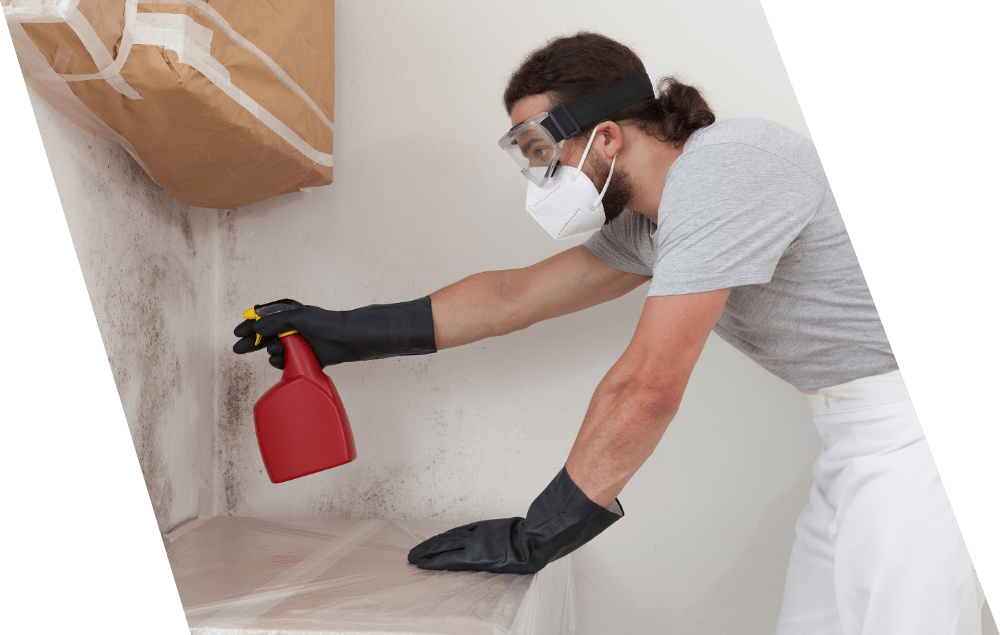
Mould that comes back three weeks after a treatment is the single most common complaint in this line of work, and it is usually taken as evidence that the treatment failed. In most cases it is evidence of something else: that the treatment was the only thing done. Killing and removing a colony deals with biology. It does not change the temperature of a wall, the amount of vapour in a flat or the route by which water arrives, and those are what decide whether a new colony establishes.
What a treatment can and cannot promise
A promise about surfaces is straightforward: growth removed, material treated, affected porous material replaced, surfaces left clean and stable. A promise about the future is conditional, because it depends on conditions nobody carrying out the treatment controls. Any guarantee on mould work that does not name the conditions it depends on is worth very little, and a household that has been given one often discovers this at the worst moment.
The conditions a recurrence clause rests on
Realistic conditions are specific: the cause identified in the report has been corrected, the ventilation described is in working order and in use, heating is maintained rather than run in short bursts in one room, and no new source of water has appeared. Where the report identified a cause outside the flat that the occupier cannot fix, the honest position is that cover is limited to the work carried out and not to the outcome.
Causes that sit outside the front door
Camden's housing runs from Georgian terraces and mansion blocks to large post-war estates and flats above commercial premises. In managed buildings the cause frequently sits beyond the flat: a shared soil stack, a roof or parapet, an unheated communal corridor against a bedroom wall, or a neighbouring property that is empty and unheated. A technician can document it and can treat the effects, but cannot repair a building they were not instructed on, which is why a report matters more than a warranty.
Documenting the visit so it holds up later
A usable record names the affected rooms and surfaces, the readings taken and where, the cause concluded and why, what was removed, what was treated, and what was recommended but not instructed. That last line is the one that protects everybody. It tells a leaseholder what to put to a managing agent, gives a landlord evidence of action, and tells the next technician what has already been tried. The general framework behind those records is described under our national mould removal and remediation service.
Monitoring instead of hoping
Where the cause cannot be removed immediately, the sensible arrangement is a monitored interval: readings at the end of the work, a hygrometer left in the room, and a return visit at the point in the season when the problem previously appeared. A return that finds nothing is useful information. A return that finds early spotting in a new location is far cheaper to deal with than a wall discovered in February.
When a second opinion is the right move
Recurrence in the same outline after two competent treatments means the diagnosis is wrong rather than the method. At that point the investigation restarts from scratch with a wider scope, including the flats above and beside, rather than repeating what has already failed twice. Where a void has turned out to be occupied rather than merely damp, wasp nest removal services in Camden deals with that cause directly.
How repeat and follow-up visits are arranged
Follow-up work is booked as a short appointment rather than a full treatment, and it is charged accordingly, by visit rather than by area. The household is asked to leave any new spotting in place rather than wiping it away, since its position and shape are the evidence. Access to the original rooms and to the report itself speeds everything up. Repairs identified along the way, from a poorly fitting internal door to a redundant opening that needs closing, are work for fully insured minor repairs in Camden; a thorough clean of affected contents after treatment is the kind of job cleaning services throughout Primrose Hill handles; and mould removal cover across Primrose Hill applies the same monitoring approach in the streets to the north.