Insulating a solid wall is the right thing to do and the most reliable way to create a mould problem if the detailing is wrong. That trade-off matters in DA5, where the older cottages and small terraces around the village core, along with the Victorian houses on the higher ground, are built in solid brick with no cavity at all. A thermal lining cures the cold surface it covers and moves the condensation risk to every junction it does not.
What a solid wall does in winter
Nine inches of brick has poor thermal resistance and considerable thermal mass, so the internal face stays cold for long periods and warms slowly. Household moisture condenses on it, generally first in corners, behind furniture and at the wall-to-ceiling junction where air movement is weakest. Heating the room harder helps a little; the surface temperature is the variable that actually decides whether growth appears.
The junctions a lining leaves behind
Insulated plasterboard or a thermal lining raises the temperature of the wall face it covers. Window reveals, sills, the head of the opening, the returns into internal partitions and the junction with the floor and ceiling frequently do not get treated, because they are fiddly and they eat into the opening. Those untreated strips are then the coldest surfaces in a warmer room, and the mould that used to spread across the whole wall concentrates into a neat frame around each window. Returning the insulation into the reveal and detailing it at floor and ceiling level is the difference between solving and relocating the problem.
Breathable systems and older fabric
Older brick and lime-mortared walls are built to absorb and release moisture. Bonding an impermeable board and a sealed vapour barrier onto such a wall can hold water within the masonry, particularly on an elevation that takes driving rain or where external ground levels are high. Wood-fibre and lime-based systems, or an insulating plaster, allow the wall to keep drying inwards. Which approach is right depends on the wall, the exposure and what has been done to the outside, and it is a judgement to make before anything is fixed to the plaster.
What gets found behind the plaster
Opening up a lined wall that has gone mouldy tends to produce one of three findings: condensation on the cold side of the insulation because there was no continuous vapour control layer; water tracking down from a defect above and running behind the board; or a bridged detail at a reveal or a floor. Distinguishing between them decides whether the lining can be repaired locally or has to come off a whole elevation, and it is worth the hour it takes to establish.
Treatment, drying and what goes back
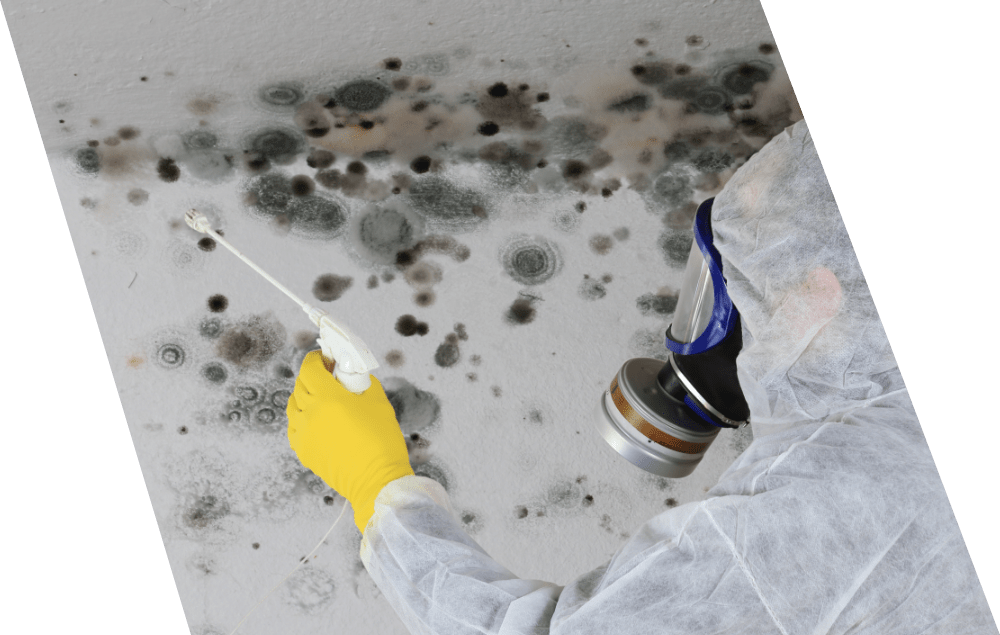
Affected plasterboard that has been wet and grown mould on its rear face is removed rather than treated, because the growth is on the side nobody can reach. Masonry behind it is cleaned, treated and dried with air movement until readings are stable, which on a solid wall in winter takes longer than people expect. Reinstatement then uses a specification suited to the wall, and decoration uses a mineral or otherwise vapour-open paint rather than vinyl emulsion.
The work around it and nearby cover
Reveals lined out, skirtings and architraves refitted, a vent installed, plasterboard renewed, ground levels and external pointing attended to: Bexley odd jobs handles those, and getting them done in the right order is most of the battle. Persistently damp timber in an older solid-walled property also attracts wood-boring insects, and where a survey turns up flight holes alongside the moisture our Bexley team assesses whether an active infestation needs treating before timbers are boxed back in. The riverside stock further north is covered by black mould removal services in Erith, Crayford domestic cleaning deals with the clean once plastering is finished, and the full specification is on the local condensation treatment page.
Arranging the work
If a wall has already been lined or dry-lined, knowing roughly when and by whom saves a lot of investigation. Access to at least one window reveal and one floor junction on the affected wall is needed, and a small area of plasterboard may have to be cut to inspect behind. Costs follow the wall area involved, the depth of make-good required and whether a breathable system is being specified, with the drying period quoted separately because it governs the programme more than the labour does.