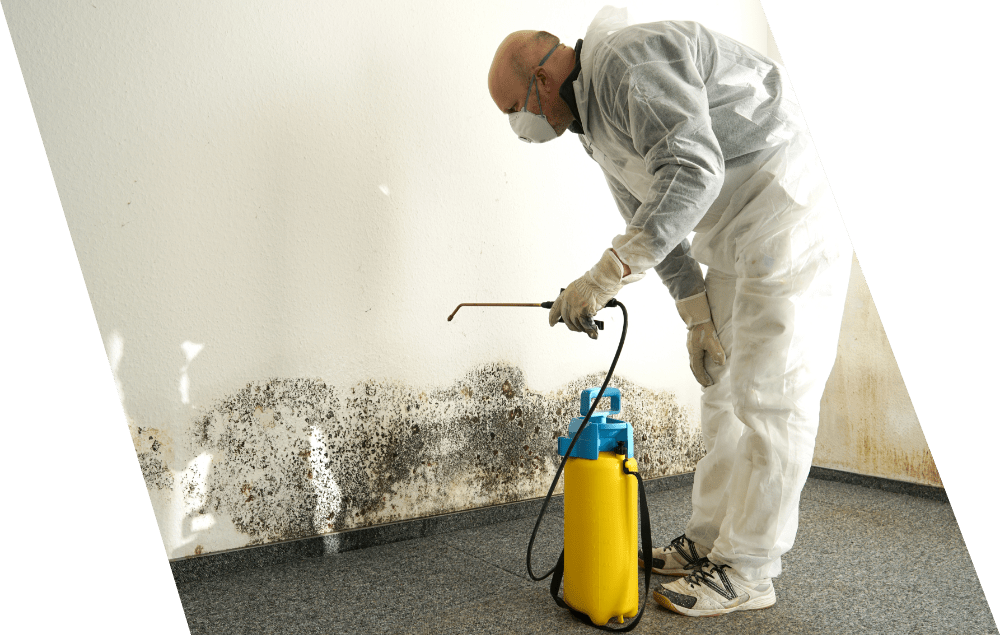
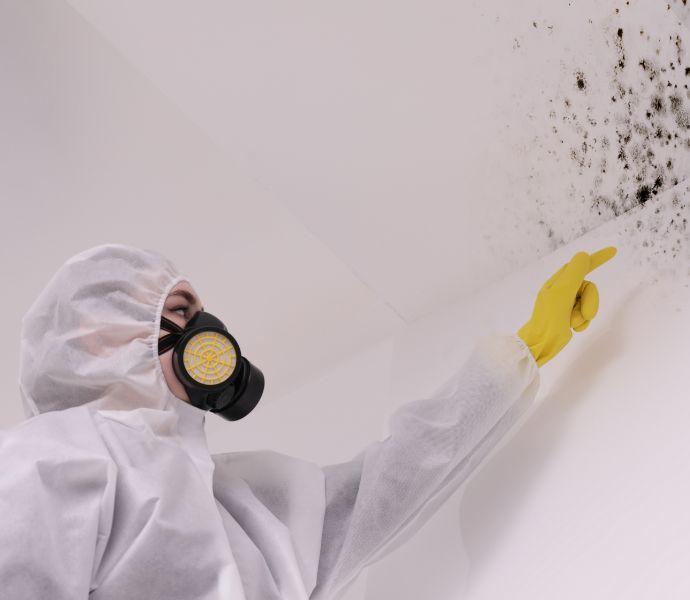
Put gypsum plaster and a vinyl paint on a solid Georgian wall and the mould that appears afterwards is a material choice, not bad luck. Greenwich has a dense concentration of pre-Victorian and early Victorian brick housing, much of it in conservation areas and some of it listed, built with soft bricks, lime mortar and lime plaster and designed to take up moisture and give it back. Modern impermeable finishes applied over that construction trap moisture at the interface, and the growth follows the interface rather than the room.
How a solid lime-plastered wall was meant to work
Soft brick laid in lime mortar absorbs water during driving rain and releases it again when the weather turns. Lime plaster inside does the same on the other face, moving moisture through itself and letting it evaporate into the room, where ventilation carried it away. There is no barrier anywhere in that system and there was never meant to be one. The wall is not waterproof; it is a buffer that works as long as both faces can breathe.
What happens when the finish is sealed
A cement render outside, or gypsum plaster and a plastic-based paint inside, stops the wall exchanging moisture with the air. Water still gets in, through the mortar, at a cracked cill or from ground level, but now it accumulates behind the finish. Pressure and salts build at the boundary, the plaster blows away from the brick in patches, and the surface stays cold and damp enough to grow mould in a thin even film — often across a whole wall rather than in corners, which is the signature that separates it from condensation.
Choosing the replacement material
Where a finish has to come off, what goes back matters as much as what is removed. A lime plaster on a solid wall lets the wall carry on working and tolerates the small amount of moisture that will always pass through it. Gypsum on the same wall will fail again, usually within a couple of winters. Breathable mineral paints and limewash allow evaporation from the surface; vinyl emulsions and waterproof coatings do not, which is why a room that was redecorated to cure a damp patch so often looks worse the following year.
Conservation constraints and what they permit
In a listed building or within a conservation area, alterations to windows, external finishes and visible features are controlled, and that shapes the remedy. It rarely blocks the work: removing an inappropriate cement render, reinstating lime plaster and improving extraction internally are generally the kind of measures that sit comfortably with the character of the building, while replacing windows or cutting new external terminals may not. Establishing what consent regime applies before specifying anything avoids a scope that cannot be carried out.
Removal on soft historic fabric
Method has to suit the material. Mechanical tools on soft brick take the face off it, and aggressive removal of plaster around a cornice, a panelled shutter or a moulded architrave destroys joinery that cannot be replaced. Plaster comes off wet and by hand where it adjoins original detail, mouldings are protected before work starts, extraction runs at the working face, and dust is kept off timber that has a historic finish. Drying is then slow by modern standards, because lime and soft brick give up water gradually and forcing it with heat causes shrinkage and cracking.
What a job here involves
An inspection covers the wall build-up, the finishes present, the external condition and the ventilation, because all four are part of the answer. Pricing reflects the area of finish removed, the specification of the replacement plaster and the length of the drying and monitoring period, which is longer on this kind of construction than on a modern wall. Access in a terrace with restricted parking and no side passage affects how materials and waste move, so that is worth settling at the point of booking. Repairs to shutters, skirtings and original joinery are handled by professional odd jobs in Greenwich; insects established in damp floor perimeters and voids are dealt with by flea treatment services in Greenwich; the final clean of a room full of plaster dust is arranged with the cleaning services team in Kennington. The same work on the hill above is covered by Maze Hill mould removal team, and the general method is on nationwide mould removal and remediation services.