


Mould Removal and Remediation Services Temple
Comprehensive mould remediation services that combine expert inspection, safe treatment, and prevention strategies to eliminate mould effectively.

Comprehensive mould remediation services that combine expert inspection, safe treatment, and prevention strategies to eliminate mould effectively.
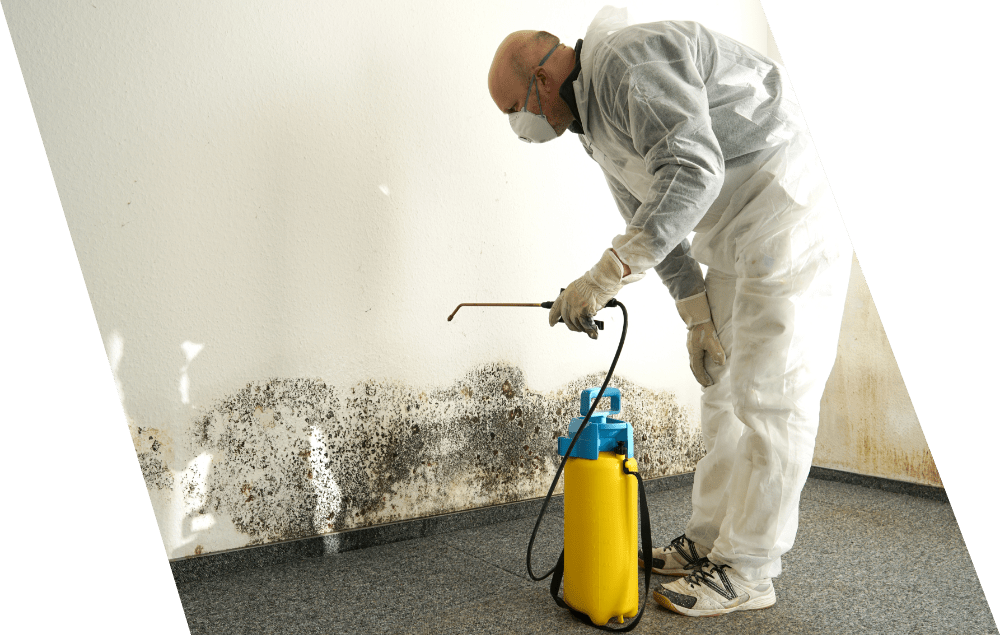
The cost of mould removal depends on the size of the affected area and the type of treatment required. After a detailed inspection a clear, personalised quote is provided based on the scope of work.
| Small mould area (e.g. around a window or corner) | Medium mould area +£100 (large section of a wall affected) | Large mould area +£150 (more than one wall or ceiling) | ||||
|---|---|---|---|---|---|---|
| Room | Standard | Fantastic Club* | Standard | Fantastic Club* | Standard | Fantastic Club* |
| Bedroom | £350 | £320 | £450 | £420 | £500 | £470 |
| Bathroom | £350 | £320 | £450 | £420 | £500 | £470 |
| Kitchen | £350 | £320 | £450 | £420 | £500 | £470 |
| Living / Dining room | £350 | £320 | £450 | £420 | £500 | £470 |
| Hallway / Landing | £350 | £320 | £450 | £420 | £500 | £470 |
| Utility room | £350 | £320 | £450 | £420 | £500 | £470 |
| Paid inspection | £50 | |||||
| *Price for members of the Fantastic Club. The Fantastic Club is a yearly subscription of £89. | ||||||

For local mould removal in Temple, count on our specialists who start with a detailed inspection and moisture assessment. This helps to ascertain the level of mould infestation and its sources, such as dampness or inadequate ventilation. Our mould cleaning service in Temple targets critical structured surfaces like walls and ceilings, ensuring a thorough treatment while excluding soft furnishings.
Our mould remediation in Temple firm focuses on comprehensive solutions that capture airborne mould spores, thus improving health and safety. Employing HEPA filtration systems, we effectively remove spores from the air, whereas HOCl (Hypochlorous Acid) neutralises harmful mould and bacteria effectively. With ULV fogging technology, we also reach concealed areas that require attention. This extensive treatment regime enhances indoor air quality, prevents structural damage, and promotes healthier living conditions for you and your family.
The meticulous mould remediation process in Temple commences with a comprehensive inspection and moisture assessment carried out by our local specialists. With the help of advanced professional equipment, we pinpoint both visible and hidden sources of dampness, which are critical in preventing future mould problems. The identification of excess moisture plays an essential role in our remediation strategy. Our methods also include using HEPA filtration systems and air scrubbers to capture airborne mould spores, ensuring that the indoor air remains safe during the entire treatment.
In our mould cleaning efforts in Temple, we leverage the potency of HOCl (Hypochlorous Acid), a non-toxic solution that skillfully neutralises mould, bacteria, and mycotoxins at a molecular level. Moreover, we utilize ULV (Ultra-Low Volume) fogging technology to achieve complete coverage, targeting hidden areas effectively. The physical mould removal process involves specialized equipment with H-Class filtration to contain potential contaminants securely. Our final actions encompass air purification and long-term protection strategies, improving indoor air quality and significantly cutting down the chance of future mould contamination.

Booking mould cleaning is quick and designed to get results without unnecessary delays.
Share what you’re dealing with, whether it’s visible mould, damp patches, or a recurring problem. This helps determine the right approach, from mould cleaning to full mould remediation.
A specialist checks the affected areas and identifies what’s causing the mould, such as excess moisture, condensation, or poor ventilation. This ensures the issue is treated properly, not just on the surface.
You’ll get a straightforward quote based on the level of contamination and the type of mould removal required. The service is tailored to ensure effective results and long-term protection.
The treatment removes mould and improves indoor air quality, helping to prevent future growth and create a healthier living space. It also targets the root cause of the problem for longer-lasting results.
Mould removal requires more than basic cleaning, which is why it’s handled by trained mould remediation specialists experienced in treating both visible and hidden contamination. Each specialist assesses the full extent of mould growth, including underlying causes such as excess moisture, condensation, and ventilation issues, ensuring the problem is addressed properly rather than just on the surface.
Number of bookings: 3178
With Fantastic Services for: 4 years
Other specialities:
Number of bookings: 298
With Fantastic Services for: 3 years
Other specialities:
Number of bookings: 205
With Fantastic Services for: 3 years
Other specialities:
Alongside professional mould removal and mould cleaning, a range of additional property care services is available to help maintain a healthier indoor environment.
Mould can spread quickly and impact both health and property if not treated in time. Book a service today to remove mould, improve indoor air quality, and restore a cleaner and healthier living environment.

The first sign in Temple is often a smell rather than a stain. EC4Y is a district of eighteenth and nineteenth-century sets and chambers arranged around courts and staircases, with storage pushed into the places nobody heats: brick-vaulted cellars under the pavement, cupboards on unheated landings, and the back of a deep press built into an outside wall. Paper, leather and cloth held in those spaces take up water from the air long before anything shows, and by the time a box smells musty the growth is inside the material.
Lime plaster on solid brick is porous but inert. Paper, board, cloth, leather and animal glue are food. Above roughly seventy per cent relative humidity, the water held within those materials is enough to support growth with no liquid water present anywhere, which is how a bundle of files blooms in a cellar whose walls read dry. It also explains why a colony on a book spine returns within weeks of being brushed off - the mycelium sits inside the fibre, and the air around it has not changed.
The vaults and light wells below the pavement line are the wettest part of most of these buildings. They sit under external ground level, were built with no barrier in the floor or the walls, and were originally ventilated through grilles and pavement lights that have since been sealed, paved over or built against. Restoring a route for air, holding humidity down mechanically and keeping stored material clear of the floor and the outside walls achieves far more than any coating on the brickwork, which tends to push moisture sideways to the next weak point. Cellars in this condition are also where silverfish and booklice concentrate, feeding on the same damp starch and paste, so Shoreditch pest control services is worth involving when a survey turns them up among stored material.
Salvage is decided item by item. Hard non-porous things - glass, metal, sealed plastic - clean up completely. Sealed and polished timber usually recovers. Bound paper and board can often be stabilised by drying first and cleaning afterwards, with a soft brush under extraction rather than a damp cloth, which drives spores deeper into the fibre. Upholstery, foam, cardboard and carpet underlay that have been wet and colonised are normally written off, because contamination runs through the full thickness and cleaning cannot reach it. Anything being kept is dried before it is cleaned, never the other way round, and rooms emptied for that process need a thorough clean before material goes back, which is where local cleaning services across Barbican fits.
Much of this stock is listed or sits in a conservation area, and that narrows the options considerably. Cement renders, injected chemical courses and sealed internal linings are standard on a modern cavity wall and the wrong answer here: a wall built to pass moisture through soft brick and lime mortar holds water behind an impermeable layer, and altering historic fabric may need consent in its own right. The appropriate work is duller and more effective - closing the route water is taking in, restoring air movement, and holding humidity down with equipment sized for the volume of the space. Why a breathable specification is used, and what the guarantee covers, is set out on how it works.
A remediation visit nearly always leaves a short list of building tasks behind it: a blocked grille reopened, a shelving run rebuilt clear of the wall, a door undercut so air can pass beneath it, skirting lifted and refitted, a cupboard back removed permanently. fully insured furniture assembly in Shoreditch covers that kind of work, and doing it in the same fortnight is the difference between a treated cellar and a cellar that stays treated.
The chambers and residential stock on this side of the City are handled by the same teams, so mould removal team in Tower Hill follows the same pattern of working. Access is on foot through courts and up staircases with no lift, which governs the size of equipment that can be brought in, and the porter or building manager usually needs notice. A first attendance measures both air and material moisture, photographs the affected storage, and states plainly what is treatable in place, what has to be taken away for treatment, and what is past saving. Pricing follows the volume of the space, the equipment left running and the quantity of contents handled.
Skip the line, request and
book a service online


