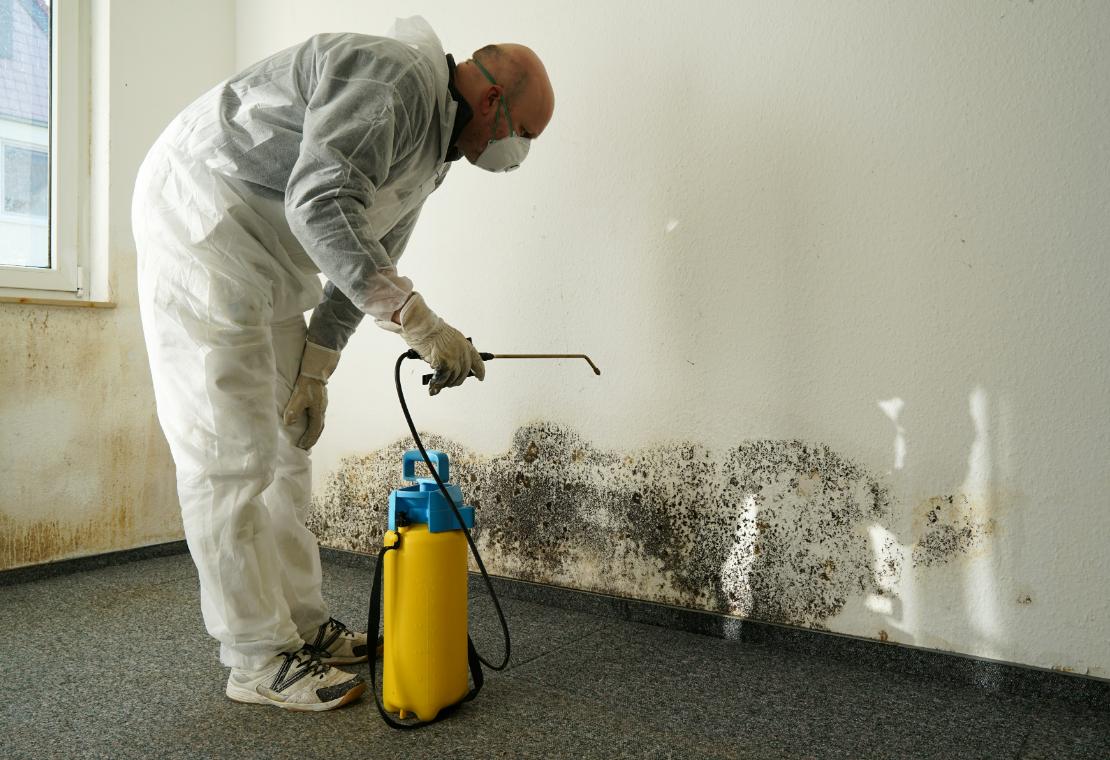
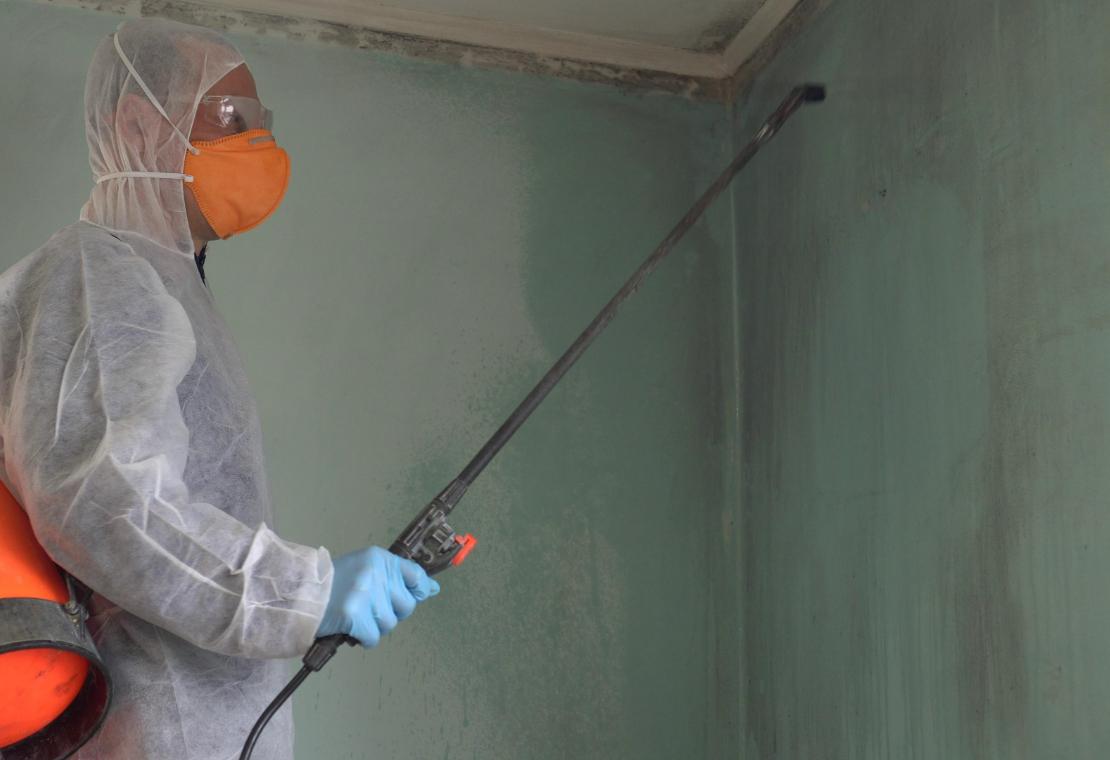
Almost nothing in EC4 was built as housing. The residential addresses around Blackfriars tend to be upper floors of former banking halls, print works and nineteen-eighties offices, carved into flats as the City's commercial floorspace moved on from its older buildings. That origin is written into the mould these flats produce: deep floorplates with bathrooms pushed into the middle where no window reaches, sealed glazing, and an air supply that depends entirely on fans running in a ceiling void.
A flat that cannot be aired
In a terraced house, opening windows on two elevations shifts the air in a room within minutes. A converted office floor offers no such option. The glazing may be fixed, the openings that exist may all face one way, and an inboard shower room has no external wall at all. Where the extract serving that shower room is weak, or wired to the light switch with no overrun, vapour from a shower migrates into the hall instead of leaving the flat and settles on the coolest surface available - typically a window reveal on the shaded elevation, or plaster behind a wardrobe pushed against an outside corner.
Ductwork decides the outcome
The fan is rarely the whole story. Extract from an internal bathroom travels several metres through ducting above a plasterboard ceiling before it reaches a riser or a facade grille, and that run is where things fail. Flexible hose gets crushed by a later ceiling alteration. A long sagging length fills with condensate. An uninsulated duct crossing a cold void chills the moist air until it drops its water back down the line. A backdraught shutter seizes shut. Measuring the volume of air actually leaving the terminal, rather than confirming that the fan spins, is what turns an opinion into a diagnosis. Replacing a crushed run, fitting a unit of the right duty and making good the ceiling afterwards is joinery and electrical work rather than remediation, and handyman services across Shoreditch covers that side of it.
When it is a leak rather than the air
Not every patch is condensation. Converted floors carry long horizontal pipe runs and boxed soil stacks serving the flats above, and a weeping joint inside a boxed riser produces staining that is wet to the touch, tracks a vertical line and worsens regardless of the season. A pinhole in a chilled water circuit behaves the same way. The distinction is straightforward in principle: condensation follows the cold surfaces and the calendar, a leak follows the pipe. Where the readings and the pattern point at pipework, plumbing for rented homes in Aldgate is the trade that has to attend first, because treating masonry that is still being wetted achieves nothing at all.
What else uses the same voids
Ceiling and riser voids in a converted building are continuous in a way they never are in a house. They link flats vertically, carry warm humid air, and offer cover. Technicians opening them up regularly find evidence of mice, and in kitchens of insects that have travelled the same warm ducted routes from plant at street level. Where droppings or smear marks turn up alongside the growth, the pest control team in Shoreditch runs in parallel with remediation, since clearing the colony without closing the route leaves the second problem exactly where it was.
Cover across the City fringe
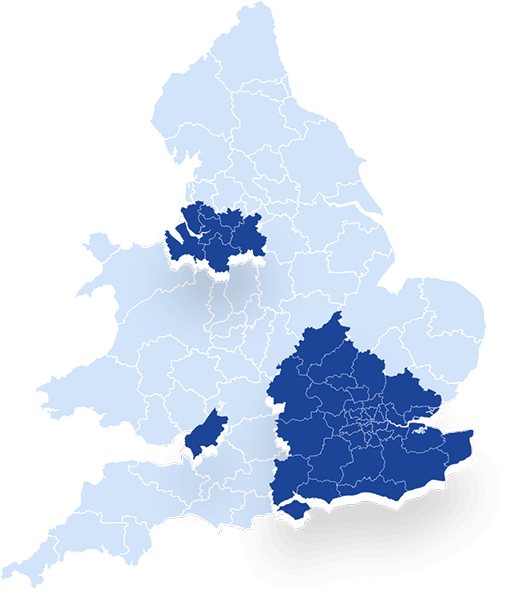
The City's residential pockets are small and scattered, so the same technicians and the same equipment move between districts in a single day. what the visit includes operates on identical terms, and where a building straddles a boundary the work is scheduled as one attendance rather than two. Reports are written per flat, which matters in a converted building where a managing agent may be dealing with the same defect on four different floors.
Arranging a visit in a City building
Work here is organised around the building rather than the street. Kerbside parking is not a realistic option, so equipment comes in on foot or through a loading bay with a booked slot, and a goods lift generally has to be reserved ahead. Many managing agents restrict noisy work to set hours and want a permit and insurance details before anyone starts. Having the agent's name and any contractor rules to hand when the appointment is made avoids a wasted trip. Treatment is quoted on the extent of the affected area and the method required, with mechanical and ventilation work priced separately; the standing method, containment arrangements and guarantee terms are set out on our main service page.