


Mould Removal and Remediation Services in Waterloo
Professional mould removal and remediation experts eliminating contamination from walls, ceilings, and floors while targeting airborne spores for healthier indoor air.

Professional mould removal and remediation experts eliminating contamination from walls, ceilings, and floors while targeting airborne spores for healthier indoor air.
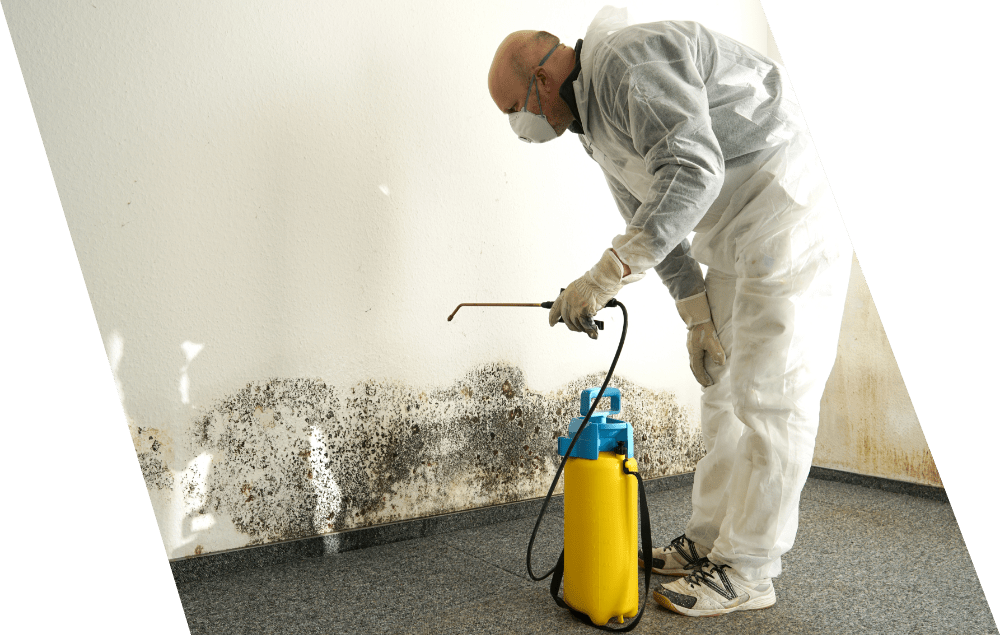
The cost of mould removal depends on the size of the affected area and the type of treatment required. After a detailed inspection a clear, personalised quote is provided based on the scope of work.
| Small mould area (e.g. around a window or corner) | Medium mould area +£100 (large section of a wall affected) | Large mould area +£150 (more than one wall or ceiling) | ||||
|---|---|---|---|---|---|---|
| Room | Standard | Fantastic Club* | Standard | Fantastic Club* | Standard | Fantastic Club* |
| Bedroom | £350 | £320 | £450 | £420 | £500 | £470 |
| Bathroom | £350 | £320 | £450 | £420 | £500 | £470 |
| Kitchen | £350 | £320 | £450 | £420 | £500 | £470 |
| Living / Dining room | £350 | £320 | £450 | £420 | £500 | £470 |
| Hallway / Landing | £350 | £320 | £450 | £420 | £500 | £470 |
| Utility room | £350 | £320 | £450 | £420 | £500 | £470 |
| Paid inspection | £50 | |||||
| *Price for members of the Fantastic Club. The Fantastic Club is a yearly subscription of £89. | ||||||

Our mould removal service near Waterloo is executed by local specialists who perform detailed inspections and moisture assessments to ascertain the extent of mould contamination. We identify the root causes, including poor ventilation, damp conditions, or past water damage, to ensure a targeted approach. The service primarily addresses structural surfaces such as walls, ceilings, and floors where mould is likely to grow. It's important to keep in mind that our treatments do not extend to soft furnishings, focusing instead on creating a safer environment within your home or business.
Mould remediation in Waterloo encompasses more than just surface-level cleaning by addressing airborne mould spores that can affect indoor air quality. We utilise advanced HEPA filtration systems to efficiently capture these spores, while HOCl (Hypochlorous Acid) neutralises mould and bacteria at a fundamental level. To guarantee total coverage, we employ ULV fogging technology, ensuring that every nook and cranny is treated. By opting for our professional mould removal services, you are not only safeguarding your health but also averting potential structural damage, securing a healthier living space in the long run.
In the realm of mould remediation in Waterloo, the process begins with an exhaustive inspection and moisture assessment. This is carried out using professional equipment designed to reveal both visible and hidden damp conditions. Identifying sources of excess moisture is critical, as it allows local mould removal specialists to mitigate future risks effectively. During the remediation process, HEPA filtration systems and air scrubbers are employed to capture any airborne mould spores, thus maintaining a safe indoor environment for residents.
The application of HOCl (Hypochlorous Acid) comes next, known for its non-toxic properties and effectiveness in neutralising mould, bacteria, and mycotoxins at a molecular level, thus enhancing the mould cleaning process in Waterloo. The use of ULV (Ultra-Low Volume) fogging technology ensures thorough coverage, penetrating deep into recesses and hidden spaces. Physical mould removal follows, utilizing specialized equipment with H-Class filtration to securely contain contaminants. The operation concludes with comprehensive air purification and long-term protective measures that significantly improve indoor air quality and decrease the likelihood of future mould contamination in Waterloo.

Booking mould cleaning is quick and designed to get results without unnecessary delays.
Share what you’re dealing with, whether it’s visible mould, damp patches, or a recurring problem. This helps determine the right approach, from mould cleaning to full mould remediation.
A specialist checks the affected areas and identifies what’s causing the mould, such as excess moisture, condensation, or poor ventilation. This ensures the issue is treated properly, not just on the surface.
You’ll get a straightforward quote based on the level of contamination and the type of mould removal required. The service is tailored to ensure effective results and long-term protection.
The treatment removes mould and improves indoor air quality, helping to prevent future growth and create a healthier living space. It also targets the root cause of the problem for longer-lasting results.
Mould removal requires more than basic cleaning, which is why it’s handled by trained mould remediation specialists experienced in treating both visible and hidden contamination. Each specialist assesses the full extent of mould growth, including underlying causes such as excess moisture, condensation, and ventilation issues, ensuring the problem is addressed properly rather than just on the surface.
Number of bookings: 3178
With Fantastic Services for: 4 years
Other specialities:
Number of bookings: 139
With Fantastic Services for: 2 years
Other specialities:
Number of bookings: 205
With Fantastic Services for: 3 years
Other specialities:
Alongside professional mould removal and mould cleaning, a range of additional property care services is available to help maintain a healthier indoor environment.


























Mould can spread quickly and impact both health and property if not treated in time. Book a service today to remove mould, improve indoor air quality, and restore a cleaner and healthier living environment.

Regular cleaning prevents a great deal of mould and cures almost none of it, and knowing where that line falls saves households in SE1 both money and disappointment. A cleaner working in a Waterloo flat can keep a shower screen, a window sill and a kitchen splashback clear indefinitely with nothing more than a cloth and a routine. The same cloth on a bedroom wall where growth has gone into the plaster achieves a cosmetic improvement for a fortnight, and sometimes makes matters worse by spreading spores around a room that people sleep in.
Growth on a hard, non-absorbent surface is sitting on top of that surface and comes off. Sealant beads, tiles, glazing, sills, painted woodwork and the inside of a shower enclosure all fall into that category, and wiping them down before growth establishes is the most effective preventive measure available to any household. Keeping the same surfaces dry after use, wiping a window sill on a cold morning and not leaving wet towels folded against a wall are the small habits that keep a flat clear without any intervention at all.
Absorbent materials are different. Emulsion on plaster, wallpaper and its paste, plasterboard, timber, grout and carpet underlay all take growth into their thickness. What is visible on the surface is a fraction of what is present, so wiping removes the stain and leaves the colony. The clue is recurrence in the same place within days or weeks and a patch that lightens but never disappears. At that point the material has to be assessed, and usually removed, rather than cleaned again.
Three are worth naming. Dry brushing or vacuuming with a domestic machine puts spores into the room air and distributes them. Neat bleach on porous plaster bleaches the stain, adds water to the very material that is too wet, and leaves the growth alive below the surface. Abrasive pads on a textured or painted finish break the surface open so the next colony keys in harder. None of this is the fault of the person cleaning; it is the predictable result of asking a cleaning method to do a remediation job.
Remediation starts by identifying why that surface is damp, because nothing else has any lasting effect. It then removes unsound material wet, with extraction at the working face and waste bagged as it comes out, treats surfaces that are staying with a biocide left on for its full dwell time, dries the substrate to a monitored standard, and only then hands the room back for decoration and normal cleaning. It is a sequence with a cause at one end and a measurement at the other, which is exactly what a cleaning visit is not designed to be.
Once the wall is dry and treated, ordinary cleaning becomes useful again — and there is usually a proper clean needed, because remediation is dusty work in a small flat. Putting the room back in order, including the surfaces that were protected while work went on, is arranged with local cleaning services in Waterloo. Carpets and rugs that were outside the affected area but have been lived around during the work are worth dealing with separately, and that is a job for carpet cleaning team in Waterloo, best done after drying has finished rather than before.
A sensible division of labour: the household or its cleaner keeps hard surfaces dry and clear, keeps furniture off cold walls so air can move behind it, runs the bathroom extraction through and after showering, and reports a patch that keeps coming back rather than painting over it. Remediation deals with cause, material and drying. Where a small patch is caught early on a hard surface, cleaning is the whole answer; where it is in plaster, it never is.
An inspection first, since the scope depends on whether the affected material is absorbent and how far the growth has gone into it. Pricing follows the area of finish removed, the drying equipment and the number of monitoring visits, and small early cases are correspondingly cheaper than a wall that has been repainted three times. Clear the affected wall and allow for the room being unusable while it dries. Adjusting a door, refitting skirtings or fitting an access panel is joinery covered by what the visit includes; the same work in the neighbouring district is under vetted mould removal services in Southwark, and the sequence in general terms is set out on our mould removal and remediation service.
Skip the line, request and
book a service online

