Mould Removal and Remediation Maze Hill
Advanced mould remediation services focused on removing black mould, structural contamination, and airborne spores safely.

Advanced mould remediation services focused on removing black mould, structural contamination, and airborne spores safely.
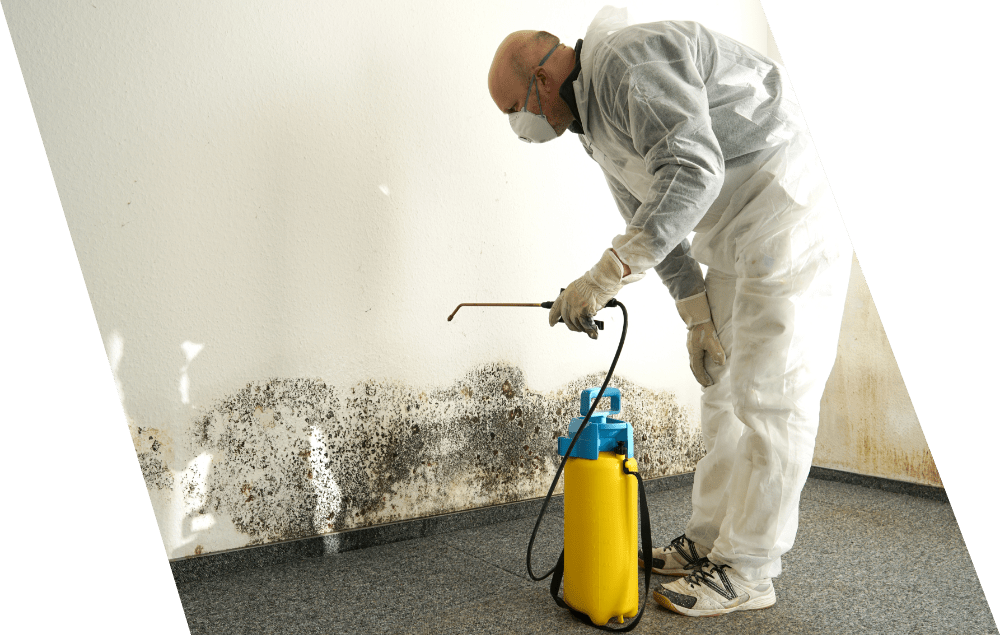
The cost of mould removal depends on the size of the affected area and the type of treatment required. After a detailed inspection a clear, personalised quote is provided based on the scope of work.
| Small mould area (e.g. around a window or corner) | Medium mould area +£100 (large section of a wall affected) | Large mould area +£150 (more than one wall or ceiling) | ||||
|---|---|---|---|---|---|---|
| Room | Standard | Fantastic Club* | Standard | Fantastic Club* | Standard | Fantastic Club* |
| Bedroom | £350 | £320 | £450 | £420 | £500 | £470 |
| Bathroom | £350 | £320 | £450 | £420 | £500 | £470 |
| Kitchen | £350 | £320 | £450 | £420 | £500 | £470 |
| Living / Dining room | £350 | £320 | £450 | £420 | £500 | £470 |
| Hallway / Landing | £350 | £320 | £450 | £420 | £500 | £470 |
| Utility room | £350 | £320 | £450 | £420 | £500 | £470 |
| Paid inspection | £50 | |||||
| *Price for members of the Fantastic Club. The Fantastic Club is a yearly subscription of £89. | ||||||

In Maze Hill, our mould removal service encompasses a thorough inspection and moisture assessment to uncover the depth of mould contamination and its root causes. Mould growth is frequently caused by factors like condensation, excessive humidity, poor ventilation, or previous water damage. Understanding these elements is critical for effective mould remediation in Maze Hill. We focus on treating structural surfaces such as walls, ceilings, and floors, which are typical locations for mould. However, soft furnishings such as carpets and sofas are excluded from treatment.
Our professional mould cleaning services are designed to address airborne mould spores and ensure that the conditions for future growth are eliminated. By employing a comprehensive damp and mould removal strategy, we protect your health and maintain indoor air quality. Our meticulous process safeguards against potential structural damage while ensuring that your home remains a safe environment. Count on us for effective black mould removal in Maze Hill and long-term mould prevention.
The process of mould remediation in Maze Hill begins with a meticulous inspection and moisture assessment. Professionals use specialised hygrometers to assess hidden damp areas, which is key to preventing mould recurrence. Identifying excess moisture is crucial for instigating appropriate mould removal strategies. HEPA filtration systems and air scrubbers are instrumental during this phase, ensuring that airborne mould spores are captured and indoor air quality remains safe throughout the remediation process.
Following the initial assessment, HOCl (Hypochlorous Acid) treatment is applied as a safe, non-toxic solution that effectively neutralises mould, bacteria, and mycotoxins. Utilizing ULV (Ultra-Low Volume) fogging technology, the treatment is evenly dispersed, reaching hidden spaces like corners and cracks. The physical removal of the mould is performed using professional-grade equipment with H-Class filtration to securely contain any contaminants. This comprehensive approach is concluded with air purification and preventive measures that lower airborne spores, significantly enhancing indoor air quality—essential for effective damp and mould removal in Maze Hill.

Booking mould cleaning is quick and designed to get results without unnecessary delays.
Share what you’re dealing with, whether it’s visible mould, damp patches, or a recurring problem. This helps determine the right approach, from mould cleaning to full mould remediation.
A specialist checks the affected areas and identifies what’s causing the mould, such as excess moisture, condensation, or poor ventilation. This ensures the issue is treated properly, not just on the surface.
You’ll get a straightforward quote based on the level of contamination and the type of mould removal required. The service is tailored to ensure effective results and long-term protection.
The treatment removes mould and improves indoor air quality, helping to prevent future growth and create a healthier living space. It also targets the root cause of the problem for longer-lasting results.
Mould removal requires more than basic cleaning, which is why it’s handled by trained mould remediation specialists experienced in treating both visible and hidden contamination. Each specialist assesses the full extent of mould growth, including underlying causes such as excess moisture, condensation, and ventilation issues, ensuring the problem is addressed properly rather than just on the surface.
Number of bookings: 214
With Fantastic Services for: 3 years
Other specialities:
Number of bookings: 298
With Fantastic Services for: 3 years
Other specialities:
Number of bookings: 8301
With Fantastic Services for: 6 years
Other specialities:
What the reviews say
"Quick and effective rodent control service. Their timely response and efficient methods resolved the problem with expertise."
Alongside professional mould removal and mould cleaning, a range of additional property care services is available to help maintain a healthier indoor environment.
Mould can spread quickly and impact both health and property if not treated in time. Book a service today to remove mould, improve indoor air quality, and restore a cleaner and healthier living environment.

Where a house is cut into a hillside, one or more of its walls is holding back earth, and that wall behaves nothing like the others. Maze Hill runs up steeply from the river side of Greenwich, and the housing along and off it sits on ground that falls sharply enough for rear rooms to be partly below the level of the garden behind them. A wall in that position is in contact with wet soil rather than with air, it cannot dry outwards, and the mould on its inside face is the end of a chain that starts several metres up the slope.
The first task is to establish, room by room, where external ground level sits relative to the internal floor. Finding the garden at window-head height outside a rear room settles it at once; elsewhere it takes a measurement. A retaining wall shows a characteristic pattern indoors: damp from the floor up to roughly the external soil line and no higher, present in all weather, with growth forming an even film and plaster that has gone soft and sometimes blown away from the masonry.
On a slope, rainfall landing well above a property travels downhill through the soil rather than soaking straight down, and accumulates against the first solid obstruction it meets, which is often the back of a house. After a wet spell the soil behind a retaining wall can be effectively saturated, and the wall takes water continuously rather than in the pulses that a normal external wall experiences. This is why the internal face never dries and why a treatment applied to it lasts weeks.
The remedies that work are outside and in the ground: a land drain behind the wall taking water to a proper outfall, terracing that sheds water away from the house, and paths falling away from the wall rather than towards it. Where a garden has been re-landscaped and levels raised against the house, lowering the soil back below the internal floor line is often the single most effective change available. None of that is remediation work, but ordering it first is what makes the remediation last.
Some retaining walls cannot be dealt with from outside, because the ground behind them belongs to somebody else or the slope makes excavation impractical. The honest options then are internal: removing the failed finish, allowing the masonry to dry as far as it will, and accepting either a breathable finish that tolerates ongoing moisture or a designed internal waterproofing system with a drained cavity and a means of collecting water. What does not work is a coat of waterproofing paint over the old plaster, which simply moves the failure a few inches sideways.
Walls in this position are usually substantial, and the volume of water in one is far greater than in a single-skin partition. Once the source is controlled, drying is measured in weeks, with readings taken in the masonry at consistent points and compared visit to visit, and with air moved across the exposed face rather than aimed at it. Rushing to replaster is the reason many of these rooms have been treated repeatedly, each time with a slightly higher patch of growth on the new surface.
Lower rooms on a slope are where households put the things they rarely use, and those things sit against precisely the wall that cannot dry. Cardboard, luggage and textiles pressed against a damp retaining wall grow mould through their thickness and stop air reaching the wall, so clearing and spacing storage is part of the fix.
An inspection covers internal and external levels, garden drainage and the condition of the wall, and the report will normally separate ground and drainage work from remediation because they are different trades in a fixed order. Remediation is priced by the area of finish removed, the drying equipment on site and the number of monitoring visits, with the drying period the longest element. Steep access, stepped paths and restricted parking all affect how material is carried in and out, so mention that when booking. Retaining and garden walls that need repair, and joinery cut back during the work, are handled by Greenwich handyman team; damp lower rooms are a common route for rodents and insects, dealt with by the service in full; the room can be put back in order with the service in full. Equivalent work down the hill is covered by a local professional, and the general method appears on what our mould removal and remediation includes.
Skip the line, request and
book a service online