Professional Mould Removal Silvertown
Expert mould remediation and removal services that improve indoor air quality while ensuring thorough contamination control.


Expert mould remediation and removal services that improve indoor air quality while ensuring thorough contamination control.
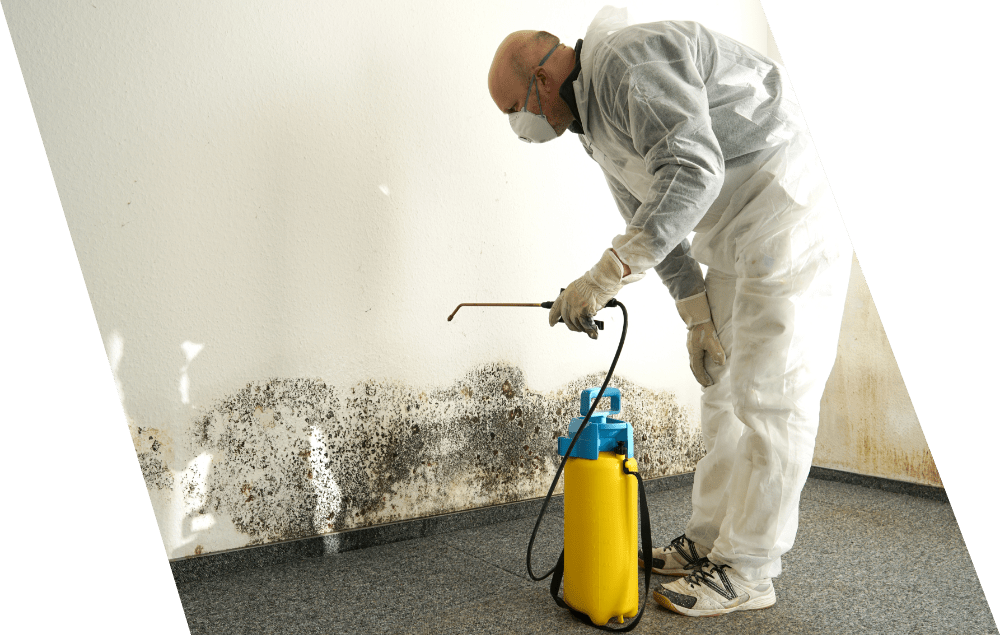
The cost of mould removal depends on the size of the affected area and the type of treatment required. After a detailed inspection a clear, personalised quote is provided based on the scope of work.

When it comes to mould removal and remediation in Silvertown, professionals use advanced technology to deliver thorough coverage of both visible and hidden mould contamination. Mould spores can become airborne and settle in hard-to-reach areas, making traditional cleaning insufficient. Recognizing this, our mould cleaning services in Silvertown integrate both airborne treatment and surface cleaning to effectively address all sources of contamination.
We implement ULV (Ultra-Low Volume) fogging technology, which enables us to disperse treatment particles evenly throughout the space, penetrating behind furniture, and reaching into tight corners and along ceilings and walls. Complementing this method, we apply HOCl (Hypochlorous Acid), a safe, professional-grade disinfectant that annihilates mould, bacteria, and mycotoxins at the molecular level without leaving toxic residues. This comprehensive treatment approach not only enhances air quality within the environment but also reduces the chances of mould reappearing in Silvertown.
The process of mould remediation in Silvertown is critical for not only removing existing mould but also for addressing the underlying conditions that promote future growth. Professionals start by meticulously measuring humidity levels, checking for proper ventilation, and identifying any water ingress issues. This comprehensive assessment allows for the creation of a bespoke mould removal plan that tackles the problem directly at its source.
Following mould cleaning in Silvertown, protective barriers are administered to affected surfaces, which significantly mitigate the risk of recurrence and reduce airborne mould spores. The inclusion of HEPA filtration systems and air scrubbers during the treatment enhances indoor air quality, ensuring a safe environment. This proactive mould removal approach ultimately benefits both health and property by decreasing allergies, preventing potential structural harm, and improving indoor conditions for all inhabitants.

Booking mould cleaning is quick and designed to get results without unnecessary delays.
Share what you’re dealing with, whether it’s visible mould, damp patches, or a recurring problem. This helps determine the right approach, from mould cleaning to full mould remediation.
A specialist checks the affected areas and identifies what’s causing the mould, such as excess moisture, condensation, or poor ventilation. This ensures the issue is treated properly, not just on the surface.
You’ll get a straightforward quote based on the level of contamination and the type of mould removal required. The service is tailored to ensure effective results and long-term protection.
The treatment removes mould and improves indoor air quality, helping to prevent future growth and create a healthier living space. It also targets the root cause of the problem for longer-lasting results.
Mould removal requires more than basic cleaning, which is why it’s handled by trained mould remediation specialists experienced in treating both visible and hidden contamination. Each specialist assesses the full extent of mould growth, including underlying causes such as excess moisture, condensation, and ventilation issues, ensuring the problem is addressed properly rather than just on the surface.
Number of bookings: 298
With Fantastic Services for: 3 years
Other specialities:
Number of bookings: 123
With Fantastic Services for: 2 years
Other specialities:
Number of bookings: 139
With Fantastic Services for: 2 years
Other specialities:
Alongside professional mould removal and mould cleaning, a range of additional property care services is available to help maintain a healthier indoor environment.
Mould can spread quickly and impact both health and property if not treated in time. Book a service today to remove mould, improve indoor air quality, and restore a cleaner and healthier living environment.

Heating a tall room is not the same as heating an ordinary one, and that single fact explains a good deal of the mould found in Silvertown. This part of E16 mixes former industrial buildings converted into flats and studios with newer apartments built to full-height glazing, and both share a behaviour: warm moist air rises to a high ceiling and stays there, leaving the lower half of the volume, and every surface within it, several degrees colder than the thermostat reading suggests. The moisture then lands on whatever is coldest.
Glass goes first. Water forms on the inner pane, runs down and collects in the frame rebate and on the cill, where it soaks the timber or the plaster beneath and grows a dark line along the joint. Exposed concrete soffits and columns come next, holding cold long after the air has warmed. Then the slab itself, particularly under a sofa or a bed pushed against an external wall, where a rug or a mattress traps a pocket of cold air and the underside stays damp. In a converted unit the pattern follows the structure, not the household routine.
Original steel-framed industrial windows are a conduit from outside to inside, and where they survive in a conversion they run cold across their whole area. Single glazing in such a frame condenses heavily on any cold night. Newer frames should carry a thermal break, but the drainage slots that let condensate out of the frame get sealed by decorators or blocked by dust, so water sits in the rebate instead. Growth in the corner of a gasket is usually a sign that the seal itself needs replacing rather than cleaning, since colonisation sits inside the rubber.
A tall space heated hard for two hours in the evening never warms its fabric. The air temperature rises, the concrete and glass do not, and the gap between the two is exactly what produces surface condensation. Steady low background heat through the cold months warms the structure and reduces the condensing area, which is counter-intuitive to anyone trying to limit consumption. Deep night setbacks have the same effect as switching off entirely. Where underfloor heating was fitted during conversion it usually performs better than radiators here precisely because it warms surfaces rather than air.
Exposed concrete, painted steel and brick take a different approach from plasterboard. Growth on these surfaces sits in the coating and in the dust held by a rough face, so mechanical cleaning followed by a treatment left to dwell does more than replacement ever would, and nothing needs to be cut out. The same methods apply along the river, where the team covering North Woolwich covers the adjoining district. Frame repairs, clearing blocked drainage slots and renewing perished seals are practical jobs covered by handyman cover across Canning Town, and they are worth doing before the heating season rather than during it.
Large service voids and undercroft spaces in converted industrial stock give pests a great deal of cover, and pest control throughout Canning Town deals with activity where an inspection finds it. Once high-level work is finished, a studio or apartment of this size needs a thorough clean at height as well as at floor level, and cleaning services cover across Walthamstow covers that. Treatment methods and guarantees are set out on the full service page.
Two adjustments make a measurable difference in a tall space and cost nothing. Move heating to a longer, lower-temperature pattern instead of short bursts, and pull furniture and beds clear of the coldest external surfaces so air can pass. A simple hygrometer in the room is worth having, because it shows which activities drive humidity up and how long the space takes to recover. Assessment here is priced as a visit; remediation is quoted by the surface area treated, by ceiling height and therefore by the access equipment needed, since anything above head height changes how long the work takes.
Skip the line, request and
book a service online