


Professional mold remediation and removal North London
Protect your home from mould with expert remediation services in North London. Our non-toxic treatments eliminate mould and prevent regrowth

Protect your home from mould with expert remediation services in North London. Our non-toxic treatments eliminate mould and prevent regrowth

Book Trusted Mould Specialists for Same-Day Professional Mould Remediation
The cost of mould removal depends on the size of the affected area and the type of treatment required. After a detailed inspection a clear, personalised quote is provided based on the scope of work.
| Small mould area (e.g. around a window or corner) | Medium mould area +£100 (large section of a wall affected) | Large mould area +£150 (more than one wall or ceiling) | ||||
|---|---|---|---|---|---|---|
| Room | Standard | Fantastic Club* | Standard | Fantastic Club* | Standard | Fantastic Club* |
| Bedroom | £350 | £320 | £450 | £420 | £500 | £470 |
| Bathroom | £350 | £320 | £450 | £420 | £500 | £470 |
| Kitchen | £350 | £320 | £450 | £420 | £500 | £470 |
| Living / Dining room | £350 | £320 | £450 | £420 | £500 | £470 |
| Hallway / Landing | £350 | £320 | £450 | £420 | £500 | £470 |
| Utility room | £350 | £320 | £450 | £420 | £500 | £470 |
| Paid inspection | £50 | |||||
| *Price for members of the Fantastic Club. The Fantastic Club is a yearly subscription of £89. | ||||||
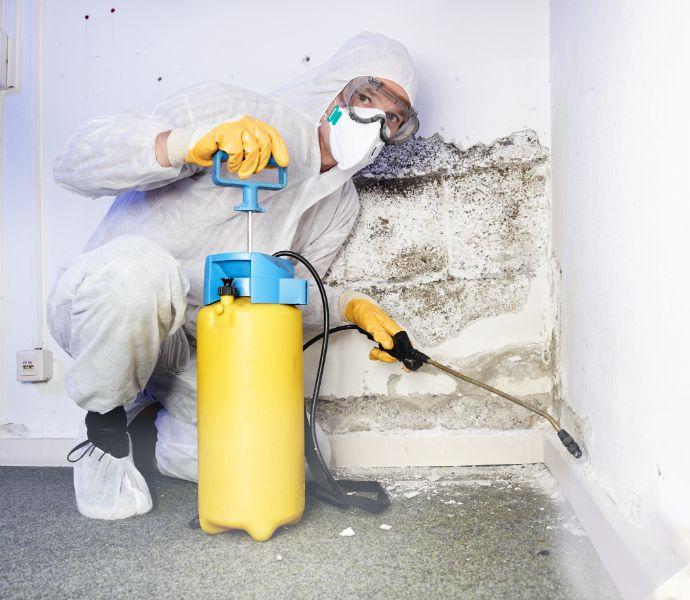
Our comprehensive mould removal service in North London commences with a detailed inspection and moisture assessment, designed to reveal the extent of mould contamination and its root causes, such as condensation, high humidity, insufficient ventilation, and water damage. Identifying these factors is vital for our success, allowing us to provide targeted mould cleaning and ensure lasting results. We focus on addressing structural surfaces like walls, ceilings, and floors, where mould typically grows, but please be advised that soft furnishings, including carpets and textiles, fall outside our treatment scope.
Our specialised mould remediation in North London does more than just clean surfaces—it actively tackles airborne mould spores, thereby enhancing your indoor air quality and preventing future infestations. Through expert damp and mould removal techniques, we protect your health and property from the adverse effects of mould exposure. By implementing effective condensation control and robust long-term strategies, we ensure that your environment remains safe and free from mould, helping you avoid structural damage and improve overall living conditions.
North London’s leading mould removal specialists are trusted by homeowners and businesses for expert mould remediation. Using advanced inspection methods, eco-friendly HOCl treatments, and professional cleaning techniques, we remove mould at the source and provide long-term prevention, ensuring a safe, healthy, and contaminant-free indoor environment.
Upon identifying the extent of mould presence, the application of HOCl (Hypochlorous Acid) treatment is undertaken. This non-toxic, professional-grade solution effectively neutralizes mould, bacteria, and mycotoxins at a microscopic level. To enhance the treatment's efficiency, ULV (Ultra-Low Volume) fogging technology is utilized, allowing the dispersal of HOCl evenly throughout the air, reaching hidden areas such as cracks and corners behind surfaces. The physical removal of mould follows using professional equipment equipped with H-Class filtration to safely contain any contaminants. Finally, a comprehensive air purification step is performed, significantly reducing airborne spores and ensuring sustained improvement in indoor air quality, making this process a reliable solution for mould remediation in North London.

Number of bookings: 3178
With Fantastic Services for: 4 years
Other specialities:
Number of bookings: 139
With Fantastic Services for: 2 years
Other specialities:
Number of bookings: 298
With Fantastic Services for: 3 years
Other specialities:
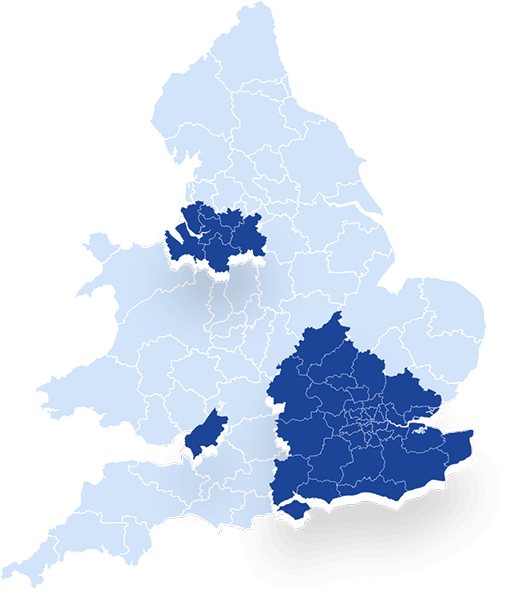
Very few of these problems are constant. A wall that is unremarkable in July grows a colony across three weeks in November, clears up in spring, and comes back the following winter in the same place, which is why so many households describe the problem as unpredictable when it is in fact highly seasonal. Across the northern districts — period terraces, interwar semis, post-war blocks and recent development, all within a few miles of one another — the mechanism varies but the calendar does not.
Growth needs a surface wet enough for long enough. Through the summer, internal surfaces sit well above the temperature at which room air releases its moisture, so nothing lands. As external temperatures fall, the coldest internal surfaces drop below that threshold every night, and once they are damp for several hours a day for several weeks in a row, colonisation follows. That is why an inspection carried out in August on a wall that was black in February may find almost nothing, and why a diagnosis made in the warm months has to be built on measurement rather than on what is visible.
A small data logger left in place records air temperature and relative humidity at regular intervals, and two of them — one in the affected room, one in a room that has no problem — are far more informative than either alone. Comparing the two shows whether the affected room is genuinely more humid or simply colder. Comparing both against outside conditions shows whether the moisture is being generated inside the dwelling or arriving through the fabric. A fortnight is usually the minimum useful period, and a month through a cold spell is better. How that evidence feeds into a specification is set out on mould removal and remediation services nationwide.
The shape of the record is the diagnosis. Sharp spikes in humidity in the early morning and evening, falling away over an hour or two, are bathroom and kitchen activity with inadequate extract. A deep overnight temperature trough in one bedroom while the rest of the house stays warm identifies an unheated room where moisture will land. A humidity level that sits high and flat, day and night, with no relationship to occupation, points to water coming in rather than being produced — a leak, a wet void, a saturated wall. A baseline that climbs steadily through the autumn and never recovers indicates fabric that is taking on water faster than it can release it. Localised examples are covered by professional damp and mould treatment in Islington.
Householders often report mould on a rear wall, a patio or a path when what has grown is algae and lichen. These are outdoor organisms living on surface moisture and light, common on north-facing render, shaded paving and any masonry kept damp by overhanging planting. They indicate that a surface stays wet, which is worth knowing, but they are not the same organisms as an internal colony and they need a different approach — cleaning down the surface and removing the reason it stays wet, which is where our pressure washing in North London is relevant, rather than internal treatment.
Because the housing varies so much over short distances, the likely cause shifts with the street. Solid-walled Victorian terraces tend to produce cold-surface growth on external walls and chimney breasts. Interwar semis with cavities produce problems at retrofit failures and in roof spaces. Post-war blocks produce patterns that follow structural cold bridges. Recent flats produce first-winter moisture and ventilation systems that have been turned off. Working out which category a property falls into before measuring anything saves a great deal of time, and the small fabric repairs that follow are handled by the service in full.
Loggers are placed on a first visit, left for an agreed period, and collected on a second, with the report produced from the combined record and the readings taken on both occasions. Nothing needs to be done in the meantime beyond living normally, since altering habits for the monitoring period defeats the purpose. Charging covers the two visits and the analysis rather than the number of rooms. Where a household wants the routine upkeep side dealt with separately, trusted domestic cleaning in North London handles that, though wiping a surface clean is a maintenance measure and not a remedy.
Skip the line, request and
book a service online

