


Mould Removal and Remediation Service Harringay
Certified mould treatment specialists providing inspection, treatment, and long-term prevention for walls, ceilings, and floors.

Certified mould treatment specialists providing inspection, treatment, and long-term prevention for walls, ceilings, and floors.
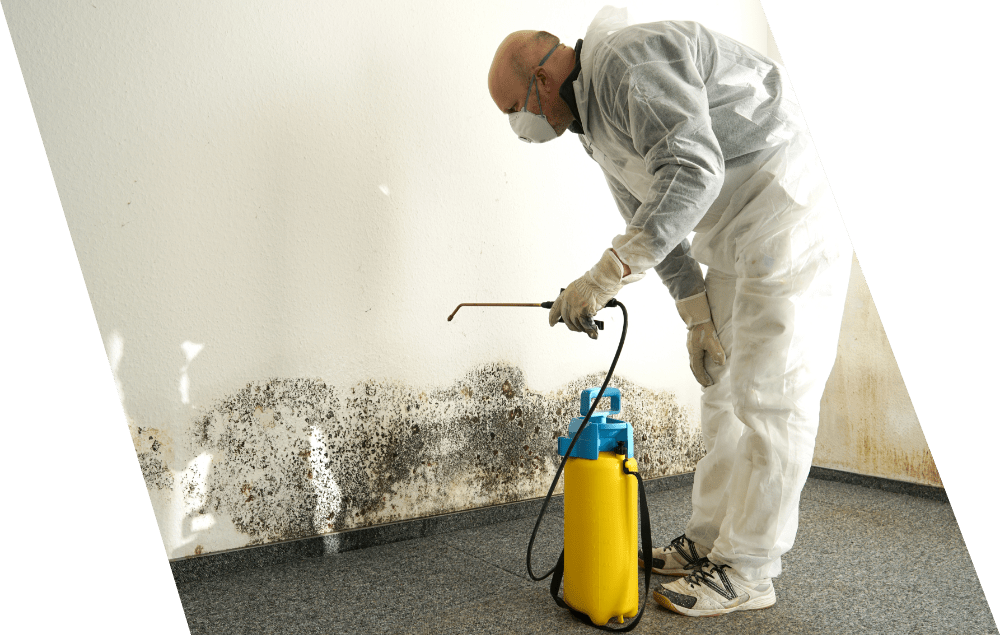
The cost of mould removal depends on the size of the affected area and the type of treatment required. After a detailed inspection a clear, personalised quote is provided based on the scope of work.
| Small mould area (e.g. around a window or corner) | Medium mould area +£100 (large section of a wall affected) | Large mould area +£150 (more than one wall or ceiling) | ||||
|---|---|---|---|---|---|---|
| Room | Standard | Fantastic Club* | Standard | Fantastic Club* | Standard | Fantastic Club* |
| Bedroom | £350 | £320 | £450 | £420 | £500 | £470 |
| Bathroom | £350 | £320 | £450 | £420 | £500 | £470 |
| Kitchen | £350 | £320 | £450 | £420 | £500 | £470 |
| Living / Dining room | £350 | £320 | £450 | £420 | £500 | £470 |
| Hallway / Landing | £350 | £320 | £450 | £420 | £500 | £470 |
| Utility room | £350 | £320 | £450 | £420 | £500 | £470 |
| Paid inspection | £50 | |||||
| *Price for members of the Fantastic Club. The Fantastic Club is a yearly subscription of £89. | ||||||

In Harringay, effective mould removal combines thorough mould cleaning Harringay techniques with an understanding of the environmental factors that contribute to mould proliferation. Mould remediation Harringay goes beyond superficial cleaning; it involves investigating and resolving root causes such as high humidity, inadequate ventilation, and concealed water leaks. Professionals utilize advanced tools to ensure that the moisture balance is maintained, making it harder for mould spores to thrive in the future.
By addressing all aspects of mould remediation, including treatment of walls, ceilings, and floors, specialists aim to eliminate mould without impacting soft furnishings that may be prone to damage. The remediation process targets the original causes, aiming for long-term solutions rather than temporary fixes, which ultimately safeguards your property against recurrent mould growth in Harringay.
In Harringay, professional mould remediation follows a meticulous protocol aimed at total mould eradication. This begins with a detailed inspection to identify affected regions, followed by HEPA air filtration, which captures and eliminates airborne spores to prevent them from spreading. During the controlled treatment phase, HOCl (hypochlorous acid) is used, providing a safe and effective solution for mould neutralization, ensuring a thorough cleansing of all surfaces.
Utilizing ULV fogging technology, we guarantee even distribution of the mould treatment across every surface and airspace within the premises. Our mould removal process incorporates professional equipment featuring H-Class filtration, effectively handling and eliminating physical mould presence. Conclusively, we perform final air cleaning procedures to enhance air quality and implement long-term protections against mould regrowth, leading to improved health and stability for residents of Harringay.

Booking mould cleaning is quick and designed to get results without unnecessary delays.
Share what you’re dealing with, whether it’s visible mould, damp patches, or a recurring problem. This helps determine the right approach, from mould cleaning to full mould remediation.
A specialist checks the affected areas and identifies what’s causing the mould, such as excess moisture, condensation, or poor ventilation. This ensures the issue is treated properly, not just on the surface.
You’ll get a straightforward quote based on the level of contamination and the type of mould removal required. The service is tailored to ensure effective results and long-term protection.
The treatment removes mould and improves indoor air quality, helping to prevent future growth and create a healthier living space. It also targets the root cause of the problem for longer-lasting results.
Mould removal requires more than basic cleaning, which is why it’s handled by trained mould remediation specialists experienced in treating both visible and hidden contamination. Each specialist assesses the full extent of mould growth, including underlying causes such as excess moisture, condensation, and ventilation issues, ensuring the problem is addressed properly rather than just on the surface.
Number of bookings: 298
With Fantastic Services for: 3 years
Other specialities:
Number of bookings: 3178
With Fantastic Services for: 4 years
Other specialities:
Number of bookings: 139
With Fantastic Services for: 2 years
Other specialities:
Alongside professional mould removal and mould cleaning, a range of additional property care services is available to help maintain a healthier indoor environment.





















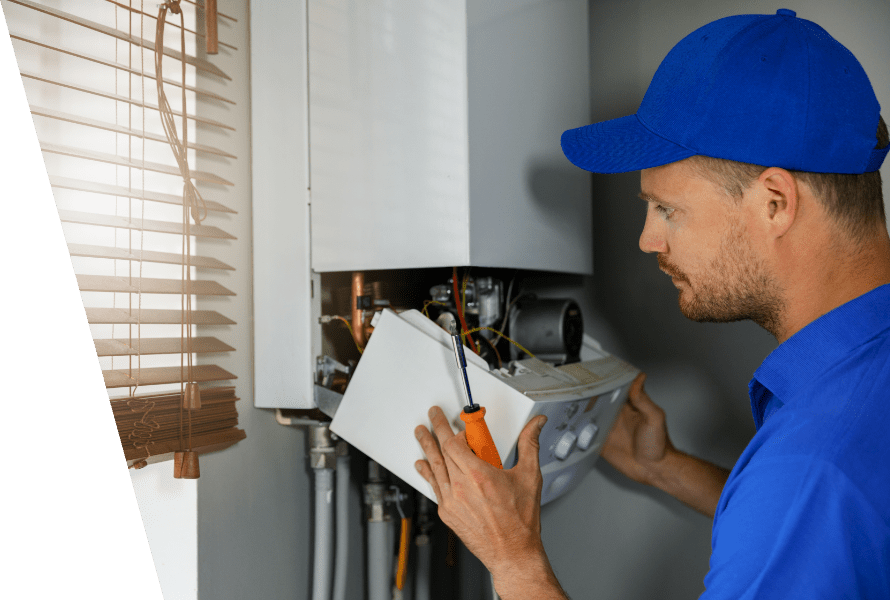
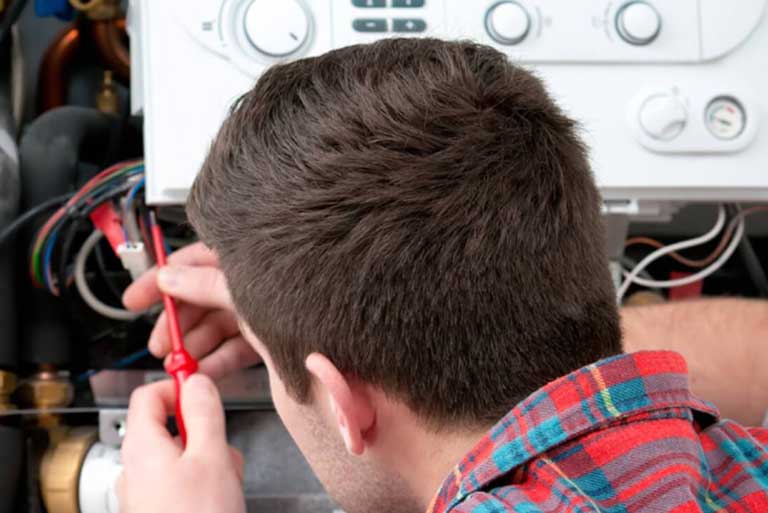

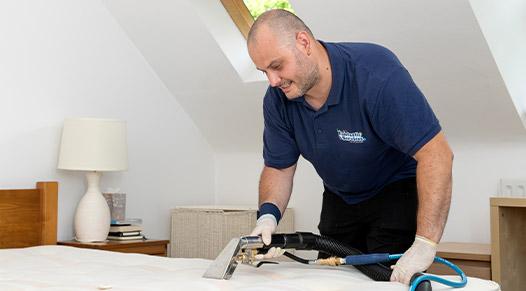


Mould can spread quickly and impact both health and property if not treated in time. Book a service today to remove mould, improve indoor air quality, and restore a cleaner and healthier living environment.

Bleach is the first thing almost everyone reaches for, and it is one of the reasons mould keeps coming back. It does something visible and something useless at the same time: it strips the pigment out of the colony so the wall looks clean, while leaving most of the living material in place and adding water to a surface that already has too much. Half the callouts across the Harringay grid are to walls that have been bleached two or three times already.
Sodium hypochlorite is a strong oxidiser in solution, but it is also mostly water, and it has very little ability to penetrate a painted film or the pores of set plaster. On a glazed tile it is effective. On emulsion over plaster it bleaches the visible spores and runs off, leaving hyphae threaded into the substrate below untouched and rewetted. Within weeks the colony regrows from beneath, usually in exactly the same outline, and the household concludes that the problem is unusually stubborn rather than that the method was wrong.
A second misunderstanding is that killing the organism finishes the job. The allergenic fraction of mould sits in cell fragments and spores, and those remain active as irritants whether the colony is alive or not. Anything that puts those fragments into the air makes matters worse in the short term, which is why dry brushing, sanding a dry patch or scrubbing hard with a stiff brush are all avoided. Removal is done with the material damp, using disposable cloths worked in one direction and changed often, and the debris is bagged rather than shaken out.
The order that works is mechanical then chemical. A surfactant wash lifts the greasy film that growth binds itself to, and that alone removes the bulk of the colony. Only then does a fungicidal wash go on, and it needs its stated dwell time on the surface to do anything at all; wiped on and immediately wiped off, it is little more than a damp cloth. Porous surfaces take a second application. Non-porous ones rarely need it. Where a surface has been repeatedly coated over the years, the coating itself may have to come off before anything can reach the plaster underneath.
The terraced streets here run in a tight grid between two main roads, two storeys with small rear returns, and a great many have been split into upper and lower maisonettes. The wall surfaces reflect a hundred years of redecoration: soft original plaster in places, hard modern skim in others, layers of washable emulsion over older soft distemper that turns to paste the moment it is wetted. A wash that works in one room can destroy the surface in the next, so a small test area is always done first, low down and out of sight, before anything is applied across a wall.
There is a real line between cleaning and remediation, and it is worth knowing which side a job sits on. Light surface growth on a sound, non-porous surface in a well-ventilated room is a cleaning task and can be handled as part of routine housework or by local cleaning services across Finsbury Park. Growth that has penetrated plaster, spread behind fitted joinery, affected more than a small area or returned after previous attempts is remediation, with containment, material removal and drying involved. The criteria used to decide between the two are set out under more about this service.
The room is cleared of small items and soft furnishings, windows are kept shut while the work is done so that spores are not pushed around the property, and they are opened afterwards to clear the smell of the wash. Occupants and pets stay out of the room while it is wet and for a period after. Costs follow the area treated and the number of applications a surface needs, rather than the size of the property. Where the affected surface has to come off and be replaced, refitting trims and fixings afterwards is a job for our handyman service in Harringay; where a void behind it shows signs of activity, pest control cover across Harringay deals with that first. The same washes and the same caution apply at a local professional, in housing of the same age and much the same construction.
Skip the line, request and
book a service online

