


Mould Removal in Kentish Town
Trusted mould remediation services targeting visible mould, hidden spores, and moisture issues to ensure long-term indoor safety.

Trusted mould remediation services targeting visible mould, hidden spores, and moisture issues to ensure long-term indoor safety.

The cost of mould removal depends on the size of the affected area and the type of treatment required. After a detailed inspection a clear, personalised quote is provided based on the scope of work.
| Small mould area (e.g. around a window or corner) | Medium mould area +£100 (large section of a wall affected) | Large mould area +£150 (more than one wall or ceiling) | ||||
|---|---|---|---|---|---|---|
| Room | Standard | Fantastic Club* | Standard | Fantastic Club* | Standard | Fantastic Club* |
| Bedroom | £350 | £320 | £450 | £420 | £500 | £470 |
| Bathroom | £350 | £320 | £450 | £420 | £500 | £470 |
| Kitchen | £350 | £320 | £450 | £420 | £500 | £470 |
| Living / Dining room | £350 | £320 | £450 | £420 | £500 | £470 |
| Hallway / Landing | £350 | £320 | £450 | £420 | £500 | £470 |
| Utility room | £350 | £320 | £450 | £420 | £500 | £470 |
| Paid inspection | £50 | |||||
| *Price for members of the Fantastic Club. The Fantastic Club is a yearly subscription of £89. | ||||||
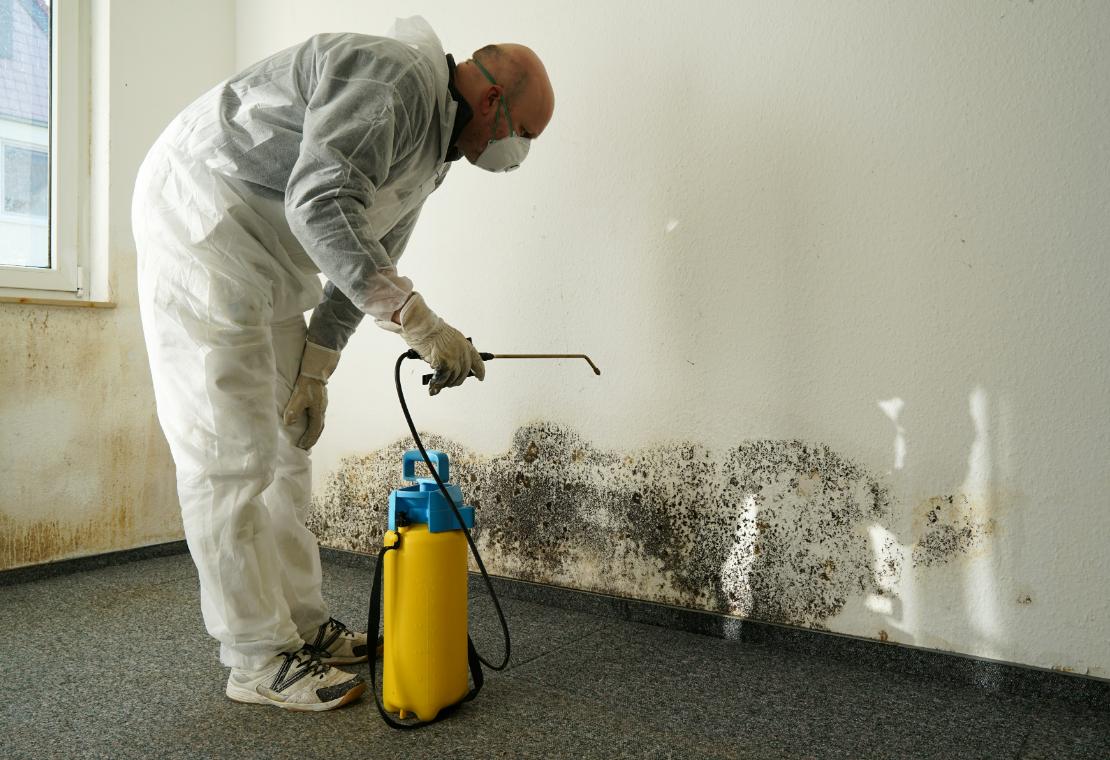
In Kentish Town, effective mould removal starts with identifying root causes such as moisture balance, poor ventilation, and water damage. Mould cleaning involves thorough inspection and cleaning processes tailored for each property. Professionals assess areas of concern to provide mould remediation, which is specifically designed to eliminate all traces of mould while preventing its recurrence. This includes treating walls, ceilings, and floors, while also ensuring that soft furnishings are excluded from the treatment, as they can harbor spores that contribute to further growth.
Using specialised equipment, experts in mould removal in Kentish Town measure humidity and ventilation to develop a comprehensive understanding of the environment. They employ moisture detection tools to identify hidden sources of dampness, which are crucial for effective mould remediation Kentish Town. This process does not merely focus on visible mould but includes strategies for condensation control and overall mould prevention, leaving your home safer and healthier.
In Kentish Town, effective mould remediation begins with a thorough inspection to identify the extent of mould damage and moisture sources. Following this, professional remediation teams utilize HEPA air filtration systems to capture airborne mould spores and other particulates, ensuring a safe environment throughout the remediation process. The controlled treatment involves using highly effective solutions like HOCl (hypochlorous acid) for safe and efficient mould neutralization, which disrupts the mould's cellular structure without harsh chemicals. Additionally, ULV fogging technology is employed to achieve an even distribution of treatment agents across all surfaces and airspaces, ensuring comprehensive mould removal in Kentish Town.
Physical mould removal is conducted with advanced equipment that includes H-Class filtration systems, ensuring that all growth is efficiently extracted while minimizing cross-contamination. After the initial removal, final air cleaning processes are implemented to guarantee indoor air quality and long-term protection against mould regrowth. Benefits of this structured mould remediation process include preventing future mould infestations, significantly improving air quality, and ensuring the long-term stability of your indoor environment. In Kentish Town, choosing professional mould removal services ensures a clean and healthy home or business.
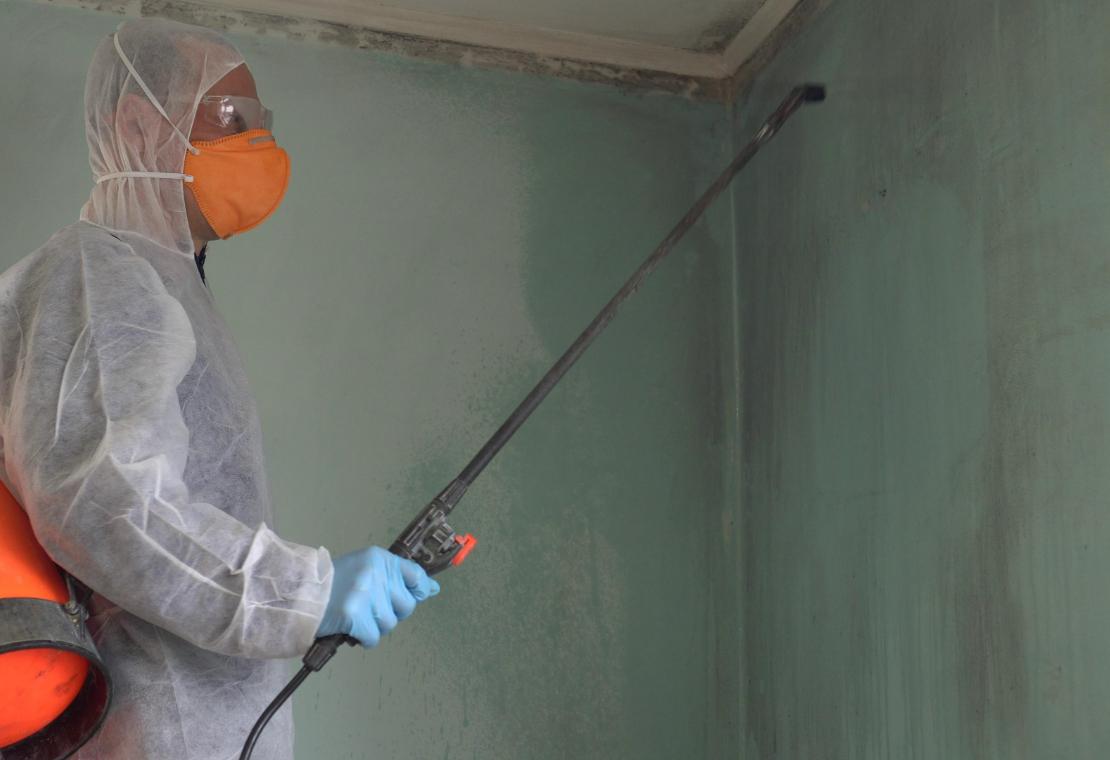
Booking mould cleaning is quick and designed to get results without unnecessary delays.
Share what you’re dealing with, whether it’s visible mould, damp patches, or a recurring problem. This helps determine the right approach, from mould cleaning to full mould remediation.
A specialist checks the affected areas and identifies what’s causing the mould, such as excess moisture, condensation, or poor ventilation. This ensures the issue is treated properly, not just on the surface.
You’ll get a straightforward quote based on the level of contamination and the type of mould removal required. The service is tailored to ensure effective results and long-term protection.
The treatment removes mould and improves indoor air quality, helping to prevent future growth and create a healthier living space. It also targets the root cause of the problem for longer-lasting results.
Mould removal requires more than basic cleaning, which is why it’s handled by trained mould remediation specialists experienced in treating both visible and hidden contamination. Each specialist assesses the full extent of mould growth, including underlying causes such as excess moisture, condensation, and ventilation issues, ensuring the problem is addressed properly rather than just on the surface.
Number of bookings: 213
With Fantastic Services for: 2 years
Other specialities:
Number of bookings: 139
With Fantastic Services for: 2 years
Other specialities:
Number of bookings: 214
With Fantastic Services for: 3 years
Other specialities:
Alongside professional mould removal and mould cleaning, a range of additional property care services is available to help maintain a healthier indoor environment.










Mould can spread quickly and impact both health and property if not treated in time. Book a service today to remove mould, improve indoor air quality, and restore a cleaner and healthier living environment.
The cupboard under the stairs is the last place anybody looks and often the first place mould establishes. It has no heating, no window, no air movement and a door that fits reasonably well. It usually backs onto an external wall or sits beneath a staircase against one. And it is where wet coats, damp shoes, the vacuum cleaner, cardboard boxes and the meters all end up. In the terraced housing and conversions of Kentish Town, this small triangular space produces a steady flow of callouts.
The space is bounded by the underside of the stair treads above, a partition to the hall, and masonry on one or two sides. There is nothing in it to produce heat and nothing to move air, so its temperature drifts towards that of the coldest surface enclosing it. Every time the door opens, warm humid air from the hall moves in and gives up its moisture onto those surfaces. Because the door is then closed again, nothing ever dries. Growth appears on the plaster at the back, on the underside of the treads and on the stored contents themselves.
Where the electricity or gas meter is in the same cupboard, there is usually an opening through the external wall for the supply, and in older properties that opening was never properly sealed. It admits cold outside air continuously into a space with no outlet, which drops the internal temperature further and can carry moisture in with it. The characteristic sign is growth concentrated around the opening and spreading along the wall from it, with the rest of the cupboard less affected. Sealing that penetration correctly is small work with a large effect.
The contents are part of the cause. A coat hung up wet releases its water into a closed space. Shoes and boots do the same, and take days to dry in there. Cardboard and paper absorb moisture readily and then hold it, providing both a reservoir and a food source. A pushchair brought in from the rain, sports kit in a bag, or a mop head left in a bucket will keep the humidity in a stair cupboard high for a long time after the item itself feels dry. Nothing wet should be put away in there at all.
The work is straightforward once the space is completely empty. Growth on plaster and on the timber soffit of the stairs is washed down and treated, cardboard and any softened board lining is removed rather than cleaned, the supply opening is sealed, and the space is dried with air moved through it before anything goes back. Then it is given a permanent means of air change, usually a louvred or vented door, and a rule about contents. Affected coats, bags and fabric need laundering and drying fully, which is the kind of task our nearby specialists handles, and cutting in a vented panel or hanging a new door is a job for our nearby specialists. The wider sequence of assessment, removal and drying is described under our national mould removal and remediation service.
The cupboard has to be emptied before the appointment, all the way to the back and including whatever is stored on the floor, because a partly cleared cupboard cannot be inspected or treated properly and the visit turns into a survey. The inspection also takes in the hall itself and the wall the cupboard backs onto seen from outside, since the supply opening and any ground-level issue are both visible there. Charges follow the internal area treated and whether lining or shelving has to be replaced. Where droppings or gnawed edges turn up behind the stored contents, which is common in these spaces, pest control across Kentish Town deals with that before the cupboard is closed up, and Gospel Oak mould removal team covers the same small enclosed spaces in the housing just north.
Skip the line, request and
book a service online

