


Mould Removal and Remediation Services in Tufnell Park
Comprehensive mould remediation services that include inspection, treatment, and prevention to eliminate mould and reduce the risk of recurrence.

Comprehensive mould remediation services that include inspection, treatment, and prevention to eliminate mould and reduce the risk of recurrence.
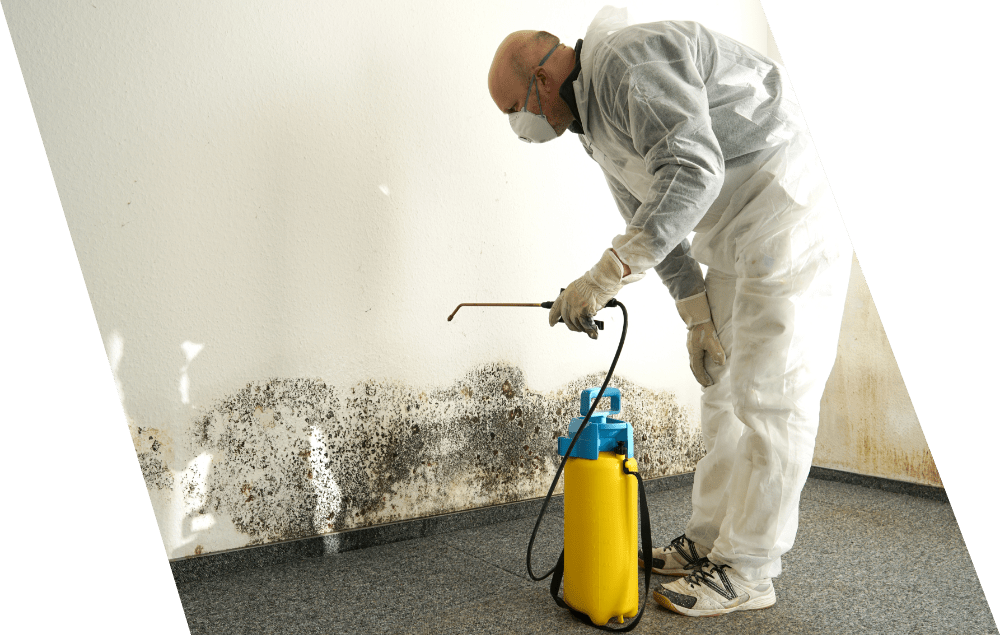
The cost of mould removal depends on the size of the affected area and the type of treatment required. After a detailed inspection a clear, personalised quote is provided based on the scope of work.
| Small mould area (e.g. around a window or corner) | Medium mould area +£100 (large section of a wall affected) | Large mould area +£150 (more than one wall or ceiling) | ||||
|---|---|---|---|---|---|---|
| Room | Standard | Fantastic Club* | Standard | Fantastic Club* | Standard | Fantastic Club* |
| Bedroom | £350 | £320 | £450 | £420 | £500 | £470 |
| Bathroom | £350 | £320 | £450 | £420 | £500 | £470 |
| Kitchen | £350 | £320 | £450 | £420 | £500 | £470 |
| Living / Dining room | £350 | £320 | £450 | £420 | £500 | £470 |
| Hallway / Landing | £350 | £320 | £450 | £420 | £500 | £470 |
| Utility room | £350 | £320 | £450 | £420 | £500 | £470 |
| Paid inspection | £50 | |||||
| *Price for members of the Fantastic Club. The Fantastic Club is a yearly subscription of £89. | ||||||

If you're in need of mould removal near Tufnell Park, our local mould specialists provide a full inspection and moisture assessment to identify the degree of mould presence and its origins, including issues like dampness and condensation. Our mould cleaning service covers critical structural surfaces such as walls, ceilings, and floors where mould often appears, but we do not treat soft furnishings.
Our approach to mould remediation in Tufnell Park is comprehensive, tackling airborne spores and halting future growth. We utilize HEPA filtration systems to remove airborne spores, and employ HOCl (Hypochlorous Acid) to destroy mould and bacteria on contact. Specialised ULV fogging technology guarantees that hard-to-reach areas are thoroughly treated, greatly enhancing indoor air quality and protecting both your health and property from mould-related damage and health risks.
The process of mould remediation in Tufnell Park begins with a thorough inspection and moisture assessment, facilitated by local specialists equipped with state-of-the-art tools to uncover visible and concealed damp conditions. Identifying excess moisture is vital in preventing recurrence, allowing remediation teams to effectively target problem areas and implement essential solutions. Following this inspection, air quality is prioritized using HEPA filtration systems and air scrubbers to capture airborne mould spores throughout the treatment, ensuring a safe environment during the process of mould removal near Tufnell Park.
Upon securing the environment, professional-grade HOCl (Hypochlorous Acid) is applied to neutralise mould, bacteria, and mycotoxins effectively at a molecular level, offering a non-toxic solution to strive for cleaner spaces. The application of ULV (Ultra-Low Volume) fogging technology guarantees comprehensive coverage of hidden locations like cracks and corners. The physical removal of mould is executed with specialized equipment featuring H-Class filtration, ensuring safe containment of contaminants. The process concludes with final air purification and strategies for long-term protection, demonstrating how efficient mould cleaning in Tufnell Park optimizes indoor air quality and minimizes future contamination risks.

Booking mould cleaning is quick and designed to get results without unnecessary delays.
Share what you’re dealing with, whether it’s visible mould, damp patches, or a recurring problem. This helps determine the right approach, from mould cleaning to full mould remediation.
A specialist checks the affected areas and identifies what’s causing the mould, such as excess moisture, condensation, or poor ventilation. This ensures the issue is treated properly, not just on the surface.
You’ll get a straightforward quote based on the level of contamination and the type of mould removal required. The service is tailored to ensure effective results and long-term protection.
The treatment removes mould and improves indoor air quality, helping to prevent future growth and create a healthier living space. It also targets the root cause of the problem for longer-lasting results.
Mould removal requires more than basic cleaning, which is why it’s handled by trained mould remediation specialists experienced in treating both visible and hidden contamination. Each specialist assesses the full extent of mould growth, including underlying causes such as excess moisture, condensation, and ventilation issues, ensuring the problem is addressed properly rather than just on the surface.
Number of bookings: 8301
With Fantastic Services for: 6 years
Other specialities:
What the reviews say
"Quick and effective rodent control service. Their timely response and efficient methods resolved the problem with expertise."
Number of bookings: 298
With Fantastic Services for: 3 years
Other specialities:
Number of bookings: 3178
With Fantastic Services for: 4 years
Other specialities:
Alongside professional mould removal and mould cleaning, a range of additional property care services is available to help maintain a healthier indoor environment.








Mould can spread quickly and impact both health and property if not treated in time. Book a service today to remove mould, improve indoor air quality, and restore a cleaner and healthier living environment.

Knocking two rooms into one changes the way the ground floor of a terrace holds heat, and the evidence often appears months later as a straight dark line across a ceiling. That line is almost always a steel beam. Tufnell Park has a large stock of Victorian terraces, many with lower ground floors, and a high proportion have had a rear wall or a spine wall removed to open the plan up. The beam that replaced the wall is now the coldest object in the room.
Steel conducts heat hundreds of times faster than brick. A beam whose ends are built into external walls, or which carries a padstone bearing onto an outside leaf, provides a continuous path for heat to leave the room. The underside of the beam therefore runs several degrees colder than the plaster either side of it, and in a warm, humid kitchen that difference is enough for moisture to settle there and nowhere else. The result is geometric: a band of growth the exact width of the flange, running the full length of the opening.
Three positions give different information. Growth along the whole beam points at the beam itself acting as a bridge, and the answer is insulation between the steel and the room together with the correct encasement. Growth concentrated at the two ends points at the bearings, where the beam sits on padstones set into cold masonry and the heat loss is worst. Growth on the ceiling a little to one side of the beam, in a straight line, is usually following a joist or a noggin rather than the steel. Distinguishing between them decides whether the work is local or runs the length of the opening.
Removing the wall also removed a door, and with it the ability to keep cooking moisture in one place. In a closed kitchen, steam is contained and extracted at source. In an open-plan room, it disperses across a much larger volume and reaches every cold surface in it, including a stairwell and the ceiling of a rear addition. Households frequently report that mould started after the building work and assume poor workmanship. Usually both things are true at once: the beam is a bridge, and the moisture now has free run of the space.
The correction is a thermal break between the steel and the room, which means insulating board and a plaster finish carried past the flange and returned into the ceiling line, rather than a tighter skim over bare steel. Plasterboard fixed directly to the beam and skimmed leaves the cold path intact and simply hides it. Where fire protection is required around structural steel, the build-up has to satisfy that as well, and the two requirements are resolved together rather than one after the other. Where the opening was formed without any thought for insulation at the bearings, those are treated as part of the same job.
A ceiling line that has grown repeatedly is usually holding staining well into the plaster. Sound plaster is washed and treated with the room closed and the debris bagged; plaster that has lost adhesion is taken off back to a straight edge. Timber around the opening is checked for moisture and for decay rather than just for marks, because water that has condensed on a steel flange has been running along it. The sequence of survey, removal, drying and reinstatement is described under same-day mould removal and remediation, and radiators that were relocated during the original building work often need moving back to the cold side of the room, which is work for plumbing throughout Angel.
An open-plan ground floor cannot be sealed off as easily as a single room, so this work is usually done in one go with the space cleared rather than in stages. Households are asked to empty worktops, move seating clear of the opening and allow access to both ends of the beam, including any cupboard built against a bearing. Pricing follows the length of the opening, the number of bearings treated and the extent of ceiling made good. Making good and refitting joinery around the new detail is a job for handyman for landlords in Tufnell Park; where a void alongside a bearing shows activity, mice and rat control in Tufnell Park handles it, and Hornsey mould remediation covers the same problem in the terraces east of here.
Skip the line, request and
book a service online
















