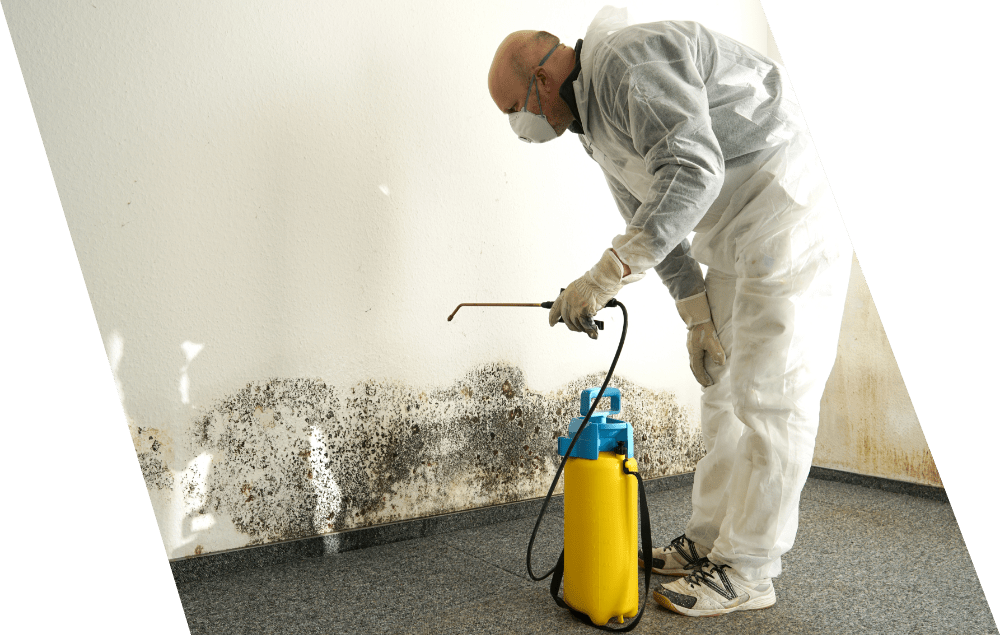
Retrofitted insulation moves the cold spots in a home rather than abolishing them, and mould has a habit of finding wherever they ended up. Abbey Wood has a large stock of post-war housing, a good deal of it solid-walled or system-built, and much of it has been through an improvement programme of some kind - insulation applied outside, replacement windows and doors, new heating. Those works genuinely reduce heat loss. What they also do is redistribute the risk, so a household that never had mould before finds it in a band at the ceiling or in a stripe down one corner.
Where the insulation had to stop
Insulation applied to the outside of a wall cannot continue through everything in its way. It stops at a window opening, at a door threshold, at the junction with a neighbouring property that was not part of the programme, and at anything projecting through the wall - a porch canopy, a balcony slab, a stair landing. Each of those is a path for heat to bypass the new layer, and the internal surface next to it stays cold while everything around it has warmed up. The result is a sharply defined line of growth rather than a general bloom, which is usually the clue that this is a junction problem.
The sealing that came with new windows
New frames and doors cut draughts dramatically, and draughts were doing unacknowledged work in an old house. Unless the replacement provided controllable background ventilation and the extract in the kitchen and bathroom was upgraded at the same time, the household is producing as much moisture as before with less route out. This is the commonest single reason for mould appearing after improvement works, and it is a ventilation shortfall rather than a fault in the insulation.
Inside the wall rather than on it
Where insulation went on the inside face instead, vapour from the room can reach the cold masonry behind it if the layers were built up in the wrong order or the edges were not sealed. Growth then develops out of sight, and the only external symptom may be a musty smell and a patch that reads damp at depth while the surface feels dry. Opening a small area is the only way to know, and it is worth knowing before a wall is redecorated a third time.
Ground conditions in SE2
Much of the area sits on low, historically marshy ground with a high water table, which keeps sub-floor voids and the base of external walls cooler and damper than they would be on free-draining soil. That raises the moisture available at low level, so growth at skirting height and in the corners of ground-floor rooms deserves a check at depth rather than being written off as condensation. Those same voids are where rodent and insect activity turns up, and that is dealt with by professional flea treatment in Abbey Wood.
Correcting it without undoing the improvement
None of this calls for stripping the insulation off. The work is targeted: identify the junctions that are cold, treat and remove the growth, address the specific bridge where it can be reached, and bring ventilation up to a level that matches the new airtightness. Where a defect in the external works is letting water behind the insulation, that is reported for the programme's contractor rather than patched over. The vents, seals, thresholds and joinery that accompany the internal work are covered by local handyman across Abbey Wood. Full method, options and guarantee terms are on our mould removal and remediation team.
Reporting, repairs and what a visit produces
A survey gives a written account of cause and recommended works, which is what a tenant needs to report a repair properly and what a landlord needs to scope one. Treatment is priced by the area affected and whether ventilation work and reinstatement are included. Southwark addresses have equivalent cover through mould removal specialists in Southwark, and the clean of affected rooms before furniture goes back is covered by what the visit includes. Where a home is due further improvement works, the survey is more use before that phase starts than after it.