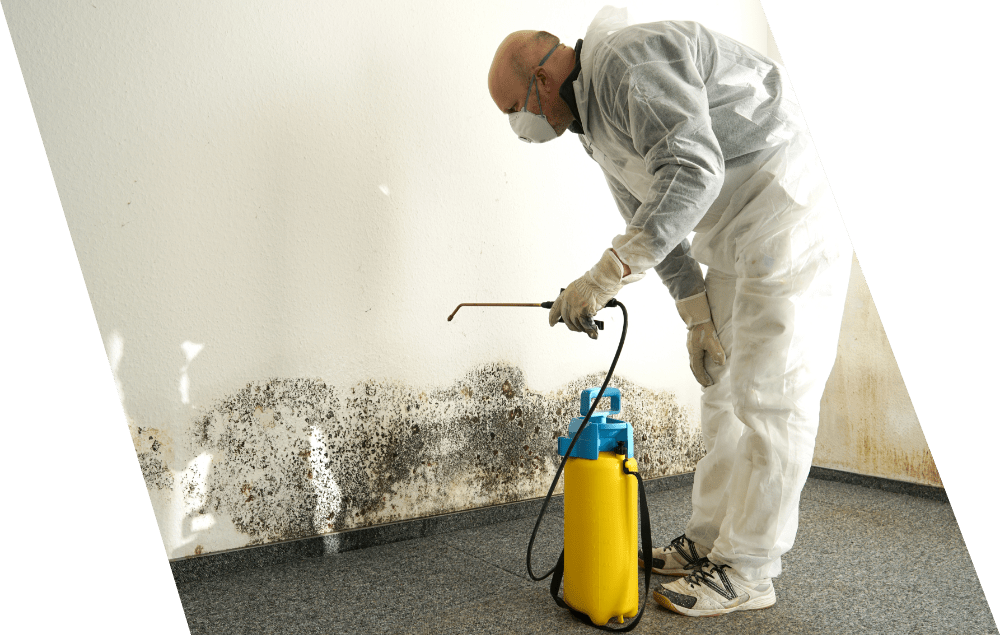
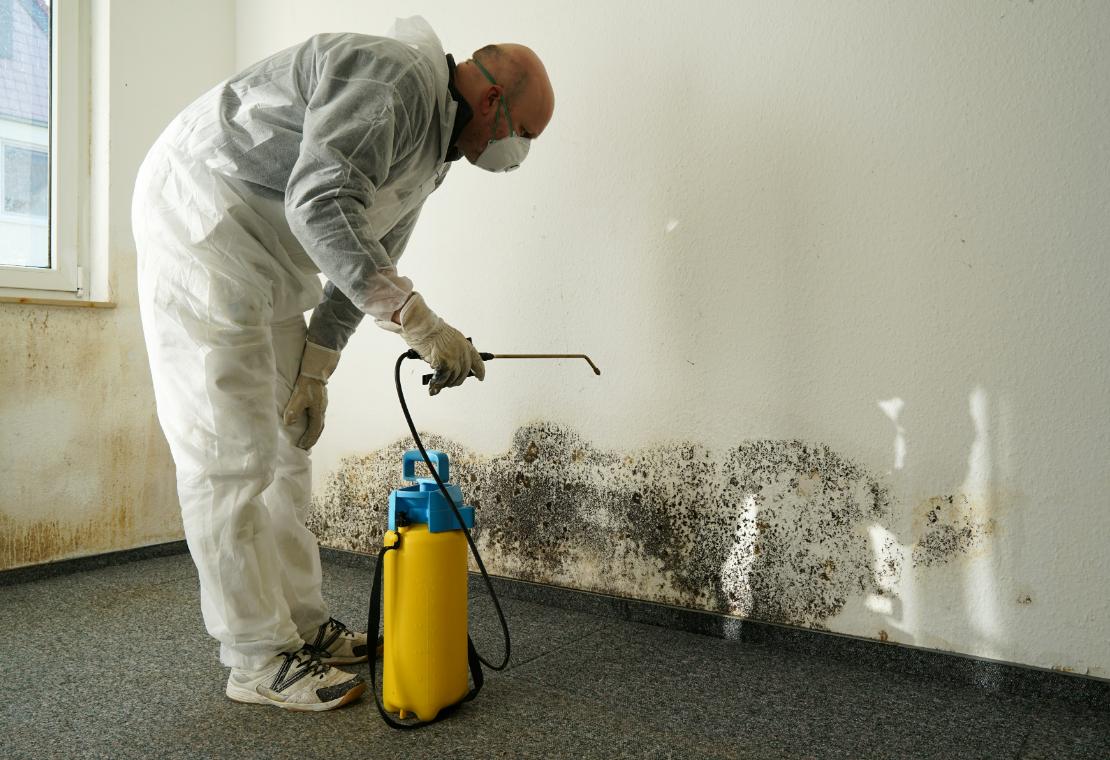
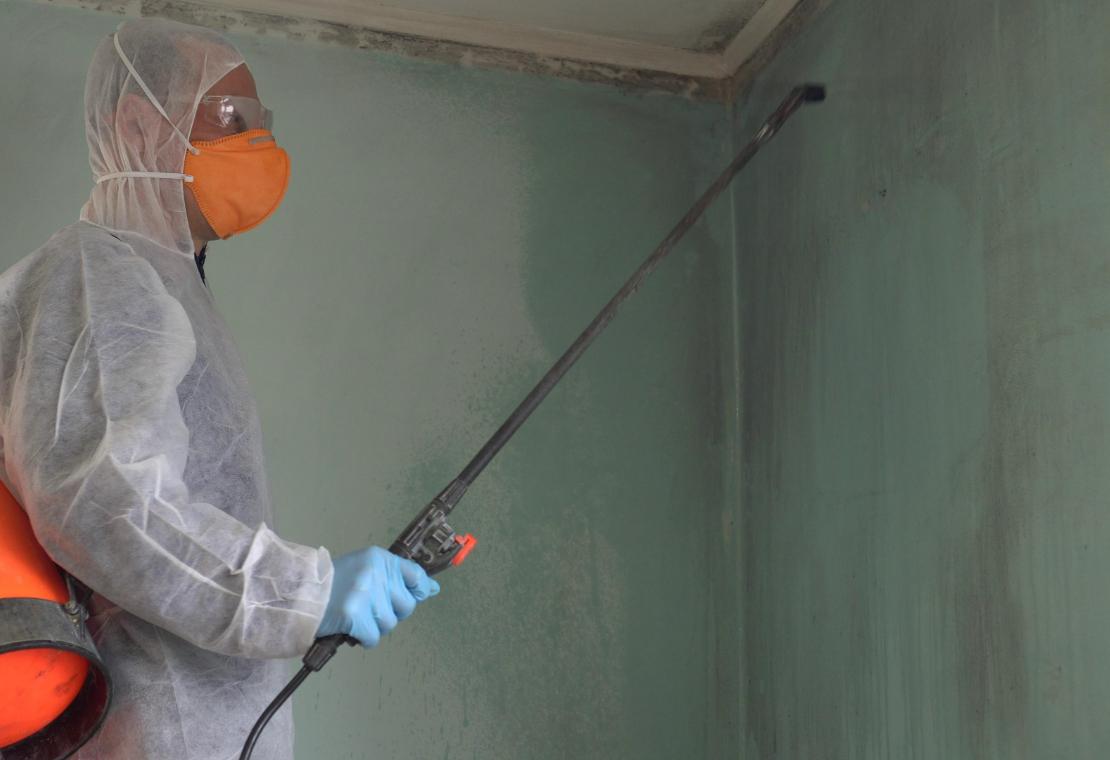
After an escape of water, mould is a question of days rather than months. Growth can establish on damp plasterboard, skirting and carpet backing within roughly two to three days of wetting at normal room temperature, which means the decisive part of the job is drying, not treatment. DA8 sits on low riverside ground of alluvium and made-up land where surface water lingers and ground-floor flats and houses take the brunt, so a fair proportion of the mould here begins as a single wet event rather than a slow seasonal pattern.
Where the water goes after the leak stops
Water travels further through a building than the visible wet patch suggests. It wicks along the paper facing of plasterboard, runs behind skirtings, tracks under a laminate floor on its underlay, fills the cells of a hollow door frame and collects in the void beneath a bath panel or a kitchen plinth. A room that looks dry on the surface after a fortnight may still hold a large volume of water in materials that will not release it to still air. Growth then appears at the edges, low down, and in cupboards.
Measuring rather than guessing
Drying is managed against readings. Moisture content is taken in timber and screed, surface and depth readings in plaster, and relative humidity and temperature are recorded in the affected rooms so progress can be tracked rather than assumed. Comparison against an unaffected part of the same building gives a realistic target, because a dry building in a riverside district will never read as dry as one on high, free-draining ground.
How a drying set-up actually works
Dehumidifiers lower the moisture content of the room air; air movers break the still boundary layer at wet surfaces so materials can release moisture into that drier air. Neither does much without the other, and neither works in a room being aired to the outside all day. Where water has reached voids, the setup has to reach them too, which may mean lifting a few boards, removing a plinth or drilling discreet holes to dry a wall cavity from the edge. Skirtings often come off, because leaving them on traps the wettest part of the wall.
The temptation to reinstate too early
The most expensive mistake after a leak is replastering and redecorating on a schedule rather than on readings. New plaster over a wall that is still releasing moisture debonds, blisters and grows mould behind fresh paint, and the whole job is repeated. Where reinstatement genuinely cannot wait, the specification changes rather than the timetable being ignored, and the report should say which choice is being made.
Flooding, insurance and records
On ground floors in a flood-risk district it pays to think about what goes back. Closed-cell insulation instead of mineral quilt at the base of a stud, removable plinths, and skirting fixed so it can be taken off without destroying the plaster all make a future event far less disruptive. Insurers and loss adjusters expect a documented sequence: initial readings, equipment placed, daily or periodic readings, completion readings and the treatment applied. Keeping that record is often what settles a claim without argument.
Making good, drains and nearby cover
Once a property is dry, someone has to put it back: skirtings and architraves refitted, plasterboard renewed, a kitchen plinth rebuilt, flooring relaid. local specialists handles that stage, and holding it until the readings are right is the whole point. Flooding and drain surcharge also displace rats, which follow defective or overloaded drainage into ground floors and voids, so our team in the area is worth addressing while floors are still open. Comparable stock uphill is covered by Bexleyheath mould removal team, the deep clean a reinstated property needs is handled by our cleaning services in Bexleyheath, and treatment specifications appear on the mould remediation page.
What happens when the call comes in
A first visit establishes the source, the extent and the materials involved, and sets up drying the same day where possible, because every day of delay increases the amount that has to be stripped out. Equipment stays in place for a period measured in days, needs a power supply and should not be switched off overnight. Costs are made up of the survey, the equipment and its running period, the strip-out and the treatment, so an early estimate is given as a range against the drying period rather than a single figure.