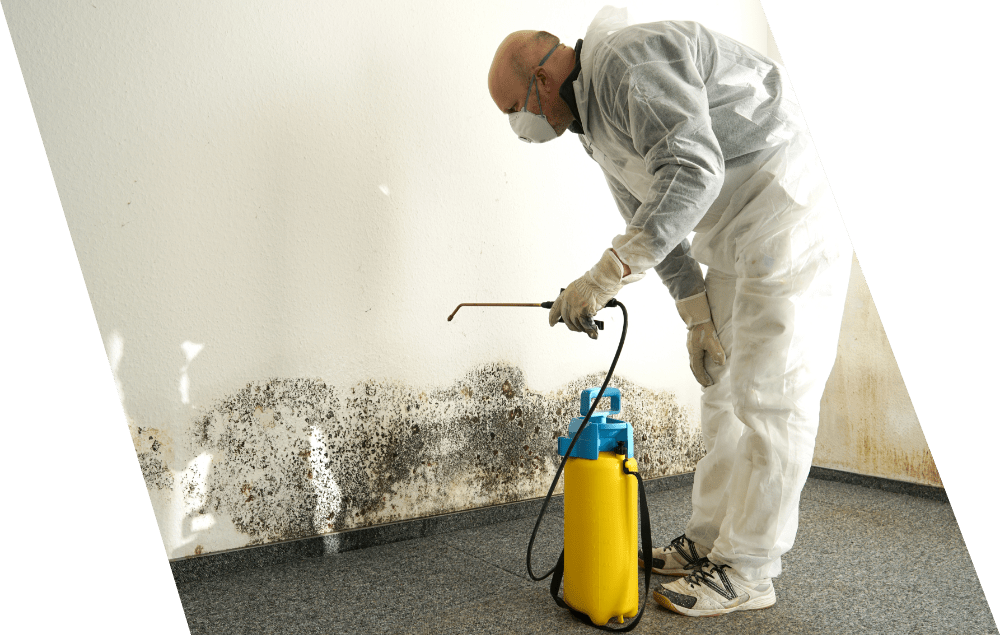
Mould does not confine itself to walls. In the later twentieth-century housing that makes up much of Beckton, the first thing a household notices is often an object rather than a surface: a mattress pushed against an outside wall, the back of a wardrobe speckled grey, or a box of stored clothes in the base of a fitted cupboard that turns out to be beyond saving. Contents are a real part of a mould job in E6, and deciding what can be recovered and what cannot is part of the work rather than an afterthought.
Sorting what is salvageable
The test is whether a material can be cleaned through rather than merely cleaned on its surface. Hard, non-porous items, sealed timber, glass, metal and most plastics clean down and stay. Washable textiles can be laundered at a temperature appropriate to the fabric, or cleaned professionally where they cannot go in a machine. Deeply colonised foam, unsealed chipboard, paper-faced board, cardboard and compressed insulation cannot be reclaimed, because the growth is within the material and not on it. Drying such items and putting them back simply reintroduces the colony to a cleaned room.
Cleaning contents without spreading spores
Handling is where damage is done. Disturbed growth becomes airborne, so affected items are vacuumed with a filtered machine before any wet cleaning, and anything being removed is bagged at the point it is picked up rather than carried open through the property. Cleaning happens in a controlled area, not across the living room floor. Items are dried fully before they return, and nothing goes back into a cupboard that is itself still drying. In a small flat this often means staging the work over two visits.
Disposal and duty of care
Material taken out of a property as waste is subject to duty of care rules, which means it leaves with a registered waste carrier and a transfer note rather than being pushed into a communal bin store. On an estate with shared chutes and refuse rooms that distinction is practical as well as legal: bagged contaminated material left in a shared area attracts complaints and pests within hours. Households are given a record of what was removed, which matters if an insurer or a landlord is involved.
Low ground and why drying is mechanical here
Much of this part of E6 is low-lying reclaimed land with groundwater close to the surface, so external humidity stays high for long stretches of the year. Opening windows on a damp day can raise indoor humidity rather than lower it, which surprises people who have been told to ventilate more. Drying a flat here usually depends on dehumidification with the windows shut, run to a target and monitored, alongside corrected extraction in the wet rooms. Refitting cupboard interiors, mounting shelving clear of an external wall and fitting ventilated cupboard doors is work covered by local specialists.
Other trades in the same job
Warm cupboard voids and stored contents make ideal harbourage, and our team in the area handles activity found behind a kick board or in a base unit. Where the moisture source turns out to be a weeping appliance connection or a failed trap under a sink rather than the wall, local plumbing across Chingford covers that repair. The same approach to contents is used nearby, and our nearby specialists covers the adjoining district. Products, method and guarantee terms are described on condensation treatment.
Preparing for the visit
A little preparation changes the scope substantially. Photograph and list affected contents before anything is moved, particularly if a claim is likely. Empty what can be emptied, keep bedding and clothing out of the affected room, and set aside anything already visibly colonised rather than repacking it. Pricing follows two separate strands: the fabric works, quoted by the rooms and surfaces treated, and contents handling, quoted by the volume of items processed and by disposal. An inventory of everything removed is provided at the end, alongside the readings taken before drying started and at the point it was signed off.