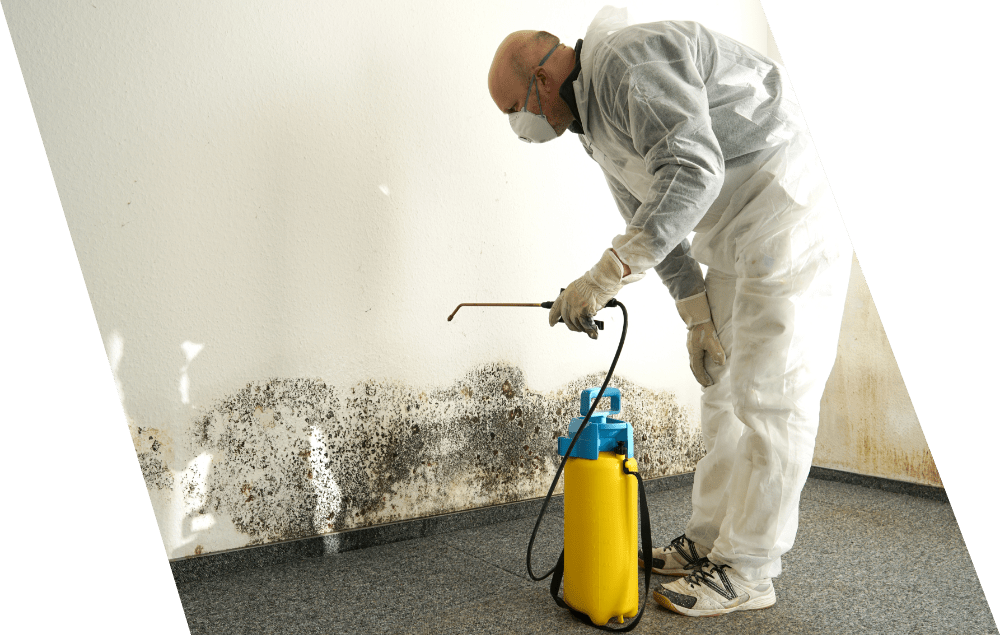
Whether a mould problem is an insurance matter turns on a single question, and it is not how bad the growth looks. Policies respond to events, not to conditions. An escape of water from a pipe, a storm that took tiles off, an overflow from a tank: those are events. Condensation, a worn-out seal, a gutter nobody cleared for a decade and general wear are conditions, and they sit outside nearly every buildings policy. Households across Blackfen discover this in the wrong order, usually after the work has already been done.
Mould is the consequence, not the claim
Growth is almost never the insured loss in itself. It is what happens to materials that were wetted by something else, so a claim stands or falls on identifying that something else and dating it. The first thing worth establishing is therefore the mechanism and the timing: when the water arrived, from where, and how long it sat. A clear answer supports a claim. An honest answer of "it has been getting slowly worse for two years" generally does not, however extensive the damage, and no amount of remediation work changes that starting position.
Recording before anything is disturbed
The single most expensive mistake is stripping out first. Once a floor covering is in a skip and the plaster is off, the evidence of what happened has gone, and the assessment relies on a description. Photographs of the affected areas from several angles, of the failed component itself, and of the extent of the wetting, taken before any work, cost nothing and change the conversation entirely. Moisture readings taken early and repeated give a picture of the extent that a later inspection cannot reconstruct.
Mitigation is expected of the policyholder
There is a duty to limit further damage, and that duty coexists with the need to preserve evidence. In practice the two are reconciled by making safe and drying promptly while recording as you go, rather than waiting weeks for permission with water still in the structure. Drying and protective work are normally regarded as reasonable. Full reinstatement, new plaster, new flooring and redecoration, is the part that generally waits until the scope has been agreed.
How the scope gets settled
For anything beyond a small loss, an adjuster is appointed to establish cause, extent and liability, and a schedule of works is agreed from that. Settlement may be arranged as works carried out by an approved contractor or as a sum paid to the policyholder to have the work done. Buildings and contents are treated separately, so a damaged floor and the furniture standing on it may be handled under different parts of the policy and carry different excesses.
Where a mould contractor fits
There are three distinct roles and it helps to know which is wanted. Independent findings on cause and extent, for use as evidence. Drying and remediation as the immediate response. Or the treatment and making good that forms part of the agreed schedule. Being clear about which is being asked for avoids duplicated visits. Comparable investigations in the neighbouring area are covered by mould remediation in Welling, and the general approach to remediation is set out under our mould removal and remediation team.
What a first attendance involves
A technician inspects the affected areas, takes readings on wet and comparable dry materials, photographs the extent and produces written findings suitable for submission to an insurer or an adjuster. Charges follow the size of the property, the number of rooms and whether documentation is required. Repairs and making good once a scope is agreed, including skirtings, doors and flooring trims, are handled by the service in full, deep cleaning after works is covered by cleaning services specialists in Welling, and a long-standing damp void often contains more than damp, which is dealt with by professional wasp nest removal in Blackfen.