Mould Removal and Treatment North Woolwich
Professional mould remediation experts providing safe mould removal, air filtration, and moisture control to prevent recurring mould problems.


Professional mould remediation experts providing safe mould removal, air filtration, and moisture control to prevent recurring mould problems.
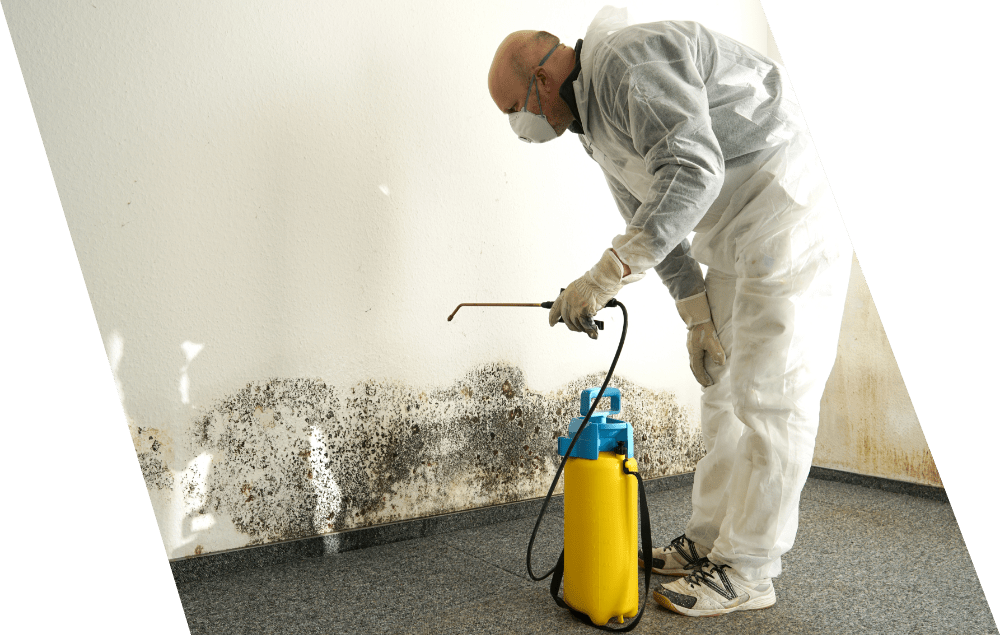
The cost of mould removal depends on the size of the affected area and the type of treatment required. After a detailed inspection a clear, personalised quote is provided based on the scope of work.

Our mould removal service in North Woolwich begins with a comprehensive inspection and moisture assessment to pinpoint contamination levels and their underlying causes. Mould growth is frequently triggered by factors such as condensation, elevated humidity levels, inadequate ventilation, or recent water damage. Identifying these sources is crucial for establishing long-lasting results. We focus on treating structural surfaces like walls, ceilings, and floors—areas where mould typically proliferates. It’s important to note that soft furnishings such as carpets and textiles are not addressed in our service, as our aim is to eliminate the source of the problem for effective mould cleaning in North Woolwich.
Beyond mere cleaning, our mould remediation service in North Woolwich is designed to tackle airborne mould spores, ensuring a cleaner indoor environment. We utilize advanced techniques for black mould removal in North Woolwich, helping to enhance indoor air quality. Our approach not only combats existing mould issues but also implements strategies for condensation control and damp and mould removal to prevent future outbreaks, protecting both your health and the structural integrity of your property. Proper mould inspection is key to safeguarding your living space and ensuring long-term mould prevention.
In North Woolwich, effective mould remediation begins with a thorough inspection and moisture assessment. Professional hygrometers are employed to detect hidden damp conditions, which are often the root cause of mould growth. Identifying these sources of excess moisture is crucial, as it not only aids in immediate mould removal but also prevents future occurrences. Following the assessment, HEPA filtration systems and air scrubbers are utilized to capture airborne mould spores, ensuring safe indoor air quality during the entire remediation process.
The application of HOCl (Hypochlorous Acid) treatment is a key element of mould cleaning in North Woolwich. This professional-grade, non-toxic solution neutralizes mould, bacteria, and mycotoxins at a microscopic level. Additionally, ULV (Ultra-Low Volume) fogging technology is implemented to disperse the treatment evenly throughout the environment, reaching hidden areas such as cracks, corners, and behind surfaces. The physical removal of mould is conducted using professional equipment equipped with H-Class filtration, safely containing contaminants. The final air purification step, combined with ongoing protection measures, significantly reduces airborne spores and improves indoor air quality, ensuring long-term results against damp and mould removal in North Woolwich.

Booking mould cleaning is quick and designed to get results without unnecessary delays.
Share what you’re dealing with, whether it’s visible mould, damp patches, or a recurring problem. This helps determine the right approach, from mould cleaning to full mould remediation.
A specialist checks the affected areas and identifies what’s causing the mould, such as excess moisture, condensation, or poor ventilation. This ensures the issue is treated properly, not just on the surface.
You’ll get a straightforward quote based on the level of contamination and the type of mould removal required. The service is tailored to ensure effective results and long-term protection.
The treatment removes mould and improves indoor air quality, helping to prevent future growth and create a healthier living space. It also targets the root cause of the problem for longer-lasting results.
Mould removal requires more than basic cleaning, which is why it’s handled by trained mould remediation specialists experienced in treating both visible and hidden contamination. Each specialist assesses the full extent of mould growth, including underlying causes such as excess moisture, condensation, and ventilation issues, ensuring the problem is addressed properly rather than just on the surface.
Number of bookings: 3178
With Fantastic Services for: 4 years
Other specialities:
Number of bookings: 205
With Fantastic Services for: 3 years
Other specialities:
Number of bookings: 298
With Fantastic Services for: 3 years
Other specialities:
Alongside professional mould removal and mould cleaning, a range of additional property care services is available to help maintain a healthier indoor environment.
Mould can spread quickly and impact both health and property if not treated in time. Book a service today to remove mould, improve indoor air quality, and restore a cleaner and healthier living environment.

North Woolwich sits on a bend of the river with very little standing between its housing and open water, and the elevation facing the Thames takes weather that a sheltered inland street never sees. Rain driven horizontally against solid brickwork for hours finds every open joint and every hairline crack in a render coat. What follows is not condensation and does not behave like it: a diffuse damp area on the inside face of that one wall, worse in the days after a storm, while the rest of the property stays perfectly dry.
The distinction matters because the remedies have nothing in common. Wind-driven wetting gives readings that stay high deep into the masonry and vary with the weather rather than with the time of day. Surface meters alone can mislead, since salts in old plaster read as moisture, so a sample taken from a drilled depth gives a truer figure. Externally the evidence is usually visible: eroded or hollow mortar joints, brick faces spalled where frost has taken the fired surface off, cracked render sounding hollow when tapped, and cills with no drip or a drip that has been filled with paint.
No internal treatment survives on a wall that is still taking in water. Repointing is done with a mortar softer than the brick, because a hard cement mix simply forces moisture to leave through the brick face and accelerates spalling. Render cracks are cut out and made good rather than painted over. Cills get re-bedded and their drips reinstated. Where a solid wall is chronically exposed, a breathable water-repellent treatment can be considered, but only on masonry that has already been dried and repaired, never as a way of sealing water in.
Brickwork that has been saturated over a winter holds a great deal of water, and it releases it slowly. Drying is managed with dehumidification and air movement, monitored by repeat readings at fixed marked points, and continued to an agreed target rather than to a date in a diary. The local ground does not help: much of this part of E16 is reclaimed former dock land with groundwater close to the surface, so external humidity stays high and evaporation is slower than it would be inland. Lining or sealing a wall that is still above target is the single most common way a job of this kind is spoiled.
Only once readings settle does internal work make sense: removing contaminated plaster where salts have migrated, treating the exposed structure, and replastering in a system that lets the wall dry inwards. The same method is used along the river, and a local professional covers the neighbouring district. External repairs, vents and making good are practical tasks covered by minor repairs services in Canning Town, best scheduled before the drying period starts rather than after. Damp, still voids in these blocks draw rodents, and our Canning Town team addresses that where an inspection turns up both problems together.
Rooms that have been open for weeks need a proper clean before they are furnished again, and Canary Wharf after builders cleaning specialists deals with the residue from plaster removal and drying equipment. Survey method, drying protocols and guarantee terms are described on professional mould removal and remediation.
A job here is naturally in stages, and each is quoted separately so nothing is paid for speculatively: an inspection with depth readings and an external assessment; fabric repair; a monitored drying period; then internal treatment and making good. Drying is priced by duration and by the equipment on site, and monitoring visits are scheduled at intervals rather than left to chance. Occupiers are told what the equipment costs to run and which rooms need to stay closed while it does. Where a property is tenanted, the readings taken at each visit form the record a landlord or agent needs to show the cause was addressed rather than covered up.
Skip the line, request and
book a service online