


Mould Removal and Remediation Rainham
Safe and proven mould removal services that eliminate contamination and support healthier living and working spaces.

Safe and proven mould removal services that eliminate contamination and support healthier living and working spaces.
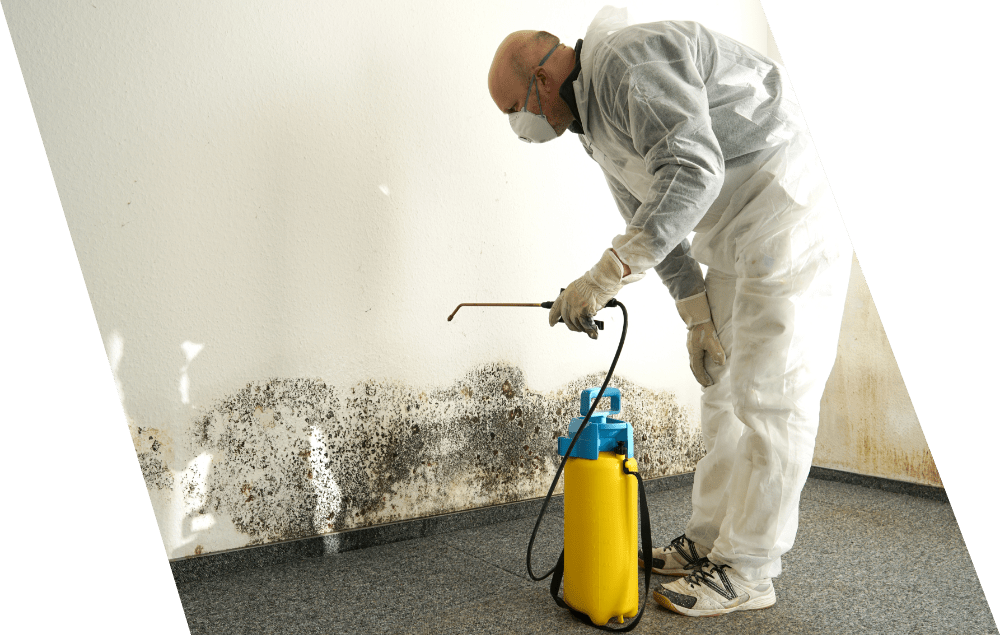
The cost of mould removal depends on the size of the affected area and the type of treatment required. After a detailed inspection a clear, personalised quote is provided based on the scope of work.
| Small mould area (e.g. around a window or corner) | Medium mould area +£100 (large section of a wall affected) | Large mould area +£150 (more than one wall or ceiling) | ||||
|---|---|---|---|---|---|---|
| Room | Standard | Fantastic Club* | Standard | Fantastic Club* | Standard | Fantastic Club* |
| Bedroom | £350 | £320 | £450 | £420 | £500 | £470 |
| Bathroom | £350 | £320 | £450 | £420 | £500 | £470 |
| Kitchen | £350 | £320 | £450 | £420 | £500 | £470 |
| Living / Dining room | £350 | £320 | £450 | £420 | £500 | £470 |
| Hallway / Landing | £350 | £320 | £450 | £420 | £500 | £470 |
| Utility room | £350 | £320 | £450 | £420 | £500 | £470 |
| Paid inspection | £50 | |||||
| *Price for members of the Fantastic Club. The Fantastic Club is a yearly subscription of £89. | ||||||

In Rainham, professional mould removal and remediation are made effective through the use of advanced technology designed to eliminate both visible and hidden mould contamination. Mould spores can spread easily through the air and settle in hard-to-reach spots where typical cleaning fails. Thus, professional mould cleaning in Rainham involves both airborne treatment and direct surface cleaning measures.
ULV (Ultra-Low Volume) fogging technology is employed to ensure that treatment particles distribute evenly throughout the environment, reaching behind furniture, in cracks, and along ceilings and walls. As a crucial element, HOCl (Hypochlorous Acid) acts as a non-toxic, professional-grade disinfectant that neutralizes mould, bacteria, and mycotoxins at a molecular level, leaving no harmful residue. This comprehensive treatment strategy improves indoor air quality, significantly lowering the chance of recontamination.
In Rainham, the goal of mould remediation is twofold: to eliminate existing mould issues and to prevent future growth through targeted interventions. Experienced professionals assess critical factors such as humidity, ventilation, and water ingress prospects to develop a customized mould remediation plan. Following the successful mould removal Rainham, surfaces can be treated with protective solutions that bond to inhibit mould growth and lower airborne spore activity. Employing HEPA filtration systems and air scrubbers throughout the process ensures improved indoor air quality, effectively safeguarding health. Proper mould cleaning Rainham minimizes allergens and preserves property integrity, creating a healthier living environment.

Booking mould cleaning is quick and designed to get results without unnecessary delays.
Share what you’re dealing with, whether it’s visible mould, damp patches, or a recurring problem. This helps determine the right approach, from mould cleaning to full mould remediation.
A specialist checks the affected areas and identifies what’s causing the mould, such as excess moisture, condensation, or poor ventilation. This ensures the issue is treated properly, not just on the surface.
You’ll get a straightforward quote based on the level of contamination and the type of mould removal required. The service is tailored to ensure effective results and long-term protection.
The treatment removes mould and improves indoor air quality, helping to prevent future growth and create a healthier living space. It also targets the root cause of the problem for longer-lasting results.
Mould removal requires more than basic cleaning, which is why it’s handled by trained mould remediation specialists experienced in treating both visible and hidden contamination. Each specialist assesses the full extent of mould growth, including underlying causes such as excess moisture, condensation, and ventilation issues, ensuring the problem is addressed properly rather than just on the surface.
Number of bookings: 205
With Fantastic Services for: 3 years
Other specialities:
Number of bookings: 298
With Fantastic Services for: 3 years
Other specialities:
Number of bookings: 8301
With Fantastic Services for: 6 years
Other specialities:
What the reviews say
"Quick and effective rodent control service. Their timely response and efficient methods resolved the problem with expertise."
Alongside professional mould removal and mould cleaning, a range of additional property care services is available to help maintain a healthier indoor environment.








Mould can spread quickly and impact both health and property if not treated in time. Book a service today to remove mould, improve indoor air quality, and restore a cleaner and healthier living environment.

Recovery from a flood is a drying job with a cleaning job attached, and getting that the wrong way round is why some houses are still growing mould a year later. RM13 sits on low, flat ground close to the marshes and the river wall, with a good deal of its housing on ground that drains slowly and where surface water has nowhere obvious to go in a heavy downpour. Water that has come in across a threshold or up through a floor is not the same material as water from a burst pipe, and it is not treated the same way.
Clean water from a supply pipe wets materials and leaves them otherwise intact. Surface water that has crossed a garden, a road or a drainage system arrives carrying silt, organic matter and whatever the drains held, and where it has backed up through a gully it has to be assumed contaminated. Contaminated water means porous materials in contact with it are removed rather than dried — carpet, underlay, mineral wool insulation, chipboard, and the lower part of plasterboard — because drying dirty material simply produces dry dirty material that will support growth as soon as humidity rises again.
A flooded room looks clean once the water has gone, but a fine layer of silt has settled on and into every horizontal surface, under the floor covering, in the corners, and in the sub-floor void if there is one. That silt is food. It holds moisture, supplies nutrients and gives spores an ideal bed, so a room that was dried but not properly cleaned out will grow mould on surfaces that are not particularly damp. Removing it wet, before drying starts in earnest, is a distinct stage rather than a finishing touch.
Plasterboard behaves like a wick. Water rises within it well above the visible line, and insulation behind a stud wall holds water indefinitely, so the board is cut to a straight line above the highest wet reading rather than to the tide mark. Solid walls with wet plaster are hacked off to sound material. Where there is a ventilated void below a timber floor, that void is pumped and cleared, low-level ventilation openings are proved clear, and the underside of the timber is checked before anything is laid back on it. A solid floor with a screed holds water for weeks and cannot be hurried.
Air movers and dehumidification are set up to work on the materials rather than the room air, positioned so that air passes across wet surfaces and into the void spaces, and readings are taken in the same places at each visit so the trend is visible. The equipment stays until the readings flatten at a sensible level and stop falling, which in a masonry wall or a screed is a matter of weeks. Replastering, flooring and skirtings while the substrate is still giving up water is the classic mistake, and it produces a fresh patch of growth behind a brand-new finish.
Once the material is dry and clean, remaining surfaces are treated with a biocide left on for its full dwell time to deal with what is left on sound substrates. A treatment is not a substitute for removal and it does not sterilise a house; it deals with residual growth on surfaces that are going to stay. Anything taken out leaves as controlled waste under duty of care rather than going out with the household refuse. Replacing skirtings, doors and floor structure afterwards is carpentry handled by our local team.
Expect an inspection with readings and a written scope, a strip-out stage, a drying period with equipment running continuously, and reinstatement only after that. Costs follow the area stripped, the number of pieces of drying equipment and the length of the drying period, and the drying period is the part that cannot be compressed. Rooms will be unusable while it runs and the noise is constant. Flooded voids and wet ground also push rodents and insects into buildings, which is handled by Rainham pest control services; the final clean of the rooms is arranged with cleaning services across Upminster and nearby areas; the equivalent service in the neighbouring district is covered by mould removal prices in Upminster, and the general sequence is set out on mould removal and remediation services UK.
Skip the line, request and
book a service online














