


Mould Removal Seven Kings
Certified mould remediation specialists delivering safe, effective mould removal using industry-approved techniques and equipment.

Certified mould remediation specialists delivering safe, effective mould removal using industry-approved techniques and equipment.
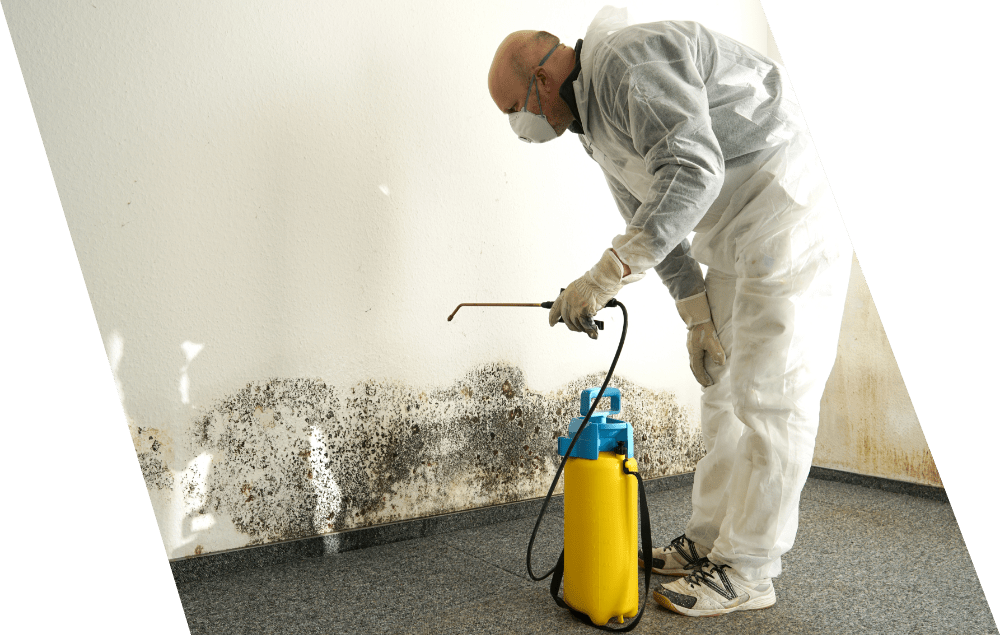
The cost of mould removal depends on the size of the affected area and the type of treatment required. After a detailed inspection a clear, personalised quote is provided based on the scope of work.
| Small mould area (e.g. around a window or corner) | Medium mould area +£100 (large section of a wall affected) | Large mould area +£150 (more than one wall or ceiling) | ||||
|---|---|---|---|---|---|---|
| Room | Standard | Fantastic Club* | Standard | Fantastic Club* | Standard | Fantastic Club* |
| Bedroom | £350 | £320 | £450 | £420 | £500 | £470 |
| Bathroom | £350 | £320 | £450 | £420 | £500 | £470 |
| Kitchen | £350 | £320 | £450 | £420 | £500 | £470 |
| Living / Dining room | £350 | £320 | £450 | £420 | £500 | £470 |
| Hallway / Landing | £350 | £320 | £450 | £420 | £500 | £470 |
| Utility room | £350 | £320 | £450 | £420 | £500 | £470 |
| Paid inspection | £50 | |||||
| *Price for members of the Fantastic Club. The Fantastic Club is a yearly subscription of £89. | ||||||

When it comes to mould removal in Seven Kings, a professional approach is essential to achieving complete remediation of both visible and hidden mould. Mould spores are notorious for their ability to circulate through the air and settle in inaccessible areas, where ineffective standard cleaning methods cannot reach. As a result, professional mould cleaning in Seven Kings integrates airborne treatments with surface-level interventions, ensuring that every potential site of mould is effectively addressed.
Employing ULV (Ultra-Low Volume) fogging technology is a cornerstone of this approach, dispersing treatment particles evenly throughout the environment and penetrating behind furniture and into tight spaces. Coupled with this advanced technique, the use of HOCl (Hypochlorous Acid) stands out as a safe, professional-grade disinfectant that neutralises mould, bacteria, and mycotoxins at a molecular level without leaving harmful residues. This meticulous strategy not only enhances indoor air quality but also mitigates the risk of future recontamination, ensuring a healthier living space.
In Seven Kings, effective mould remediation is about more than simply removing mould; it's designed to prevent future outbreaks by tackling underlying environmental conditions. Professionals evaluate moisture levels, airflow, and sources of water ingress to develop a comprehensive mould removal Seven Kings strategy tailored to your situation. This thorough approach to mould cleaning Seven Kings ensures that the factors promoting mould growth are addressed, leading to long-term solutions.
After mould treatment, protective barriers are put in place, bonding to surfaces to actively fend off future mould development while minimizing airborne spores. The use of HEPA filtration systems and air scrubbers is integral both during and after the mould removal process, contributing to a sustained improvement in indoor air quality. This strategic black mould removal in Seven Kings not only promotes a healthier living environment by lowering allergens but also helps maintain the integrity of your property, decreasing the chances of structural damage and elevating overall indoor conditions.

Booking mould cleaning is quick and designed to get results without unnecessary delays.
Share what you’re dealing with, whether it’s visible mould, damp patches, or a recurring problem. This helps determine the right approach, from mould cleaning to full mould remediation.
A specialist checks the affected areas and identifies what’s causing the mould, such as excess moisture, condensation, or poor ventilation. This ensures the issue is treated properly, not just on the surface.
You’ll get a straightforward quote based on the level of contamination and the type of mould removal required. The service is tailored to ensure effective results and long-term protection.
The treatment removes mould and improves indoor air quality, helping to prevent future growth and create a healthier living space. It also targets the root cause of the problem for longer-lasting results.
Mould removal requires more than basic cleaning, which is why it’s handled by trained mould remediation specialists experienced in treating both visible and hidden contamination. Each specialist assesses the full extent of mould growth, including underlying causes such as excess moisture, condensation, and ventilation issues, ensuring the problem is addressed properly rather than just on the surface.
Number of bookings: 123
With Fantastic Services for: 2 years
Other specialities:
Number of bookings: 3178
With Fantastic Services for: 4 years
Other specialities:
Number of bookings: 214
With Fantastic Services for: 3 years
Other specialities:
Alongside professional mould removal and mould cleaning, a range of additional property care services is available to help maintain a healthier indoor environment.








Mould can spread quickly and impact both health and property if not treated in time. Book a service today to remove mould, improve indoor air quality, and restore a cleaner and healthier living environment.

Black lines in the sealant around a bath are treated as a cleaning failure and are usually the visible end of a structural one. Bathrooms in the terraced housing of IG3 were mostly retrofitted - into a back bedroom, over a stairwell, or into a ground-floor rear addition - and the tiling, trays and waterproofing in them have often been replaced piecemeal by different hands over forty years. Water finds the weakest junction, gets behind the finish, and the growth in the joint is simply where it comes back out.
Very few bathroom problems are pipe leaks. The usual culprits are junctions that move: the joint between a bath rim and the tiles, the edge of a shower tray, the point where a tray meets a waste, and the corners of a tiled enclosure. All of those move slightly when weight goes into or out of a bath or tray, and a rigid filler in a moving joint cracks. The water then runs down the face of the substrate behind the tiles, where nothing evaporates.
Three mistakes account for most sealant failures. Applying it to a dry, unloaded bath, so that the joint is stretched beyond its capacity the first time the bath is filled - the bath should be full when the bead is formed. Piping fresh sealant over an old bead, where it has nothing sound to bond to and traps whatever was growing underneath. And relying on sealant to bridge a gap far wider than it should be, usually because a bath or tray is not properly supported, in which case the support is the actual repair.
Cement-based grout is porous by design. In a splashback that is acceptable; in a shower it wicks water steadily into the adhesive bed and then into whatever is behind. Where that substrate is ordinary plasterboard - common in a retrofitted bathroom - the board softens, loses its grip on the adhesive and colonises. Tapping the tiles tells you where you stand: a hollow, drummy note across part of a shower wall means the tiles have lost their bond and there is a wet layer behind them. Terraced houses on the roads immediately west have the same retrofitted layouts, covered under mould removal across Goodmayes.
A tiled wet area needs a waterproof layer behind the tiles, not just tiles and grout. Liquid-applied membranes with reinforcing tape at internal corners and collars at pipe penetrations are the norm; the failures are nearly always at those details rather than in the open field. Retrofitted wet rooms over a timber floor bring their own risk, because the deck flexes, the falls are shallow, and the joint between the former and the floor membrane has to be continuous. What a tanked wet zone involves, stage by stage, is set out under how it works.
An extract fan needs air coming into the room as much as it needs a route out. Fit a door that closes tightly onto a carpet with no undercut, and the fan runs against a closed box, moving very little air whatever its rating. A ten-millimetre gap under the door, or a transfer grille, transforms the performance of a fan that was previously written off as useless. Ducting matters too: short, rigid and insulated where it crosses a cold void, terminating outside rather than in a roof space. professional handyman services in Seven Kings covers the fan, the ducting and the door adjustment.
Silverfish need high humidity and feed on starches, including wallpaper paste and the cellulose in plasterboard. Finding them in numbers in a bathroom is a reliable sign that humidity is staying high for long periods rather than spiking and clearing, and they concentrate around the bath panel and the base of a tiled wall where moisture is sitting. Treating them is straightforward, and local pest control in Seven Kings handles that side while the humidity problem is dealt with properly.
Where growth is confined to sealant and grout, the work is a day: beads cut out, joints cleaned and dried, grout raked and replaced in the wet zone, new movement joints formed with the bath loaded. Where tiles sound hollow, the wet zone comes off, the substrate is replaced with a board suitable for the location, tanked, and re-tiled, which is a two-stage job with drying time between. Pricing follows the area stripped and whether waterproofing and tiling are included. The bathroom is out of use during the tiling stage, and a full clean afterwards is worth arranging, which what the visit includes covers.
Skip the line, request and
book a service online













