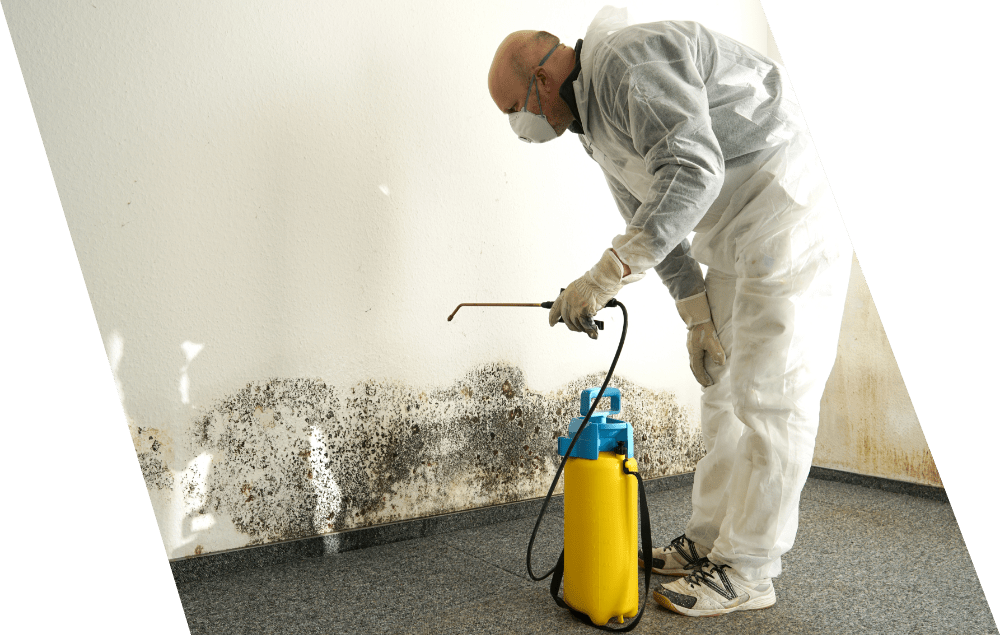
Silverfish in a bathroom and booklice along a skirting are not a pest problem with a damp problem next to it. They are one problem with two symptoms, and the insects almost always arrive first. In Collier Row, where much of the housing is interwar and post-war suburban stock with ventilated timber floors at ground level and fitted joinery against external walls, the insects are frequently the earliest warning a household gets that a surface somewhere is staying damp enough to support growth.
What those insects are actually eating
Booklice, silverfish and plaster beetles feed on microscopic fungal growth and on the starch in paper, paste and cardboard. They cannot establish in a dry house because their food will not grow there and because they lose water too quickly to survive. A sustained population is therefore direct evidence of persistently high humidity at that spot, usually well before any black marking is visible on a wall. Finding them in a bathroom, behind a bath panel, under a floor covering or in a stored box tells a technician where to look.
Rodents make cold spots and wet ones
Mice and rats work the other way round: they create the conditions. Nesting activity pulls insulation aside and compresses it, which leaves a cold patch that then collects condensation on the room side. Nesting material holds moisture, and urine and droppings both add moisture and provide nutrients for growth. A ceiling or wall with a persistent damp patch that has no plumbing or weather explanation, in a house with evidence of activity above, is often exactly this.
Why treating one without the other fails
Insecticide applied to a damp skirting kills the current population and nothing else. The humidity that supported it is unchanged, the fungal food source is still growing, and a new population arrives within weeks. Equally, cleaning growth off a wall while a rodent population is actively nesting in the structure above simply means the cleaning is undone. The sequence that works is to remove the animals and block their access, deal with the water or the cold surface that made the place habitable, then clean and treat. Trapping, proofing and monitoring are the work of the pest control team in Collier Row, and on a shared job it goes first.
Where they overlap in this housing type
Three places account for most of it. The void below a ground-floor timber floor, where low-level ventilation openings have been blocked by paving or a border and the space has gone stale and damp. Fitted joinery against a cold external wall, where the back of a carcase never dries and cardboard-backed panels rot quietly. And the space above a top-floor ceiling, where insulation has been disturbed and moisture from the rooms below is reaching it. All three are warm, still and out of sight, which is what both the growth and the animals require.
Removal in a contaminated space
Where droppings, nesting material and mould are present together, the work is done wet with extraction at the point of removal, everything is bagged as it comes out and leaves as controlled waste, and the area is cleaned down before any biocide is applied. Dry sweeping a nesting site is how contamination gets distributed through a house. Proofing follows cleaning rather than preceding it, so that nothing is sealed in, and insulation that has been soiled or wetted is replaced rather than laid back.
What a combined visit looks like
The inspection covers both the growth and the evidence of activity, because the two together give a much better picture of where the moisture is than either alone. Pricing for the remediation side follows the area treated, the material removed and the drying period; proofing and pest treatment are priced separately by the number of visits and points of entry. Clearing stored possessions away from external walls and floor perimeters before the visit makes a real difference to what can be reached. Timber that has been chewed, gnawed or cut back, and access panels that need refitting, are carpentry handled by professional handyman services in Collier Row. Cleaning the affected rooms afterwards is arranged with the cleaning services team in Harold Wood, the same service nearby is covered by mould removal services in Chadwell Heath, and the remediation sequence in general is set out on mould remediation.