


Mould Removal Hornchurch
Professional mould remediation services combining inspection, treatment, and prevention to maintain hygienic indoor spaces.

Professional mould remediation services combining inspection, treatment, and prevention to maintain hygienic indoor spaces.
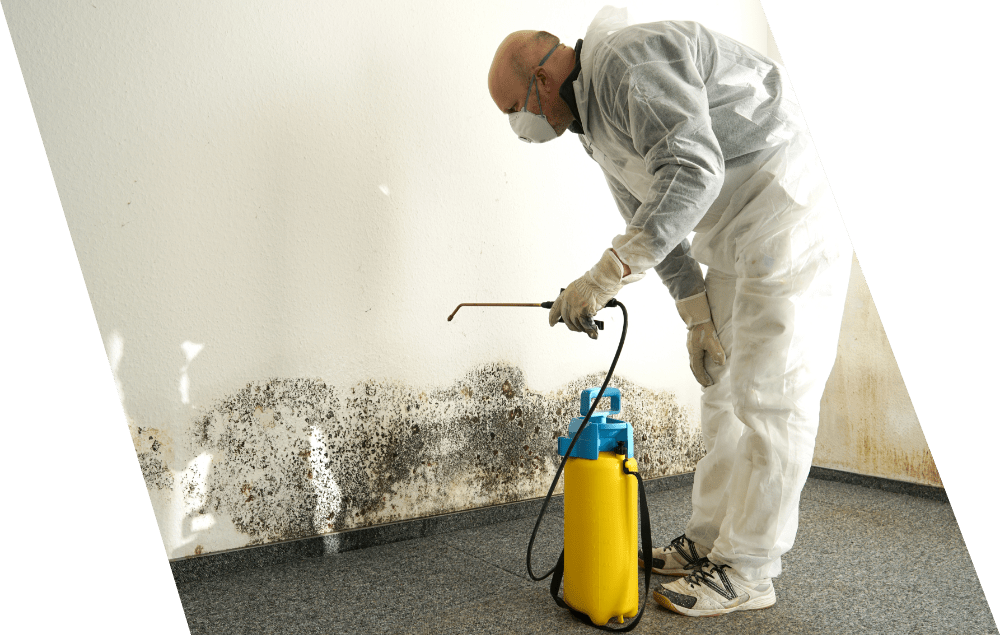
The cost of mould removal depends on the size of the affected area and the type of treatment required. After a detailed inspection a clear, personalised quote is provided based on the scope of work.
| Small mould area (e.g. around a window or corner) | Medium mould area +£100 (large section of a wall affected) | Large mould area +£150 (more than one wall or ceiling) | ||||
|---|---|---|---|---|---|---|
| Room | Standard | Fantastic Club* | Standard | Fantastic Club* | Standard | Fantastic Club* |
| Bedroom | £350 | £320 | £450 | £420 | £500 | £470 |
| Bathroom | £350 | £320 | £450 | £420 | £500 | £470 |
| Kitchen | £350 | £320 | £450 | £420 | £500 | £470 |
| Living / Dining room | £350 | £320 | £450 | £420 | £500 | £470 |
| Hallway / Landing | £350 | £320 | £450 | £420 | £500 | £470 |
| Utility room | £350 | £320 | £450 | £420 | £500 | £470 |
| Paid inspection | £50 | |||||
| *Price for members of the Fantastic Club. The Fantastic Club is a yearly subscription of £89. | ||||||

In Hornchurch, mould removal is not just about cleaning visible mould; it extends to thorough mould remediation that detects and resolves the underlying causes. Mould cleaning requires an understanding of environmental factors, including condensation and humidity levels. By pinpointing these issues, professionals can establish effective mould prevention measures to protect your home from recurring problems.
To ensure effective mould remediation in Hornchurch, experts employ advanced equipment to assess ventilation, moisture levels, and signs of water damage thoroughly. The process typically includes treatment of impacted walls, ceilings, and floors, while soft furnishings are often excluded due to their potential to harbour moisture. This integrated approach not only provides immediate mould removal but also establishes a moisture balance, helping to eliminate the conditions that allow mould to thrive.
Mould remediation in Hornchurch follows a meticulous structured process that ensures the effective elimination of mould. Initially, a detailed inspection is conducted to ascertain the extent of the mould problem and pinpoint moisture sources. Following this, HEPA air filtration systems are deployed to capture and filter out airborne spores. The treatment phase involves using HOCl (hypochlorous acid), a natural and safe mould neutraliser that effectively tackles mould while posing minimal risk to health.
An essential part of mould remediation is ULV fogging technology, which distributes anti-mould treatments evenly across all surfaces and airspaces. Additionally, our physical removal strategies utilize professional equipment fitted with H-Class filtration for maximum efficacy. The final step includes thorough air cleaning, greatly improving air quality and fostering long-term protection against mould regrowth. By engaging in mould removal in Hornchurch, you secure a healthier living environment that minimizes risks associated with mould exposure.

Booking mould cleaning is quick and designed to get results without unnecessary delays.
Share what you’re dealing with, whether it’s visible mould, damp patches, or a recurring problem. This helps determine the right approach, from mould cleaning to full mould remediation.
A specialist checks the affected areas and identifies what’s causing the mould, such as excess moisture, condensation, or poor ventilation. This ensures the issue is treated properly, not just on the surface.
You’ll get a straightforward quote based on the level of contamination and the type of mould removal required. The service is tailored to ensure effective results and long-term protection.
The treatment removes mould and improves indoor air quality, helping to prevent future growth and create a healthier living space. It also targets the root cause of the problem for longer-lasting results.
Mould removal requires more than basic cleaning, which is why it’s handled by trained mould remediation specialists experienced in treating both visible and hidden contamination. Each specialist assesses the full extent of mould growth, including underlying causes such as excess moisture, condensation, and ventilation issues, ensuring the problem is addressed properly rather than just on the surface.
Number of bookings: 214
With Fantastic Services for: 3 years
Other specialities:
Number of bookings: 213
With Fantastic Services for: 2 years
Other specialities:
Number of bookings: 139
With Fantastic Services for: 2 years
Other specialities:
Alongside professional mould removal and mould cleaning, a range of additional property care services is available to help maintain a healthier indoor environment.








Mould can spread quickly and impact both health and property if not treated in time. Book a service today to remove mould, improve indoor air quality, and restore a cleaner and healthier living environment.

A lean-to across the back of a house is a moisture machine for four months of the year, and it is rarely blamed for what it does to the rooms behind it. Hornchurch has a great many interwar and post-war houses with a conservatory, a glazed garden room or a flat-roofed glazed extension added at the rear, usually with a sliding or French door into the kitchen or dining room left open most of the day. The glazing collects condensation, the dwarf wall holds it, and the moisture that cannot escape migrates inwards and settles on the coldest surface it can find.
A conservatory has more glazed area per cubic metre than any other part of a house, and glazing is the coldest thing indoors on a winter night by a wide margin. Every litre of moisture in that air ends up on it. By morning there is water standing on the glazing bars, on the aluminium or uPVC frames, in the bead channel, and running down onto the dwarf wall and the floor. Growth follows on frames, on blinds, on any timber furniture left out there, and along the sealant at the bottom of the glazing.
With the door to the house open, the two spaces become one. Warm, moisture-laden air from cooking and from the rest of the house flows out into the cold glazed space, where it deposits its moisture, and the cooled air flows back in along the floor. That circulation runs all day, which is why the kitchen or dining room behind a conservatory frequently develops growth in its own corners and behind its furniture even though the glazing is where the water is visible. Closing that door in cold weather does more than any treatment applied to either room.
Where the roof is twin or triple-wall polycarbonate, the sheets themselves collect condensation internally and will hold algae inside the flutes if the tape at the ends has failed. Above a suspended ceiling or behind internal blinds, that moisture sits in an unventilated pocket and the growth is invisible until the blinds come down. Roof vents that were fitted and never opened, or that have seized, mean the space has no way of losing warm moist air even on a bright day.
The low wall under the glazing is often a single skin, sometimes built off the original external face with the paving outside at or above internal floor level. Condensation running off the glazing lands on top of that wall and soaks in; ground water pushes at it from outside. Plaster on the inside face goes soft, skirtings swell and the floor edge stays damp. This is where the most persistent growth in a conservatory is found, and it is the part that treatment alone never resolves.
Three things change the outcome: a door kept shut between the conservatory and the house in cold weather, some heat in the glazed space rather than none, and a genuine way for moist air to leave — working roof vents, openable top lights, or mechanical extraction where the layout allows. Once that is in place the surfaces can be cleaned and treated with any prospect of staying clear. Seized vents, failed sealant, swollen doors and rotten frame sections are the repairs that make the rest possible, and that is work for local specialists.
Treatment of a glazed space is priced by the area of frame, glazing and hard surface involved, with any plaster removal on the dwarf wall and its drying period charged separately, because those are the parts that take days rather than hours. Clear furniture, blinds and stored garden items beforehand, since the edges and corners under them are usually where the worst of it is. Warm damp glazed spaces reliably attract insects, which is handled by fully insured pest control in Hornchurch, and the room behind can be put straight afterwards with professional cleaning services in Rainham. Comparable work nearby is covered by Rainham mould removal services, and the broader method appears on the service in detail.
Skip the line, request and
book a service online











