Mould Removal and Remediation Services in Upminster
Our mould removal service uses advanced remediation techniques to eliminate spores, improve indoor air, and restore safe, hygienic conditions.

Our mould removal service uses advanced remediation techniques to eliminate spores, improve indoor air, and restore safe, hygienic conditions.

The cost of mould removal depends on the size of the affected area and the type of treatment required. After a detailed inspection a clear, personalised quote is provided based on the scope of work.
| Small mould area (e.g. around a window or corner) | Medium mould area +£100 (large section of a wall affected) | Large mould area +£150 (more than one wall or ceiling) | ||||
|---|---|---|---|---|---|---|
| Room | Standard | Fantastic Club* | Standard | Fantastic Club* | Standard | Fantastic Club* |
| Bedroom | £350 | £320 | £450 | £420 | £500 | £470 |
| Bathroom | £350 | £320 | £450 | £420 | £500 | £470 |
| Kitchen | £350 | £320 | £450 | £420 | £500 | £470 |
| Living / Dining room | £350 | £320 | £450 | £420 | £500 | £470 |
| Hallway / Landing | £350 | £320 | £450 | £420 | £500 | £470 |
| Utility room | £350 | £320 | £450 | £420 | £500 | £470 |
| Paid inspection | £50 | |||||
| *Price for members of the Fantastic Club. The Fantastic Club is a yearly subscription of £89. | ||||||
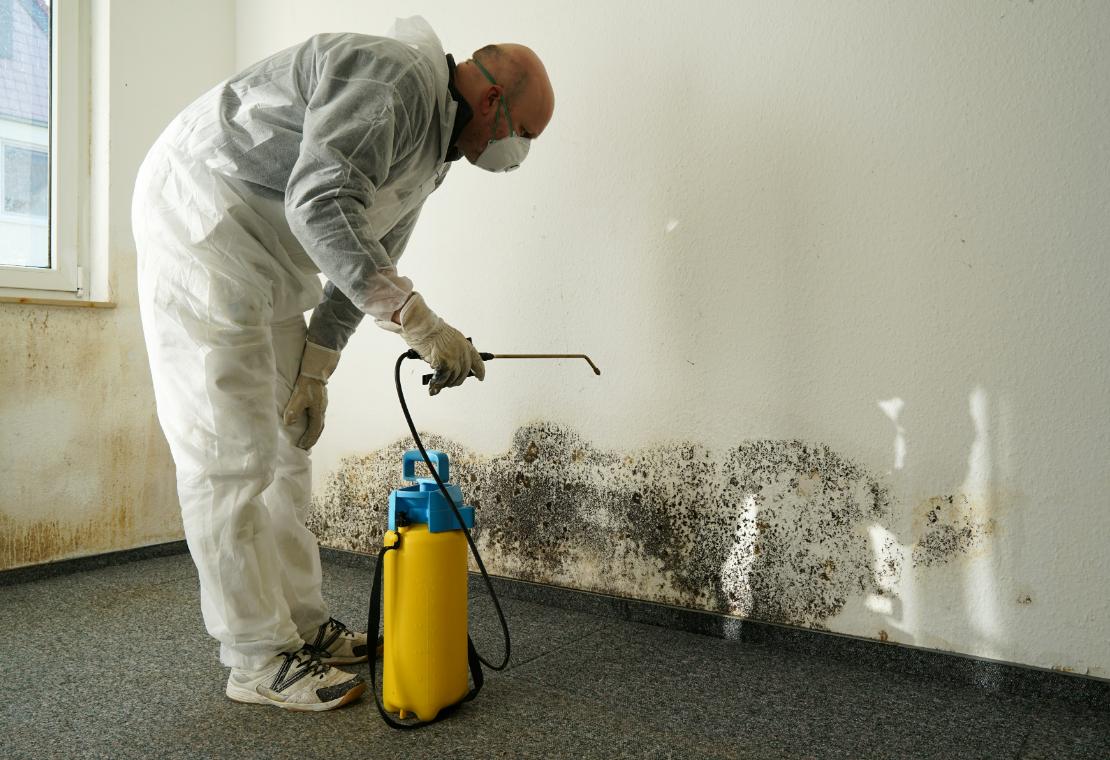
For effective mould removal near Upminster, local specialists conduct a comprehensive inspection and moisture assessment to assess the level of mould contamination and its causes like dampness, condensation, or inadequate ventilation. Our mould cleaning process in Upminster focuses on key structural areas including walls, ceilings, and floors where mould is likely to thrive, while not treating soft furnishings.
Our mould remediation services in Upminster extend far beyond mere surface cleaning; we remove airborne mould spores and implement strategies to inhibit future growth. We use HEPA filtration systems to trap airborne spores, and treat surfaces with HOCl (Hypochlorous Acid) to eliminate mould and bacteria at the microscopic level. To reach the most concealed areas, we employ ULV fogging technology, ensuring complete mould removal and significantly improving indoor air quality for long-lasting health benefits.
In Upminster, mould remediation begins with a meticulous inspection and moisture assessment, carried out by local mould removal experts. Utilizing sophisticated professional tools, they identify visible and hidden dampness, pinpointing areas where excess moisture fosters mould growth. This initial step is paramount to prevent future issues, as it informs the remediation process. Following this assessment, HEPA filtration systems and air scrubbers are employed to capture airborne mould spores, thereby ensuring that the indoor air quality remains safe during treatment, showcasing the reliability of local mould removal services in the area.
Once a secure environment has been established, the team applies HOCl (Hypochlorous Acid), a non-toxic agent designed to neutralise mould, bacteria, and mycotoxins at a molecular level. ULV (Ultra-Low Volume) fogging technology is then utilized, effectively reaching hidden areas including corners and behind surfaces. Comprehensive physical mould removal with H-Class filtration equipment ensures contaminants are safely contained and removed. The process concludes with extensive air purification and a focus on long-term protection, resulting in improved indoor air quality and mitigated risks of contamination in Upminster. This detailed approach guarantees effective mould cleaning.
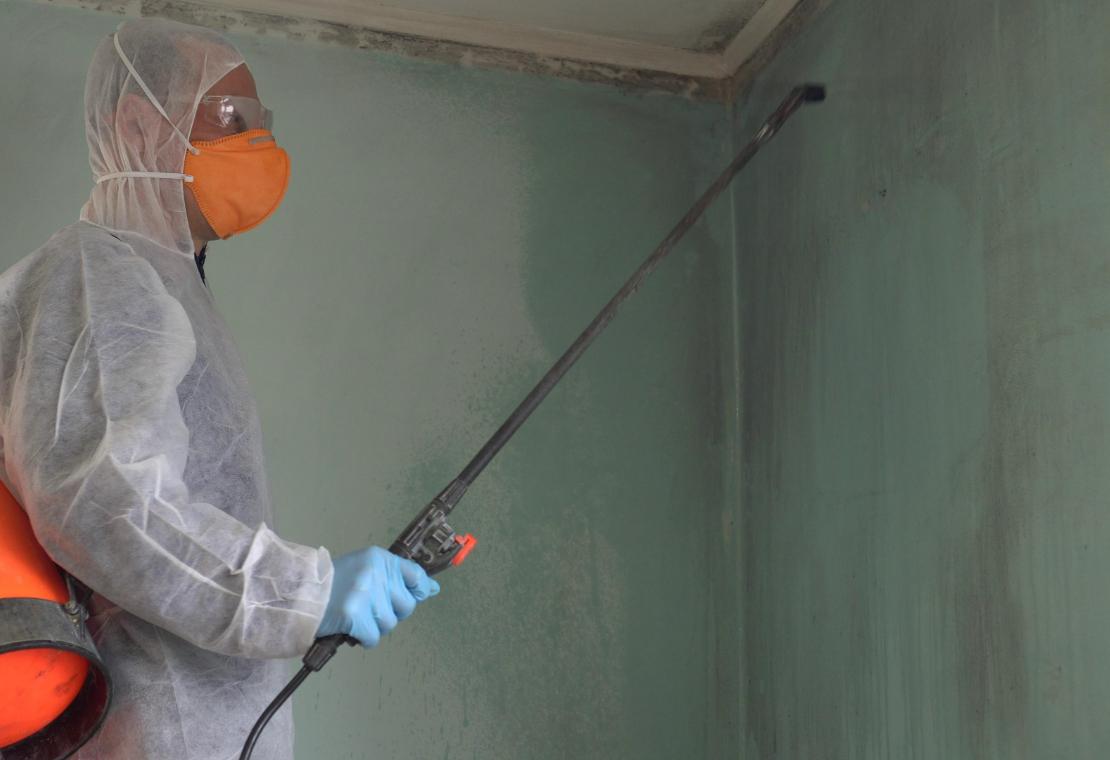
Booking mould cleaning is quick and designed to get results without unnecessary delays.
Share what you’re dealing with, whether it’s visible mould, damp patches, or a recurring problem. This helps determine the right approach, from mould cleaning to full mould remediation.
A specialist checks the affected areas and identifies what’s causing the mould, such as excess moisture, condensation, or poor ventilation. This ensures the issue is treated properly, not just on the surface.
You’ll get a straightforward quote based on the level of contamination and the type of mould removal required. The service is tailored to ensure effective results and long-term protection.
The treatment removes mould and improves indoor air quality, helping to prevent future growth and create a healthier living space. It also targets the root cause of the problem for longer-lasting results.
Mould removal requires more than basic cleaning, which is why it’s handled by trained mould remediation specialists experienced in treating both visible and hidden contamination. Each specialist assesses the full extent of mould growth, including underlying causes such as excess moisture, condensation, and ventilation issues, ensuring the problem is addressed properly rather than just on the surface.
Number of bookings: 8301
With Fantastic Services for: 6 years
Other specialities:
What the reviews say
"Quick and effective rodent control service. Their timely response and efficient methods resolved the problem with expertise."
Number of bookings: 214
With Fantastic Services for: 3 years
Other specialities:
Number of bookings: 205
With Fantastic Services for: 3 years
Other specialities:
Alongside professional mould removal and mould cleaning, a range of additional property care services is available to help maintain a healthier indoor environment.







Mould can spread quickly and impact both health and property if not treated in time. Book a service today to remove mould, improve indoor air quality, and restore a cleaner and healthier living environment.
A damp note on a mortgage valuation rarely says what people think it says. It usually says that the valuer saw something, is not qualified to diagnose it, and has passed the question on — and in Upminster, where a good proportion of sales involve substantial interwar and post-war family houses changing hands after long ownership, that note arrives in the middle of a chain with a deadline attached. What follows is a documentation problem as much as a building one, and it is worth understanding what is actually being asked for.
A valuation inspection is brief, visual and carried out for the lender. A high meter reading at a skirting or a discoloured patch on a ceiling gets recorded as an observation, often with a recommendation that a report be obtained from a suitable contractor. There is no diagnosis in it, and no statement that a particular mechanism is present. Reading that note as a finding of rising damp, and then buying a chemical injection treatment to satisfy it, is how sellers end up paying for work the wall never needed.
The useful response is a report that identifies the cause, states the evidence for it, sets out what was done and confirms the condition afterwards. Readings before and after, the location and pattern of the affected area, the nature of the defect and a record of the drying period carry weight. A one-line invoice for a treatment does not, because it says nothing about cause. Where a retention has been applied to the advance, it is normally released against evidence that the cause was addressed and not merely that a surface was cleaned.
There is a strong temptation to paint over growth before photographs are taken. Stain block on a mouldy ceiling holds for a few weeks and then bleeds through, and a surveyor's meter reads what is behind the paint rather than the paint itself. Worse, a freshly decorated patch in an otherwise untouched room is read as concealment and prompts more questions rather than fewer. Dealing with the cause and being able to show what was done is a stronger negotiating position than a tidy wall with no history.
Large detached and semi-detached houses here tend to produce a small number of recurring situations: an unheated bedroom in a wing that is kept closed, a bathroom added into an internal space with weak extraction, a rear addition with a shallow-pitched roof, and long stretches of external wall on plots with mature planting close to the house. A house that has been lightly occupied by one household for decades may also have been heated in a pattern that suited its occupants and leaves half the rooms cold, which shows on the walls of those rooms and nowhere else.
The constraint is drying, not treatment. Removing finish and cleaning a surface takes a day; getting masonry or a screed back to a stable reading takes weeks, and a report cannot honestly confirm a dry substrate before then. Where exchange is close, the realistic options are a scope of works with a price and an agreed retention, or an inspection report that identifies the cause and the remedy so both sides know what they are dealing with. Starting the inspection as soon as the valuation comment appears buys the drying time that the calendar will otherwise take away.
An inspection visit establishes cause and extent with readings taken in the material and compared between affected and sound walls. Removal of unsound finish, treatment of surfaces that are staying, drying with monitoring and then reinstatement follow in that order. Pricing reflects the area of finish removed, the drying equipment and period, and the number of monitoring visits, with a written record produced at the end for the lender or the buyer. Making good skirtings, architraves and any joinery that had to be cut back is handled by handyman for rented homes in Upminster; where a long-closed room has picked up an insect population as well, that is dealt with by Upminster pest control services. Preparing the house for occupation afterwards is arranged through cleaning services cover across Rainham, the same service in the neighbouring district appears under flexible mould removal in Rainham, and the method in outline is on professional mould remediation.
Skip the line, request and
book a service online