


Mould Removal and Remediation Services Sidcup
Professional mould treatment services designed to eliminate mould at its source and maintain a safe, healthy environment.

Professional mould treatment services designed to eliminate mould at its source and maintain a safe, healthy environment.
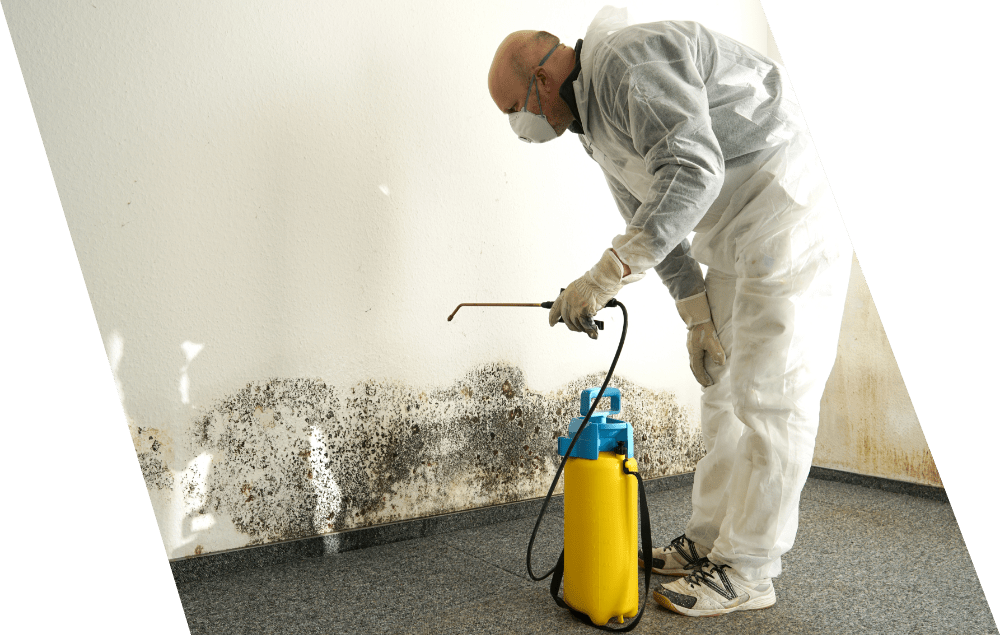
The cost of mould removal depends on the size of the affected area and the type of treatment required. After a detailed inspection a clear, personalised quote is provided based on the scope of work.
| Small mould area (e.g. around a window or corner) | Medium mould area +£100 (large section of a wall affected) | Large mould area +£150 (more than one wall or ceiling) | ||||
|---|---|---|---|---|---|---|
| Room | Standard | Fantastic Club* | Standard | Fantastic Club* | Standard | Fantastic Club* |
| Bedroom | £350 | £320 | £450 | £420 | £500 | £470 |
| Bathroom | £350 | £320 | £450 | £420 | £500 | £470 |
| Kitchen | £350 | £320 | £450 | £420 | £500 | £470 |
| Living / Dining room | £350 | £320 | £450 | £420 | £500 | £470 |
| Hallway / Landing | £350 | £320 | £450 | £420 | £500 | £470 |
| Utility room | £350 | £320 | £450 | £420 | £500 | £470 |
| Paid inspection | £50 | |||||
| *Price for members of the Fantastic Club. The Fantastic Club is a yearly subscription of £89. | ||||||

For effective mould removal and remediation in Sidcup, professionals rely on advanced technology to ensure thorough coverage of all mould contamination—both visible and hidden. Mould spores often spread through the air and can settle in challenging-to-reach areas, thus traditional cleaning methods usually fall short. Our professional mould cleaning services in Sidcup address this concern by incorporating airborne treatment strategies along with standard surface cleaning to eliminate mould entirely.
We utilize ULV (Ultra-Low Volume) fogging technology, allowing us to distribute treatment particles evenly throughout the areas affected by mould. This method ensures treatment reaches behind furniture, into cracks, and along all surfaces, including ceilings and walls. Additionally, we employ HOCl (Hypochlorous Acid), a powerful yet non-toxic professional-grade disinfectant that can neutralize mould spores, bacteria, and mycotoxins at a molecular level, leaving no harmful residues behind. This meticulous approach not only ensures comprehensive treatment but also significantly improves indoor air quality and reduces recontamination risks in Sidcup.
In Sidcup, effective mould remediation is focused on both the removal of existing mould and the prevention of future outbreaks by addressing environmental issues that facilitate its growth. Mould removal experts evaluate humidity levels, monitor ventilation, and investigate potential water ingress to develop a tailored remediation plan that caters to your specific needs.
After the detailed mould cleaning in Sidcup, protective solutions are applied that create an active defense against future mould growth while minimizing airborne spores. The use of HEPA filtration systems and air scrubbers during treatment is vital for maintaining clean indoor air both immediately and for the long term. Proper mould removal not only protects health by lowering allergen exposure but also preserves property integrity, enhancing overall indoor air quality and comfort.

Booking mould cleaning is quick and designed to get results without unnecessary delays.
Share what you’re dealing with, whether it’s visible mould, damp patches, or a recurring problem. This helps determine the right approach, from mould cleaning to full mould remediation.
A specialist checks the affected areas and identifies what’s causing the mould, such as excess moisture, condensation, or poor ventilation. This ensures the issue is treated properly, not just on the surface.
You’ll get a straightforward quote based on the level of contamination and the type of mould removal required. The service is tailored to ensure effective results and long-term protection.
The treatment removes mould and improves indoor air quality, helping to prevent future growth and create a healthier living space. It also targets the root cause of the problem for longer-lasting results.
Mould removal requires more than basic cleaning, which is why it’s handled by trained mould remediation specialists experienced in treating both visible and hidden contamination. Each specialist assesses the full extent of mould growth, including underlying causes such as excess moisture, condensation, and ventilation issues, ensuring the problem is addressed properly rather than just on the surface.
Number of bookings: 213
With Fantastic Services for: 2 years
Other specialities:
Number of bookings: 298
With Fantastic Services for: 3 years
Other specialities:
Number of bookings: 139
With Fantastic Services for: 2 years
Other specialities:
Alongside professional mould removal and mould cleaning, a range of additional property care services is available to help maintain a healthier indoor environment.








Mould can spread quickly and impact both health and property if not treated in time. Book a service today to remove mould, improve indoor air quality, and restore a cleaner and healthier living environment.

Ceiling mould is a different diagnostic problem from wall mould, and in DA14 it is usually a roof problem in disguise. Sidcup's interwar semis have almost all grown a rear extension, a box dormer or a converted loft at some point, and the roofs that came with those additions are flat or shallow warm decks and cut-in dormer cheeks built to whatever standard applied at the time. Those are the surfaces where condensation forms inside the construction rather than on its face, and the first sign of it is on the plaster below.
A traditional flat roof over a kitchen extension has insulation at ceiling level and a ventilated void above it. That void needs cross-ventilation at its edges to work, and on a rear extension hemmed in by a boundary wall on one side and the main house on the other there is often nowhere for it to breathe. Warm vapour from a kitchen or utility room gets into the void through ceiling penetrations, meets the cold underside of the deck, and condenses there. Water then drips back onto the insulation and the plasterboard, producing staining and growth in a pattern that follows the joists.
Box dormers concentrate the same fault into a smaller space. Insulation pushed hard against the sarking on a sloping ceiling leaves no ventilation gap behind it; cheeks clad in tile or render are thin and cold; and the new en-suite that usually accompanies a conversion adds a large moisture load in the very place with the least air movement. Mould appearing where a sloping ceiling meets a vertical wall almost always means the ventilation path behind the plasterboard has been closed off.
A leak through a flat roof produces a defined stain with a tidemark that grows after rain and dries between events. Interstitial condensation produces diffuse staining that appears in cold weather regardless of rainfall, is worse above rooms that generate vapour, and often shows the line of the joists or the fixings. Moisture readings taken in mild dry weather and again after a cold spell separate the two more reliably than any single visit can.
Surface remediation of the ceiling is straightforward: contained removal of growth with filtered extraction, a biocide applied and left to dwell, then a breathable coating once readings have come down. What treatment cannot do is stop the mechanism. If the void stays unventilated or the insulation stays packed against the deck, the ceiling will stain again the following winter. An honest report says which part of the result is treatment and which part depends on altering the construction.
The deep rear plots typical of the district bring their own contribution. Downpipes discharging to a soakaway that no longer takes water, a patio built up against the extension wall, and a rainwater outlet on a flat roof blocked with leaf litter from mature garden trees all keep the structure wetter than it needs to be. Clearing outlets and correcting ground levels is inexpensive and changes the internal picture more than most people expect.
Vents cut into a soffit or fascia, an extractor ducted properly out of a dormer en-suite, plasterboard renewed, an outlet cleared and rehung: handyman services across Sidcup takes that side of it, and doing it before the treatment cures is what makes the remediation last. Wasps and flies colonise unventilated flat-roof voids and soffit gaps readily, and nesting material in a vent is a frequent reason a void stopped breathing, so Sidcup pest control service often attends the same roof. Similar extension and dormer stock a district away is covered by mould removal for homes in Welling, while fully insured professional cleaners in Blackfen handles the household clean once ceilings have been made good, and the underlying method is described on the mould removal and remediation services nationwide page.
An inspection takes in the affected ceilings, the roof space or void where it can be opened, the ventilation in the rooms below, and the roof surface and its outlets from outside. Photographs and readings go into a written report with the works split into treatment, ventilation and roofing, since those three are often placed with different people. Pricing follows the ceiling area involved and whether plasterboard has to come down, and any drying period is quoted as days rather than as part of a single visit.
Skip the line, request and
book a service online













