Mould Removal and Remediation Service Grove Park
Professional mould treatment for damp and condensation-affected areas, combining neutralisation of spores with moisture control solutions.

Professional mould treatment for damp and condensation-affected areas, combining neutralisation of spores with moisture control solutions.
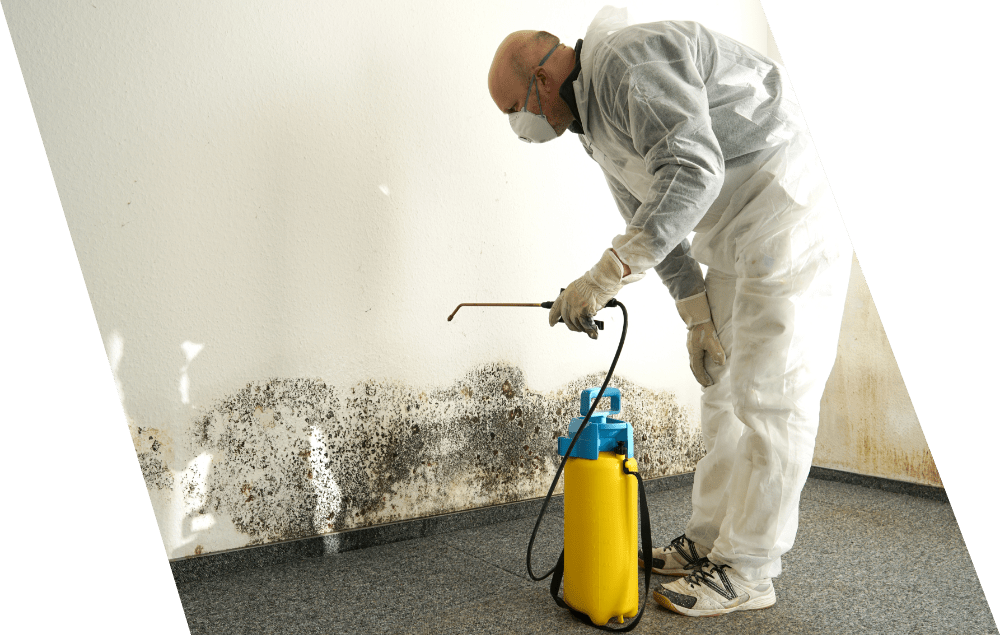
The cost of mould removal depends on the size of the affected area and the type of treatment required. After a detailed inspection a clear, personalised quote is provided based on the scope of work.
| Small mould area (e.g. around a window or corner) | Medium mould area +£100 (large section of a wall affected) | Large mould area +£150 (more than one wall or ceiling) | ||||
|---|---|---|---|---|---|---|
| Room | Standard | Fantastic Club* | Standard | Fantastic Club* | Standard | Fantastic Club* |
| Bedroom | £350 | £320 | £450 | £420 | £500 | £470 |
| Bathroom | £350 | £320 | £450 | £420 | £500 | £470 |
| Kitchen | £350 | £320 | £450 | £420 | £500 | £470 |
| Living / Dining room | £350 | £320 | £450 | £420 | £500 | £470 |
| Hallway / Landing | £350 | £320 | £450 | £420 | £500 | £470 |
| Utility room | £350 | £320 | £450 | £420 | £500 | £470 |
| Paid inspection | £50 | |||||
| *Price for members of the Fantastic Club. The Fantastic Club is a yearly subscription of £89. | ||||||

When it comes to mould removal in Grove Park, simply cleaning the affected areas is not enough. Comprehensive mould remediation involves understanding and eliminating the root causes, such as excessive humidity, inadequate ventilation, and water damage. Mould cleaning in Grove Park should focus on both the visible signs of mould and the underlying environmental conditions that allow mould to thrive, thereby ensuring effective mould prevention.
Professionals leverage advanced technology to accurately gauge humidity, inspect ventilation systems, and detect water damage. The primary goal of mould remediation in Grove Park is to not only clear existing mould but also implement management strategies that deter future growth. This includes proper treatment of structures like walls, ceilings, and floors, while typically excluding soft furnishings. By promoting a balanced moisture level and controlling condensation, these experts help safeguard your space from future mould infestations.
In Grove Park, we employ a structured mould remediation process starting with a comprehensive mould inspection. We then utilize HEPA air filtration methods to eliminate airborne spores effectively, coupled with HOCl treatment for safe mould neutralization. Our ULV fogging technology guarantees that treatment reaches every corner, addressing even trickiest mould challenges.
After addressing the infestation, we physically remove mould using professional equipment with H-Class filtration, ensuring no residue remains. We conclude our mould remediation services with a final air cleaning to restore air quality. This process not only prevents future mould regrowth but also benefits you by enhancing air quality and ensuring long-term stability in your living spaces. Count on us for expert mould removal in Grove Park for a safer, healthier home.

Booking mould cleaning is quick and designed to get results without unnecessary delays.
Share what you’re dealing with, whether it’s visible mould, damp patches, or a recurring problem. This helps determine the right approach, from mould cleaning to full mould remediation.
A specialist checks the affected areas and identifies what’s causing the mould, such as excess moisture, condensation, or poor ventilation. This ensures the issue is treated properly, not just on the surface.
You’ll get a straightforward quote based on the level of contamination and the type of mould removal required. The service is tailored to ensure effective results and long-term protection.
The treatment removes mould and improves indoor air quality, helping to prevent future growth and create a healthier living space. It also targets the root cause of the problem for longer-lasting results.
Mould removal requires more than basic cleaning, which is why it’s handled by trained mould remediation specialists experienced in treating both visible and hidden contamination. Each specialist assesses the full extent of mould growth, including underlying causes such as excess moisture, condensation, and ventilation issues, ensuring the problem is addressed properly rather than just on the surface.
Number of bookings: 213
With Fantastic Services for: 2 years
Other specialities:
Number of bookings: 139
With Fantastic Services for: 2 years
Other specialities:
Number of bookings: 3178
With Fantastic Services for: 4 years
Other specialities:
Alongside professional mould removal and mould cleaning, a range of additional property care services is available to help maintain a healthier indoor environment.








Mould can spread quickly and impact both health and property if not treated in time. Book a service today to remove mould, improve indoor air quality, and restore a cleaner and healthier living environment.

A house that managed perfectly well for twenty years and started growing mould last winter has usually not changed at all. Something about how it is lived in has. That is the most productive line of questioning in SE12, where the housing is largely interwar and post-war suburban and much of it is on its second or third household, and where the fabric has been more or less stable while occupancy, working patterns and family size have not. The building is the same; the moisture it is being asked to handle is not.
Every person in a house adds moisture by breathing, washing and cooking, so an extra occupant is a permanent increase in the load. A new baby adds laundry, longer baths and a warmer nursery with the door closed. Somebody working from home keeps a room occupied all day, often with the heating on in one room and off elsewhere, and dries washing indoors on weekdays that used to be empty. A second bathroom brought back into use doubles the showering. None of these is unreasonable, but together they can move a house from just coping to not coping.
Repurposing a room is the other half of it. A box room turned into a home office with the door shut and no heating. A garage or an integral store converted for exercise equipment, where the walls and floor were never intended to be warm. A dining room used as a bedroom, so somebody now sleeps against an external wall that used to have a table against it. A loft room that was fine as occasional storage and is now slept in. Each one puts people and moisture into a space whose surfaces were never expected to stay dry.
Changes in who is in the house change how it is heated, and usually unevenly. One room warm all day and the rest cold produces a strong pressure and moisture gradient towards the unheated rooms, and the surfaces there collect what the warm room produces. Households that have reduced their heating hours have, without intending to, lowered the temperature of every wall surface at the same time as the moisture load stayed constant. The growth appears in the rooms that lost the heat rather than in the room that gained it.
A good first visit asks what has changed in the last eighteen months: occupants, work patterns, use of each room, where washing dries, whether a tumble appliance was removed, whether any heating hours or valves changed, whether windows or a bathroom were replaced. The answers almost always identify the mechanism before any instrument is used, and readings then confirm it. Households are often apologetic about this, which is unnecessary — the point of asking is to find the smallest change that fixes it.
The interventions that work here are unglamorous: drying washing in one room with the door shut and extraction running, or outdoors when weather allows; keeping a little heat in the rooms that are now occupied rather than heating one room hard; pulling furniture a few centimetres off cold walls; running bathroom extraction during and after showering rather than while the light is on. Where a converted or repurposed room has no realistic ventilation or heating, that has to be addressed as building work, not as habit.
Affected finishes are taken off wet with extraction at the working face where growth is in the material, cleaned and treated with a biocide left on for its full dwell time where the surface is sound, then dried to a monitored reading before decoration. Fitted joinery is pulled clear so the wall behind it can be treated, and heavily grown textiles are better replaced than cleaned. Extraction improvements, door adjustments, insulating a converted store and making good afterwards is work handled by handyman across Grove Park.
An inspection and interview first, readings second, a written scope third. Pricing follows the number of rooms, the area of finish removed, the drying equipment and the drying period, with any ventilation or heating work quoted separately. Furniture needs to be movable and floor perimeters accessible on the day. Rooms that have been damp for a season often have an insect population, dealt with by pest control specialists in Grove Park; a full clean once the work is finished is arranged with cleaning services throughout New Cross. The same service in the next district is covered by Lee mould removal team, and the underlying method is set out on our mould removal and remediation team.
Skip the line, request and
book a service online