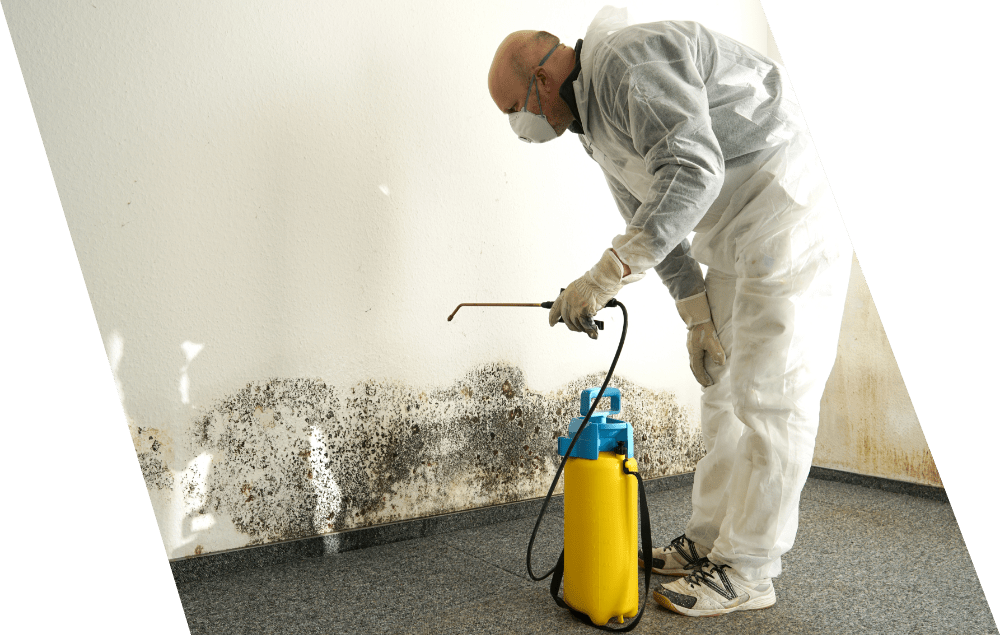
It sounds contradictory, but a home that has just been made warmer is one of the likeliest places to find mould growing for the first time. Chalk Farm has a good deal of housing that has been through improvement work over the past decade, and a recognisable pattern comes with it: new glazing, draught-proofing and added insulation go in, the heating bills fall, and by the following winter there is black spotting in a corner that had been clear for fifty years.
The ventilation that nobody specified
Old housing was ventilated by accident. Ill-fitting sash windows, open flues, gaps at floor perimeters and letter plates provided a continuous, uncontrolled air change that carried moisture away without anybody thinking about it. Every one of those routes is a heat loss, so improvement work closes them. What has to replace them is deliberate, controlled ventilation, sized for the property and actually used. Where that part of the specification was left out, the moisture that used to leak away now stays in the rooms.
Upgrading one surface and moving the problem
Insulating some of the envelope and not the rest does not remove the coldest surface in a room; it relocates it. Insulate the walls and the coldest point moves to a window head, a floor perimeter or the junction with an unheated stairwell. Insulate the roof and the flank wall becomes the target. Because growth always finds the coldest available surface, a household that has had one measure installed frequently reports that the mould has moved to a new spot, and that is exactly what has happened.
Thinking about the whole dwelling
This is why retrofit guidance has moved towards assessing an entire property before any single measure is installed, looking at fabric, ventilation, heating and how the household actually lives in the place. The order of installation matters as much as the measures themselves: ventilation is commissioned alongside airtightness work, not added later after complaints. Where work has already been done in a piecemeal way, putting it right starts with an assessment of what was installed, in what order, and what was left behind.
The first winter after building work
There is also a temporary effect worth separating from the permanent one. New plaster, screed, adhesives and timber all carry water that has to leave the building, and in the first heating season that adds substantially to the moisture load of a property that has just been sealed up. Spotting in that first winter may be a symptom of the building drying rather than of a permanent fault, but it needs managing with heat and air change rather than ignoring, because a colony that establishes will not leave when the plaster finishes drying. The staged approach to assessing this is set out under the service in detail.
Small adjustments with a large effect
Once ventilation is working, the remaining problem is usually air distribution inside the dwelling. Internal doors that seal tightly to the floor prevent air crossing a flat, so moisture accumulates in the room where it was produced. Undercutting or adjusting those doors, easing them, and fitting transfer routes where a room has no other path is modest work with a disproportionate effect, and it is a job for fully insured handyman services in Primrose Hill. Where sealing up a property has trapped rodent activity inside the newly airtight fabric, the team covering Primrose Hill deals with it.
What the work looks like in practice
An appointment begins with a history: what was installed, when, and by whom, since the sequence explains most of what follows. Readings are taken in the upgraded rooms and in the ones left alone, and the comparison usually identifies the relocated cold surface within an hour. Treatment of existing growth is charged by area and by material; the assessment is charged as a visit. Dust and residue from earlier building work often needs clearing before surfaces can be treated, which is the sort of job trusted domestic cleaning in Euston handles, and condensation treatment services in Camden Town covers the same post-improvement pattern in the streets immediately south.