


Mould Treatment and Removal Lambeth
Comprehensive mould removal services that remove visible mould while improving air quality and reducing recurrence risks.

Comprehensive mould removal services that remove visible mould while improving air quality and reducing recurrence risks.
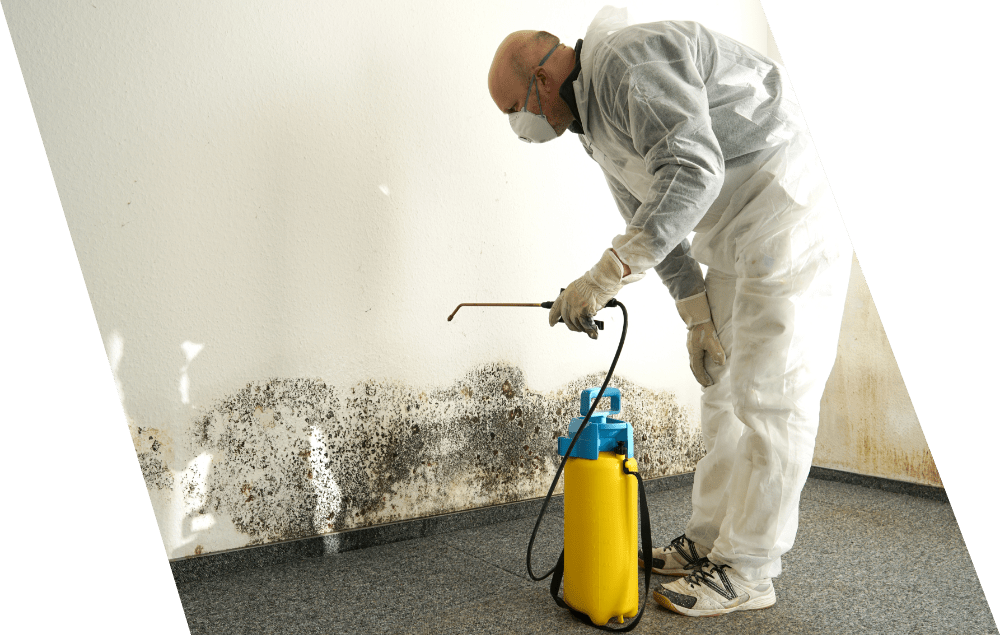
The cost of mould removal depends on the size of the affected area and the type of treatment required. After a detailed inspection a clear, personalised quote is provided based on the scope of work.
| Small mould area (e.g. around a window or corner) | Medium mould area +£100 (large section of a wall affected) | Large mould area +£150 (more than one wall or ceiling) | ||||
|---|---|---|---|---|---|---|
| Room | Standard | Fantastic Club* | Standard | Fantastic Club* | Standard | Fantastic Club* |
| Bedroom | £350 | £320 | £450 | £420 | £500 | £470 |
| Bathroom | £350 | £320 | £450 | £420 | £500 | £470 |
| Kitchen | £350 | £320 | £450 | £420 | £500 | £470 |
| Living / Dining room | £350 | £320 | £450 | £420 | £500 | £470 |
| Hallway / Landing | £350 | £320 | £450 | £420 | £500 | £470 |
| Utility room | £350 | £320 | £450 | £420 | £500 | £470 |
| Paid inspection | £50 | |||||
| *Price for members of the Fantastic Club. The Fantastic Club is a yearly subscription of £89. | ||||||

In Lambeth, mould remediation encompasses more than just removal; it is a proactive approach aimed at comprehensive mould prevention. Experts utilize specialized equipment to assess humidity levels, ventilation patterns, and any existing water damage. By conducting a detailed inspection, they tackle condensation control and moisture balance effectively. This thorough approach guarantees that all affected surfaces, including walls, ceilings, and floors are treated properly, significantly reducing the chances of mould re-emerging in your space.
In Lambeth, mould remediation is a meticulous process that starts with a thorough inspection to identify the extent of the contamination. After assessing the situation, HEPA air filtration systems are implemented to capture airborne spores effectively. A controlled treatment follows, utilizing HOCl (hypochlorous acid) for its powerful but safe mould-neutralizing properties. This is complemented by ULV (ultra-low volume) fogging technology, ensuring an even application throughout all surfaces and airspaces, reaching areas that are typically challenging to treat.
The physical removal of mould in Lambeth is conducted using professional-grade equipment that features H-Class filtration to extract mould effectively and minimize the risk of dispersing spores. The procedure concludes with thorough air cleaning and a focus on long-term protection against future mould growth. This comprehensive approach not only prevents recurrence but also enhances air quality, contributing to a healthier living environment. By choosing expert mould removal in Lambeth, you ensure lasting stability and peace of mind for your home.

Booking mould cleaning is quick and designed to get results without unnecessary delays.
Share what you’re dealing with, whether it’s visible mould, damp patches, or a recurring problem. This helps determine the right approach, from mould cleaning to full mould remediation.
A specialist checks the affected areas and identifies what’s causing the mould, such as excess moisture, condensation, or poor ventilation. This ensures the issue is treated properly, not just on the surface.
You’ll get a straightforward quote based on the level of contamination and the type of mould removal required. The service is tailored to ensure effective results and long-term protection.
The treatment removes mould and improves indoor air quality, helping to prevent future growth and create a healthier living space. It also targets the root cause of the problem for longer-lasting results.
Mould removal requires more than basic cleaning, which is why it’s handled by trained mould remediation specialists experienced in treating both visible and hidden contamination. Each specialist assesses the full extent of mould growth, including underlying causes such as excess moisture, condensation, and ventilation issues, ensuring the problem is addressed properly rather than just on the surface.
Number of bookings: 214
With Fantastic Services for: 3 years
Other specialities:
Number of bookings: 298
With Fantastic Services for: 3 years
Other specialities:
Number of bookings: 213
With Fantastic Services for: 2 years
Other specialities:
Alongside professional mould removal and mould cleaning, a range of additional property care services is available to help maintain a healthier indoor environment.






















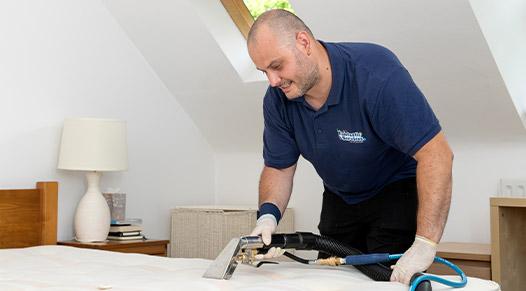
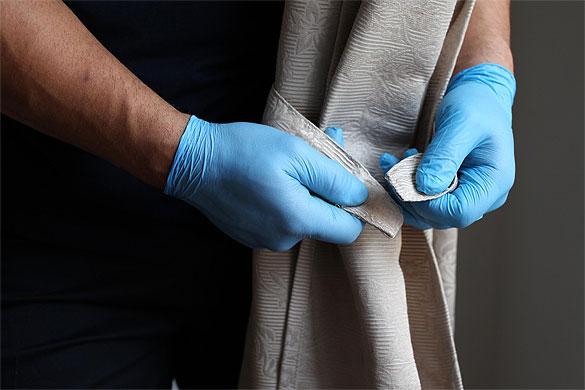
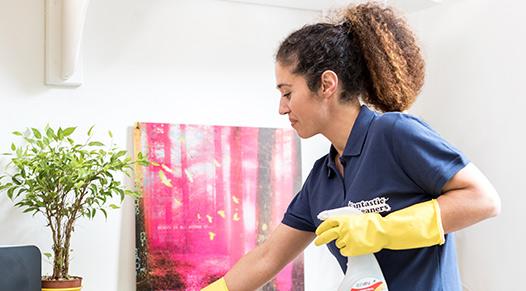



Mould can spread quickly and impact both health and property if not treated in time. Book a service today to remove mould, improve indoor air quality, and restore a cleaner and healthier living environment.

Quite often there is nothing to see. The complaint is a smell — musty, earthy, noticeable on opening the front door and gone after ten minutes in the room — and every visible surface in the flat is clean. That is a common enquiry in Lambeth, where subdivided Victorian houses, purpose-built blocks and later infill sit side by side, and it is worth taking seriously, because a smell without a mark means the growth is somewhere that cannot be seen and has probably been there a while.
Actively growing colonies give off volatile compounds as they metabolise, and the nose detects those at concentrations far below anything visible. A colony in a void, behind fitted joinery or inside a floor structure will scent the air of a room through the smallest gap long before it reaches a surface anybody looks at. Habituation is why residents stop noticing while visitors comment at once, and why a smell reported by somebody who has just come in carries more weight.
A smell survey is systematic rather than inspired. Rooms are assessed cold, before anything has been opened or aired, starting from the strongest point and working towards the weakest. Low-level and enclosed spaces are checked first because the compounds are heavier than air and accumulate at floor level. Then the boundaries: behind and under fitted furniture, inside a boxed-in pipe run, under a bath panel, beneath a floor covering at the perimeter, behind a bath or shower on a shared wall. Where the intensity increases, the source is close.
Four account for most cases in this housing type. The underside of a floor covering where a solid floor has been sealed. The void behind plasterboard on a cold wall, where warm moist air has been leaking through a service penetration. The carcase back of a fitted wardrobe or kitchen cupboard against an external wall. And the structure beneath a bath or shower where a sealant or a waste connection has been weeping slowly for a long time. None of the four produces a visible mark on a wall until it is well advanced.
Part of the value of a survey is ruling things out. A dried-out trap on a little-used basin or a washing machine standpipe lets drain air into a room and smells sulphurous rather than earthy. Decaying organic matter under a floor, a dead rodent in a void or a stale, unventilated space each have their own character. Wet timber decay smells mushroomy and sweetish and means something more serious than surface mould. Naming the smell correctly determines which trade is needed, and getting it wrong is how people end up treating the wrong thing for months.
Finding hidden growth means removing something, and the aim is the smallest opening that answers the question. A section of floor covering lifted at a perimeter, a bath panel taken off, a base unit pulled forward, a neat inspection opening cut in plasterboard at low level in a discreet position. That is enough to see the substrate and take readings in the material. Only once the extent is known does the scope of removal get set, rather than opening a whole wall on the strength of a smell.
Removing the colony removes the source, but the compounds have been absorbed by soft materials around it, so a flat can still smell after the work. Soft furnishings, curtains and stored textiles in the affected room need washing or replacing, the room needs airing and drying, and the surfaces around the work need cleaning down rather than just wiping. A room that still smells after remediation usually has a second, smaller source nearby that the first survey did not reach.
The single most useful preparation is not to air the flat for a few hours before the visit, which sounds counter-intuitive and makes the smell much easier to track. Clearing access to floor perimeters and the fronts of fitted furniture helps too. Pricing follows the extent of opening up and removal, the drying period and the number of visits, with a short survey visit priced separately where the source is not yet known. Refitting panels, plinths and joinery afterwards is handled by handyman specialists in Lambeth; a smell traced to an animal or an insect population in a void is dealt with by pest control specialists in Lambeth; washing down the room and its textiles afterwards is arranged through our team in the area. Comparable work next door is covered by what the service covers, and the general sequence is set out on local mould removal and remediation.
Skip the line, request and
book a service online

