


Mould Removal and Remediation Services in Muswell Hill
Professional mould treatment and remediation services that eliminate mould growth, reduce humidity issues, and support long-term prevention.

Professional mould treatment and remediation services that eliminate mould growth, reduce humidity issues, and support long-term prevention.
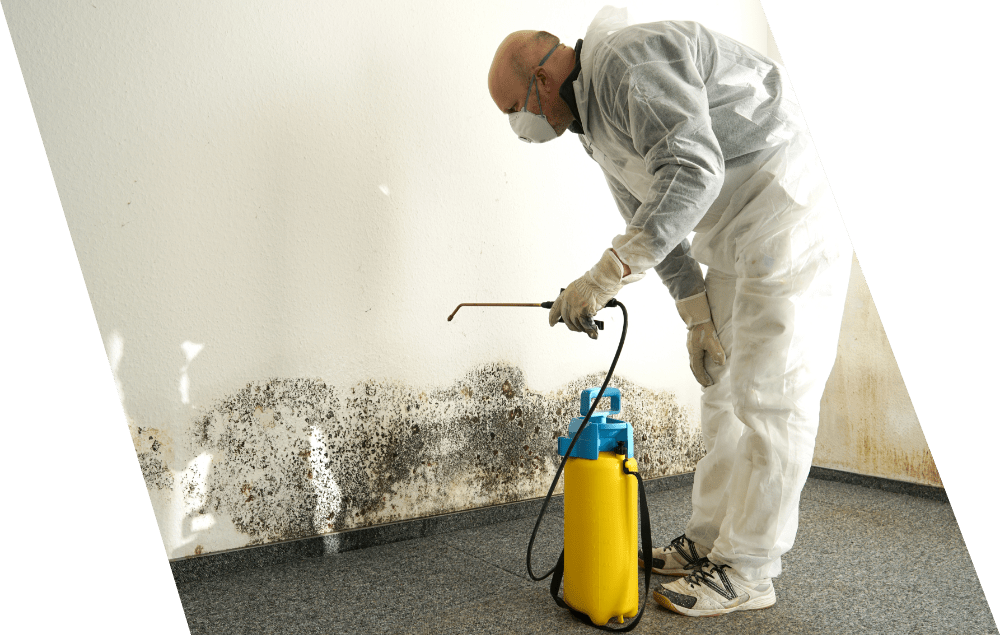
The cost of mould removal depends on the size of the affected area and the type of treatment required. After a detailed inspection a clear, personalised quote is provided based on the scope of work.
| Small mould area (e.g. around a window or corner) | Medium mould area +£100 (large section of a wall affected) | Large mould area +£150 (more than one wall or ceiling) | ||||
|---|---|---|---|---|---|---|
| Room | Standard | Fantastic Club* | Standard | Fantastic Club* | Standard | Fantastic Club* |
| Bedroom | £350 | £320 | £450 | £420 | £500 | £470 |
| Bathroom | £350 | £320 | £450 | £420 | £500 | £470 |
| Kitchen | £350 | £320 | £450 | £420 | £500 | £470 |
| Living / Dining room | £350 | £320 | £450 | £420 | £500 | £470 |
| Hallway / Landing | £350 | £320 | £450 | £420 | £500 | £470 |
| Utility room | £350 | £320 | £450 | £420 | £500 | £470 |
| Paid inspection | £50 | |||||
| *Price for members of the Fantastic Club. The Fantastic Club is a yearly subscription of £89. | ||||||

For effective mould removal in Muswell Hill, we conduct a detailed inspection and moisture assessment to pinpoint not just visible mould but the deeper issues contributing to its growth. Typical causes of mould include high humidity, condensation, and inadequate ventilation. Understanding these factors is essential for us to provide our thorough mould cleaning Muswell Hill. Our service concentrates on affected structural surfaces such as walls, ceilings, and floors, while soft furnishings like carpets and sofas are not treated during this process.
Our mould remediation in Muswell Hill includes extensive measures that go beyond superficial cleaning techniques. We take care to remove airborne mould spores and apply methods that hinder future growth, enhancing both the indoor air quality and the safety of your living environment. This preventive approach is vital in protecting your health and preventing structural damage. By addressing issues related to dampness and ensuring effective mould and black mould removal Muswell Hill, we ensure that your property remains a safe and healthy space.
Mould remediation in Muswell Hill begins with a comprehensive inspection and moisture assessment that employs professional hygrometers to identify hidden sources of dampness. This crucial step allows our specialists to pinpoint areas of excess moisture, essential in preventing future mould growth. Throughout the remediation process, we utilize HEPA filtration systems and air scrubbers to capture airborne mould spores, effectively maintaining a safe and clean indoor air environment while we work on mould removal.
After the initial assessment, we implement HOCl (Hypochlorous Acid) treatment, a non-toxic professional-grade solution designed to neutralize mould, bacteria, and mycotoxins effectively. To reach those difficult areas, ULV (Ultra-Low Volume) fogging technology is introduced, ensuring the treatment disperses evenly throughout all spaces. The subsequent physical removal of mould is performed using specialized equipment with H-Class filtration, showing a commitment to safety. Finally, we conclude with air purification efforts, significantly improving indoor air quality by reducing airborne spores, leading to sustainable results in mould cleaning across Muswell Hill.

Booking mould cleaning is quick and designed to get results without unnecessary delays.
Share what you’re dealing with, whether it’s visible mould, damp patches, or a recurring problem. This helps determine the right approach, from mould cleaning to full mould remediation.
A specialist checks the affected areas and identifies what’s causing the mould, such as excess moisture, condensation, or poor ventilation. This ensures the issue is treated properly, not just on the surface.
You’ll get a straightforward quote based on the level of contamination and the type of mould removal required. The service is tailored to ensure effective results and long-term protection.
The treatment removes mould and improves indoor air quality, helping to prevent future growth and create a healthier living space. It also targets the root cause of the problem for longer-lasting results.
Mould removal requires more than basic cleaning, which is why it’s handled by trained mould remediation specialists experienced in treating both visible and hidden contamination. Each specialist assesses the full extent of mould growth, including underlying causes such as excess moisture, condensation, and ventilation issues, ensuring the problem is addressed properly rather than just on the surface.
Number of bookings: 298
With Fantastic Services for: 3 years
Other specialities:
Number of bookings: 8301
With Fantastic Services for: 6 years
Other specialities:
What the reviews say
"Quick and effective rodent control service. Their timely response and efficient methods resolved the problem with expertise."
Number of bookings: 213
With Fantastic Services for: 2 years
Other specialities:
Alongside professional mould removal and mould cleaning, a range of additional property care services is available to help maintain a healthier indoor environment.



























Mould can spread quickly and impact both health and property if not treated in time. Book a service today to remove mould, improve indoor air quality, and restore a cleaner and healthier living environment.
A bay window is three cold walls, a lot of glass and, on most of the Edwardian housing in N10, a small flat roof with a complicated edge. Deep two-storey bays and gabled fronts give these streets their character and give the buildings their most frequent damp detail. When mould appears in a front room here it is usually inside the bay and nowhere else — along the ceiling perimeter, down the internal corners, and on the cills — and the reason is generally sitting on top of the bay rather than inside the room.
On a single-storey bay the roof is a small flat area, originally lead or asphalt, with a tiny fall, a modest upstand where it abuts the main wall, and often no more than a slot or a short length of gutter to drain it. On a two-storey bay the same arrangement sits at eaves level, tucked under a gable. Every one of those elements is small in area and high in complexity, which is the opposite of what makes roofing durable: several junctions, an abutment, a parapet or cill detail at the front, and almost no fall to shed water from a covering that has aged for a century.
The abutment is the usual culprit. A cover flashing chased into the brickwork loses its pointing, lifts at the edge, or was replaced at some point with mastic that has since hardened and split. Water then runs behind the upstand and straight into the wall head above the bay ceiling. Lead that has been left in long unjointed lengths cracks from thermal movement. The cheeks of the bay, where the roof turns a corner, take the most stress and split first. Where the covering has blistered or the laps have opened, water gets under it and travels to the lowest point before appearing inside. Flashing repairs, repointing an abutment and clearing outlets are covered by experienced TV wall mounting in Muswell Hill.
Inside, the signature is a line rather than a patch. Staining follows the junction of the bay ceiling and the external wall, sometimes with a defined brown edge from earlier episodes that dried out. Cornice and picture rail take it first because they are the coolest, most sheltered surfaces. Below, the cills of the bay windows collect condensation independently, so a bay can have two separate problems at once: liquid water entering at ceiling level and surface moisture forming at cill level. Separating them is important, because fixing the roof does nothing for the cills. Similar mixed patterns in the interwar stock nearby are covered by local specialists.
These streets carry a lot of mature planting, and the hopper or gutter section serving a bay is small, low-capacity and easily choked. Once it blocks, water sheets down the face of the bay in every shower, saturating the brickwork and the window heads, and internal damp follows on the elevation rather than at the roof junction. Boxed eaves and the void behind a bay roof are also favoured nesting spots, and where an inspection finds activity there, pest control cover across Muswell Hill handles it before anything is sealed up.
Roof and rainwater work first, then drying, then internal remediation, then decoration. Skipping the drying stage is the common error: solid brickwork above a bay holds a surprising quantity of water and will push it back through new plaster and fresh paint for months. Where plaster has been repeatedly soaked it comes off rather than being skimmed over, and the cornice detail is recorded before removal so it can be reinstated. The general order of operations is described on mould removal and remediation services UK.
Much of this area sits on a slope, which affects how a tower or scaffold is set up and occasionally rules out a tower altogether in favour of an edge-protected scaffold. Front elevations on a bus route or with limited kerb space may also need a licence for the footway. Quoting therefore separates access, roofing and internal work, with access being the element most affected by the street rather than by the house. Once plaster has come off inside a front room, a full clean is worth doing before furniture goes back, and cleaning services for period property in North Finchley covers it.
Skip the line, request and
book a service online


