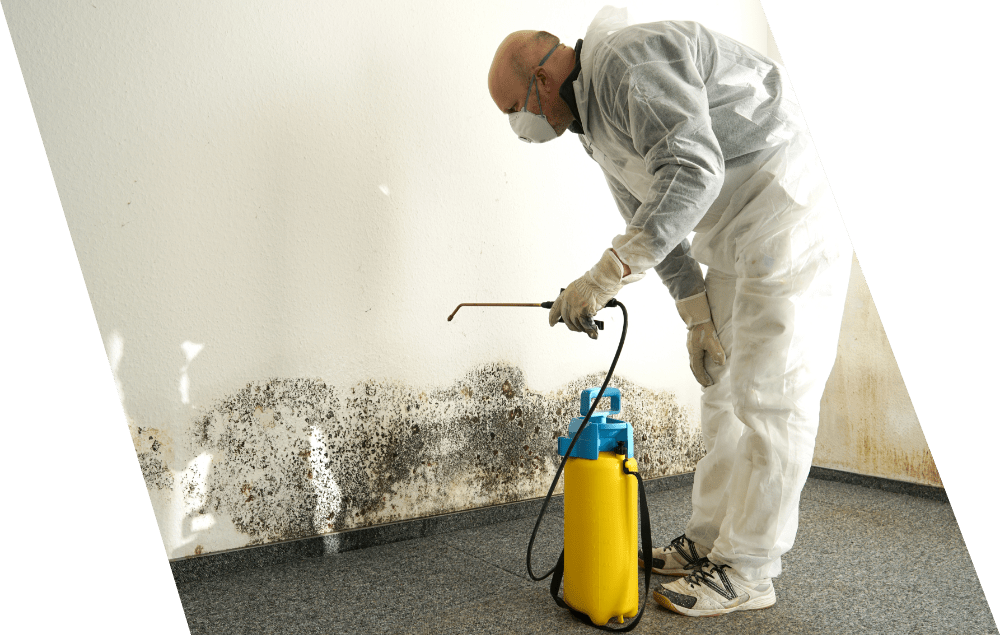
Retrofitted cavity fill solved a heating problem and created a damp one in a proportion of the houses that received it. N11 has street after street of interwar semis and short terraces with the shallow masonry cavity typical of that period, and a very large share were filled under one grant scheme or another. Most are fine. Where it went wrong, the symptoms are specific and easy to misread: damp patches on one elevation only, appearing after driving rain, often following the mortar lines, and blamed on the occupants for years.
What the cavity was there to do
A cavity wall works by separation. The outer leaf gets wet in rain, water runs down the inside of it, and the open gap stops that moisture reaching the inner leaf, which stays dry and warm. Wall ties bridge the two leaves but are designed to shed water back outwards. Everything about the arrangement depends on the gap being clear and continuous. Filling it with an insulant changes the wall from two separated leaves into one composite construction, and whether that works depends entirely on the condition of the outer leaf and the quality of the installation.
How a fill fails
Several ways, all of them visible once the cavity is opened. Blown mineral fibre can slump over time, leaving the top of the wall unfilled and creating a cold band below the eaves with a warm wall beneath it. Fibre that has repeatedly absorbed water through a defective outer leaf stays damp and transmits moisture directly across to the inner leaf. Bead fill escapes through unsealed gaps around joists, flues and at a party wall, leaving voids behind. Mortar droppings left on the ties during original construction now sit within a wet fill and provide a bridge. And a wall on a badly exposed elevation may never have been a suitable candidate in the first place.
Reading the inside face
The pattern is what identifies it. Damp confined to the elevation facing the prevailing weather, appearing a day or so after sustained rain and fading in dry spells, is pointing at the outer leaf and the fill. Isolated cold patches with growth around their edges, in a wall that is otherwise warm, suggest voids in the fill. Damp low on a wall that never varies with weather is more likely to be ground-related. And before any of this is concluded, the plumbing is ruled out, because a weeping joint, an overflow discharging down the wall or a buried leak produces an identical-looking patch, and leak repairs services in Crouch End deals with that side.
Establishing whether the fill is really the cause
This is done by looking, not by inference. A small hole drilled in a mortar joint takes a borescope, and a few of them across an elevation show whether fill is present, whether it is evenly distributed, whether it is wet, and whether debris is bridging the ties. The exposed and sheltered elevations are compared, and external readings and a careful look at pointing, cills, render and rainwater goods complete the picture. Open cavities and gaps around joist ends also serve as routes for insects and rodents into a wall, and where that comes to light, flexible pest control in Bounds Green handles it.
Extraction and reinstatement
Where the fill is the cause, it is extracted — drilled, vacuumed out in sections and verified as clear — and the outer leaf is then repaired properly: repointing, render patching, cills reinstated with working drips, defective ties addressed. Whether the cavity is then refilled, left clear, or the wall insulated internally instead is a judgement based on exposure and on what the outer leaf can now cope with. The drill holes are made good in a matching mortar. Internal treatment and replastering come afterwards, once readings show the inner leaf has dried. Repointing, cill and rainwater repairs are covered by the Bounds Green branch.
What an inspection involves and how it is priced
Expect access to all four elevations, including behind any side gate, and enough clearance inside to take readings at skirting level on affected walls. Drilling is minimal and in mortar joints rather than brick faces. Quoting reflects the number of elevations to be extracted and the amount of external repair required, rather than the number of rooms showing damp. Neighbouring blocks of a completely different construction fail in another way altogether, which New Southgate mould removal specialists covers, and general background on wall types sits on mould removal and remediation explained.