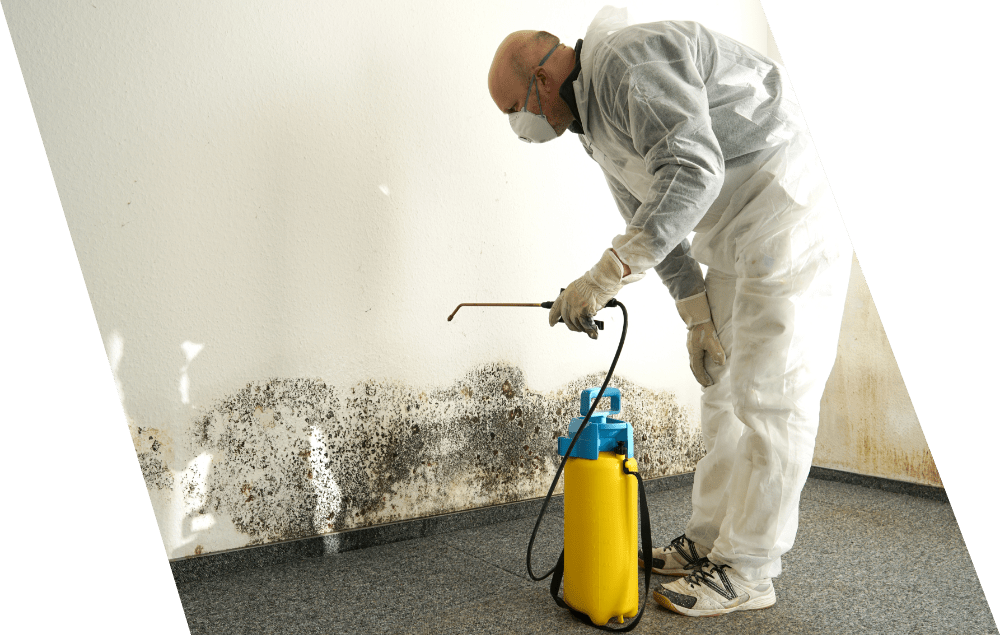
Decorating is the step that most people take first and that should come last. A wall is wiped, a coat of paint goes on, and for a few weeks the room looks resolved. By the second cold spell the spotting has come back through the new paint, usually in the same outline as before, because nothing about the wall's temperature, the moisture reaching it or the material behind the surface has changed. Getting mould work to hold in Finchley is largely a matter of running the trades in the right order.
The running order that actually works
Establish the cause. Fix the cause. Remove growth and any material too far gone to save. Dry the fabric until it stops giving up moisture. Treat the surfaces. Make good. Decorate. Each stage depends on the one before it, and skipping any of them transfers the failure to a later trade who then carries the blame. The most expensive version of this job is the one where new plaster and new paint go onto a wall that is still wet, because that work is written off and the room has to be opened again. The whole sequence is described under local condensation treatment.
What N3 housing stock adds to the sequence
Much of Finchley is interwar semi-detached and detached housing with bay-fronted front rooms, long rear gardens and generous side access. That stock has usually been altered several times: a kitchen extended across the back, a bathroom refitted, a garage converted, a loft boarded out. Every one of those alterations created a junction between old and new construction, and those junctions are where cold surfaces and concealed moisture routes tend to sit. A mould survey in a house like this spends as much time on what was built when as on what is visible now.
Handover points between trades
The awkward part of a multi-trade job is not the work, it is the handover. A plumber who has repaired a concealed joint should leave the opening accessible rather than boarding it up, so that drying can be verified. A roofer who has renewed a flashing should say when the repair was completed, because drying time is counted from then. A mould technician should record moisture readings at the point of handover so that whoever follows has a baseline. Where a wall is being stripped and a light switch, socket or spur sits in it, the isolation and refitting belong with local electrical services across Finsbury Park, and notifiable work falls under Part P rather than being tidied up on the day.
What happens when the order is reversed
Reversing it produces recognisable damage. Fresh gypsum skim applied over a wet substrate develops a network of fine cracks and loses adhesion, so it sounds hollow when tapped within a season. Vinyl paint over damp plaster blisters and lifts in sheets. New flooring laid on a slab that has not finished drying cups and lifts at the joints. Sealant applied to a wet junction fails at the bond line and admits water behind itself. None of this is a materials fault; it is a sequencing fault, and it is why a competent technician will refuse to make good before readings allow it.
Opening a wall and finding something else
Once a wall is opened, other things come to light. Insulation that has been disturbed, an old chase filled with debris, timber that has taken water repeatedly, or evidence of nesting and gnawing in a void. Where activity in the fabric turns out to be live, it is dealt with before anything is closed up, and vetted pest control in Finchley handles that side. Cutting out and replacing trims, forming a neat access hatch and refitting fixed joinery afterwards sits with handyman throughout Finchley rather than with a mould technician.
How the appointments are staged and priced
Because the work runs in stages, it is quoted in stages: an initial investigation, then removal and treatment by the area affected, then drying by the number of days plant is on site, then making good. Households are asked to have the affected rooms cleared of small items and to know where the stopcock and consumer unit are, since both are often needed. Nothing is booked for decoration until moisture readings have been taken twice, several days apart, and agree. The same staged approach applies further south at local mould removal across Pentonville, where the stock is older and the drying stage usually takes longer.