Take the back off a fitted wardrobe standing against an outside wall in January and the plaster behind it is often several degrees colder than the rest of the room. That temperature gap explains a large number of the calls from N2, where interwar and Victorian houses come with deep chimney-breast alcoves, boxed-in cupboards and fitted bedroom storage built tight against solid external walls. The room is warm, the visible walls are clean, and the growth is hidden behind joinery until something is moved.
The microclimate inside a closed cupboard
Three things combine. No heat reaches the wall behind a closed carcase, so its surface runs colder than the surrounding plaster. No air crosses it, so any moisture that forms is not carried away. And the contents act as insulation on the warm side, which drops the wall surface further still. Humidity inside the cupboard settles high and stays there, while the room outside reads perfectly normal on a meter. That is why household hygrometers so often show nothing wrong in a room where a wardrobe back is black. The way surface temperature drives this is set out on how our mould removal and remediation works.
Alcove cupboards beside a chimney breast
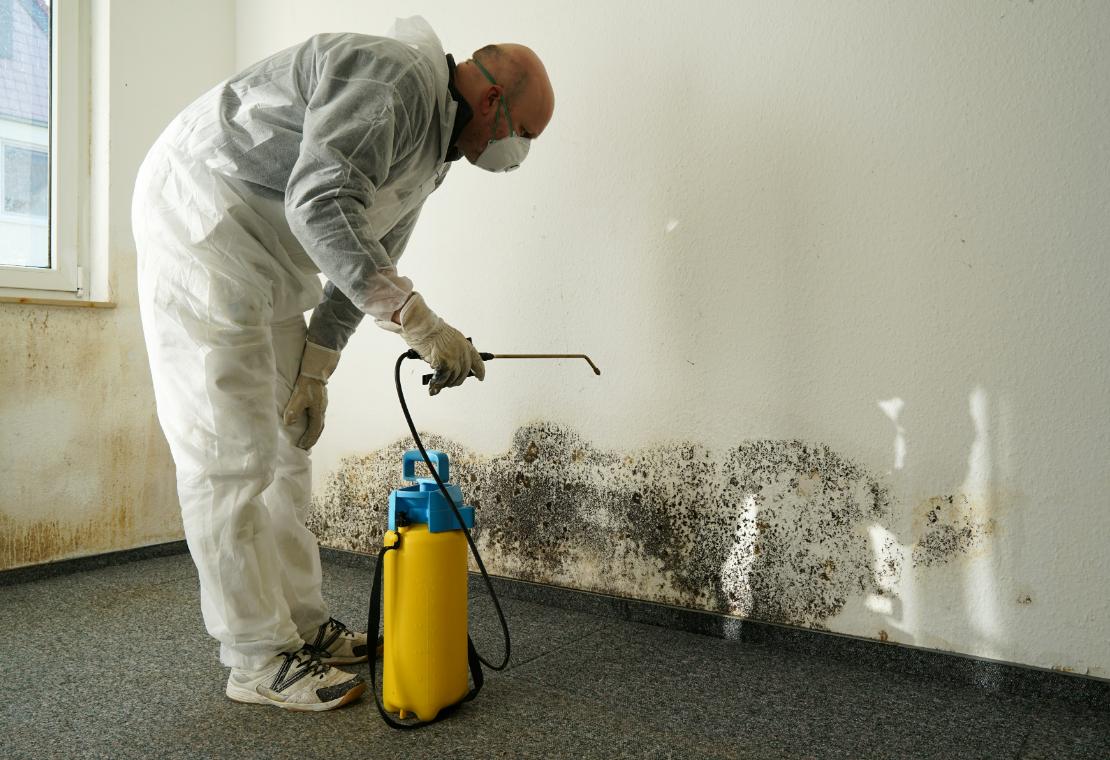
The alcove is the worst place in the room for this. Where a breast projects into a bedroom, the recesses on either side are formed by the thinnest section of external wall in the whole elevation, sometimes a single brick thickness in an older house. Build a cupboard across that recess and the coldest masonry in the room is sealed inside an unventilated box. The classic finding is mould on the back of the cupboard and on the wall inside it, running up to about shoulder height, with the exposed breast beside it entirely clean because it is thicker and better sheltered. Similar patterns across the wider area are covered by mould removal across North London and nearby areas.
Under-stairs and boxed-in spaces
An under-stair cupboard combines all the same conditions with a few of its own: no heating, a solid floor with no covering, sometimes a gas or electricity meter, and frequently the household's coats and shoes bringing in moisture from outside every day. Boxed-in spaces around pipework do something comparable, particularly where a boxing encloses a cold water pipe that sweats in summer. These spaces are also the ones where mice are found most often, because they are undisturbed and adjoin service penetrations, and where droppings turn up alongside the growth, East Finchley pest control service deals with that part.
Changing the joinery rather than treating the wall
The lasting fix is usually carpentry. Setting a carcase off the plaster on battens leaves an air gap behind it. Cutting a vent at the plinth and another near the top of the unit sets up a slow current through the space. Louvred or grilled doors do the same for a wardrobe front, and lose remarkably little storage. Where the wall itself is very cold, a thin insulated lining fixed behind the unit lifts the surface temperature, provided it is detailed so no cold edge remains exposed. Shelves kept clear of the back panel let air move around the contents. Alterations of that kind are covered by local handyman across East Finchley.
Treating the wall and the contents together
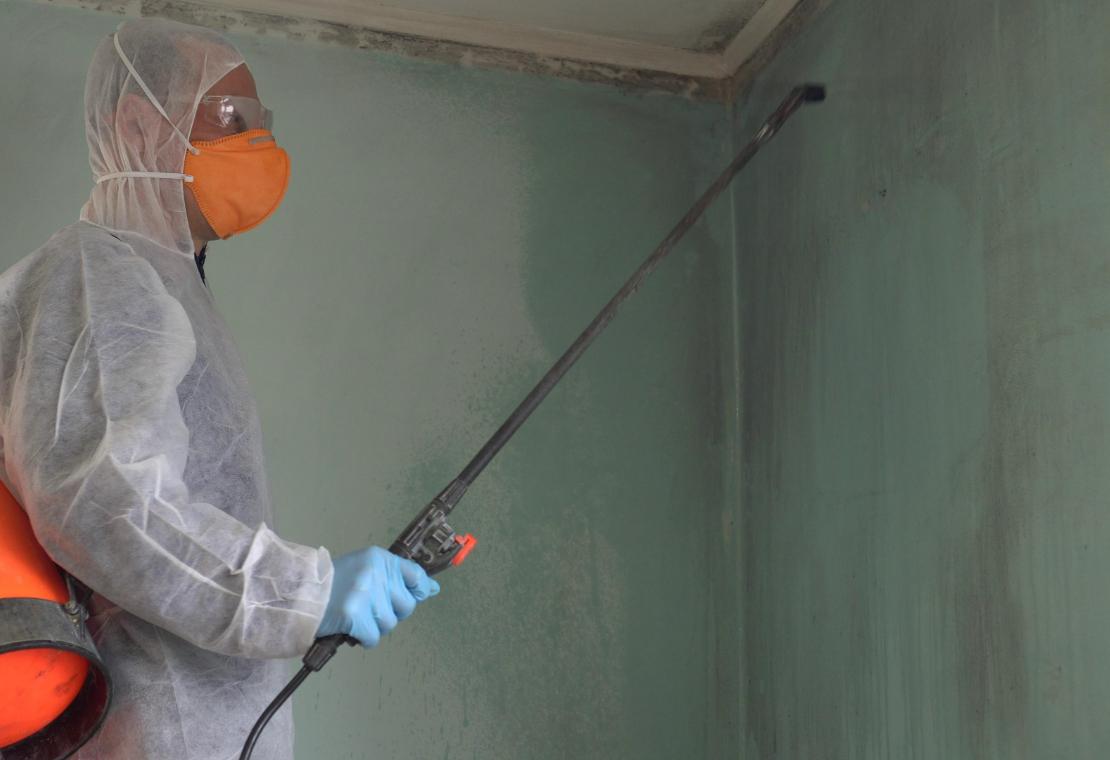
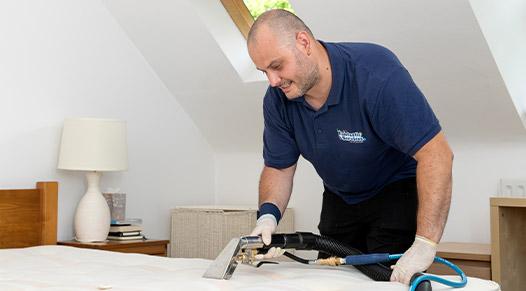
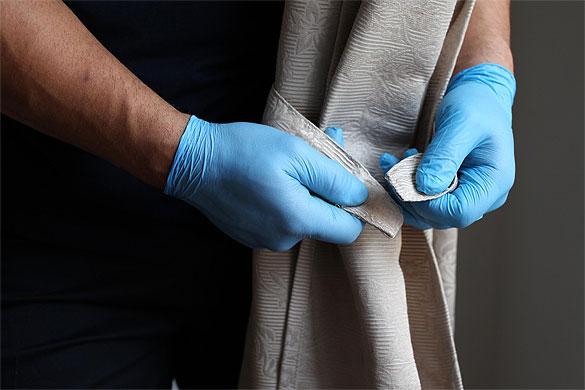
Order matters. Everything comes out first, and anything visibly affected is bagged where it stands rather than carried down a landing, because disturbed growth releases spores readily and they settle wherever the air takes them. The carcase is often best removed entirely for the duration rather than worked around. The wall is then cleaned down, treated and allowed to dry, and only then is the unit refitted in its altered form. Putting cleaned clothes back into a wiped but unchanged cupboard restarts the cycle within weeks. Laundering and cleaning of what comes out is handled by our team in the area.
What a visit covers and what to empty first
Emptying the affected storage before the appointment makes the biggest difference to how long it takes. The inspection records surface temperatures on the wall behind the joinery and on the open wall for comparison, humidity inside the closed space and in the room, moisture readings in the plaster and in the back panel, and a note of the wall thickness and construction. Charging follows the number of units involved and whether any part of the joinery is being altered or replaced, rather than the number of rooms in the house.